

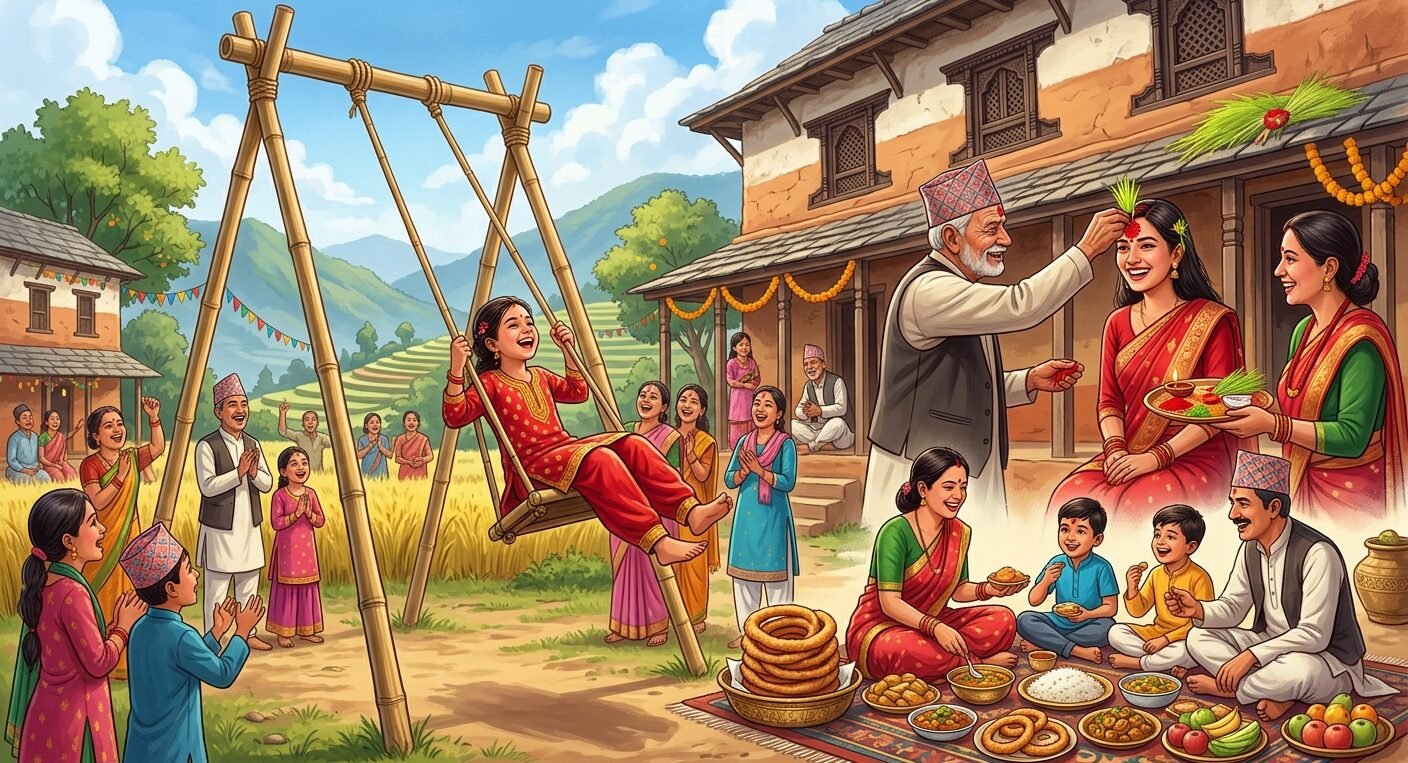
Dashain 2083 is an important occasion for Nepali families to celebrate their culture, worship Goddess Durga and spend time with loved ones. Known as Bada Dashain, Dashain is one of Nepal’s biggest Hindu festivals. It represents the victory of good over evil and brings together religious traditions, family gatherings, festive food and celebrations that have been passed down through generations.
From planting Jamara during Ghatasthapana to receiving Tika and blessings on Vijaya Dashami, each tradition has its own meaning. For many Nepalis, Dashain is also a time to return to their hometowns, meet relatives, remember childhood memories and wish one another a happy and prosperous future.
Whether you are looking for information about Dashain in English, preparing a Dashain festival essay or wondering why Dashain is celebrated, this guide explains the festival’s history, important traditions, cultural significance and modern celebrations.
What is Dashain?
Dashain is a major Hindu festival celebrated throughout Nepal and by Nepali communities around the world. Traditionally observed over approximately 15 days. it begins with Ghatasthapana and concludes with Kojagrat Purnima. The festival honours Goddess Durga and celebrates the triumph of good over evil. The main day of its celebration, Vijaya Dashami, is of special importance as families visit elders to get Tika and Jamara.
Dashain is known for more than its religious ceremonies. People buy new clothes, prepare traditional meals, fly kites, enjoy bamboo swings and visit relatives. Many people who live or work away from their hometowns make special arrangements to return home during the festival.
Although Dashain has deep roots in Hindu religious traditions, the way it is celebrated varies between families, communities and regions. For some, temple visits and worship are central to the festival and for others, family reunions and cultural traditions are equally important.
If you want to read in Nepali about Dashain 2083
So What is Dashain for?
Dashain is celebrated to honour the victory of good over evil. One of best known religious stories tells how Goddess Durga defeated Mahishasura, a powerful demon who threatened the world. Her victory symbolises the triumph of divine power over destructive forces.
The second tradition linked to the Vijaya Dashami is from the Ramayana. In this story, Lord Ram defeats Ravana, representing the victory of righteousness over wrongdoing. These stories gives Dashain its religious significance but the festival also carries a meaningful lesson to everyday life. It encourages people to remain hopeful, respect their elders, strengthen family relationships and overcome challenges.
For many Nepali families, Dashain is a time to put aside disagreements, reconnect with relatives and share blessings for the future. The celebration is a reflection of the three aspects Belief, Family, and Culture that makes it one of the most important festivals in Nepal.
Important Days of Dashain 2083
The days of the Dashain are determined by the Nepali lunar calendar, and change from year to year. In the year 2083 BS, the festival is celebrated in the month of October 2026, and Ghatasthapana and Vijaya Dashami are scheduled from 11th October to 21st October respectively.
Before making travel plans or publishing date-specific information, the exact dates of individual festivities and the auspicious time for Tika should be verified based on the Nepalese calendar or Panchang.
Ghatasthapana: The Beginning of Dashain
Ghatasthapana marks the beginning of Dashain. The families create a sacred area for worship and plant seeds, usually barley in soil or sand. The young shoots that grow over the following days are known as Jamara.
A sacred water vessel, called a Kalash (Spear), is also set up to serve as part of the religious ceremony. During the festival the growing Jamara receives prayers and care from families.
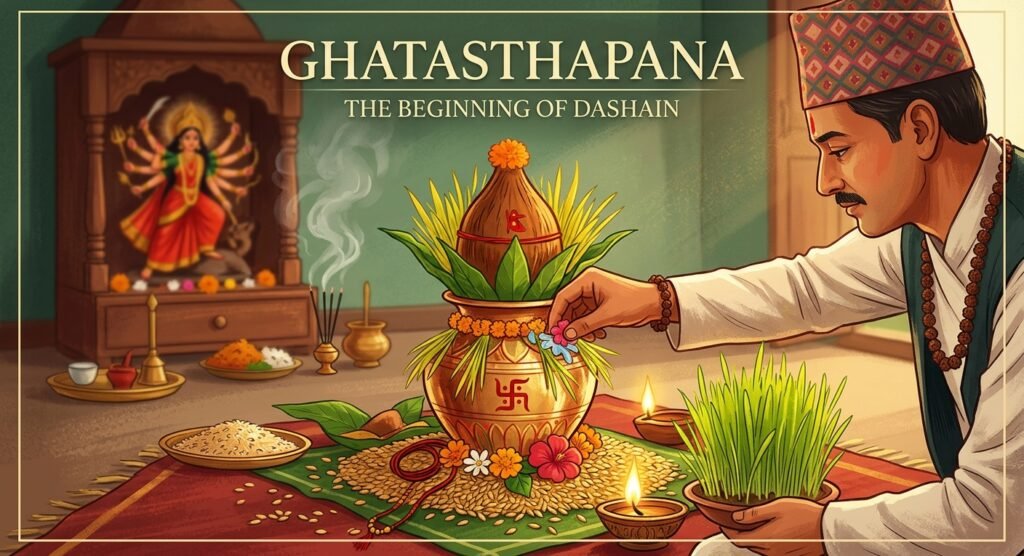
For many households, this ritual creates a connection between daily worship and the celebrations that follow. Jamara is associated with growth, prosperity, renewal and blessings.
Phulpati: An Important Dashain Tradition
One of the traditional periods of Phulpati is the seventh day of Dashain. It involves the ceremonial presentation of sacred flowers, leaves and other plants associated with the worship of Goddess Durga.
The day also is a historically imbued one in the Kingdom of Nepal and there are certain convention involving the old Nepalese kingdom attached with it. Families and communities celebrate Phulpati by engaging in worship, ceremonies and preparations of the festival, depending on their place.
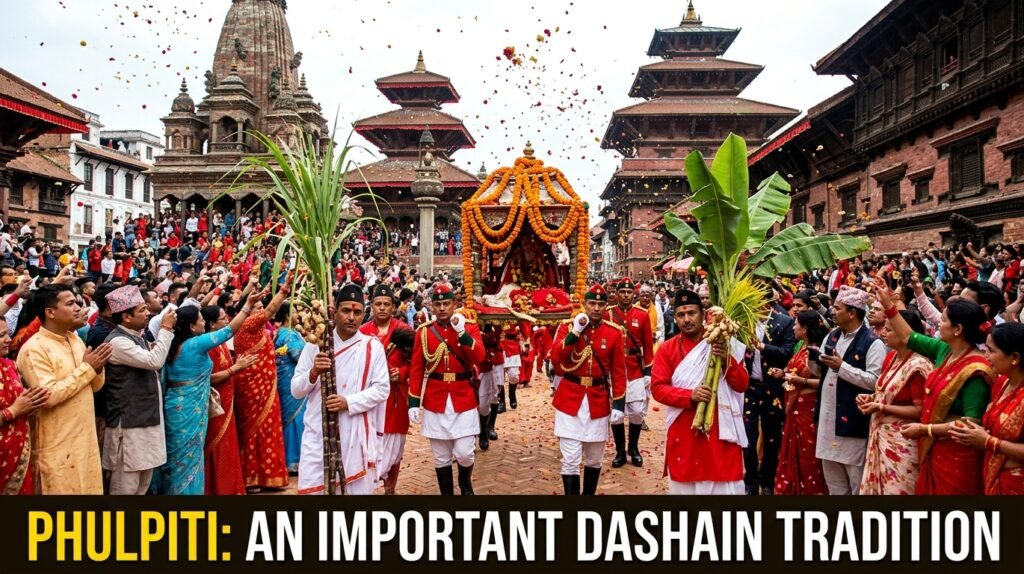
Although its customs can vary, Phulpati remains an important part of Nepal’s Dashain celebrations.
Maha Ashtami: Worshipping Goddess Durga
Maha Ashtami falls on the day of devotion towards Goddess Durga and her powerful avatar. Devotees visit temples and conduct house worship and making offerings in accordance with religious and family traditions.
In some communities, animal sacrifice is practiced and some take vegetarian sacrifices or some other beliefs. These disparities stem from the variations in faith, traditions and rituals of Nepalese families.
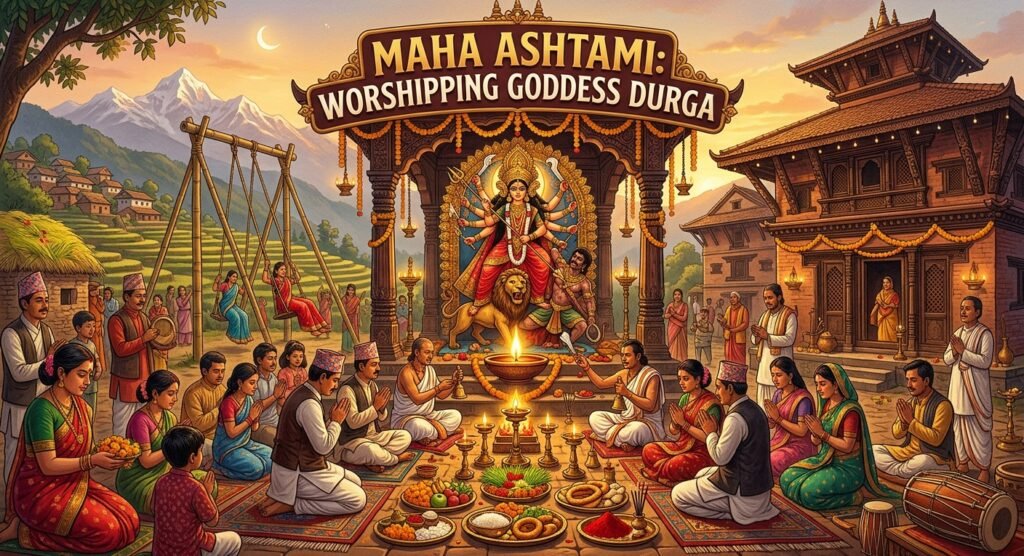
For worshippers, Maha Ashtami is an opportunity to seek protection, express devotion and pray for the well-being of loved ones.
Maha Nawami: The Ninth Day.
Maha Navami is another day of great significance in the religious celebration for Dashain. Families offer worship and give offerings, some traditions are prayers for tools, vehicles, machinery and objects used in daily labor work.
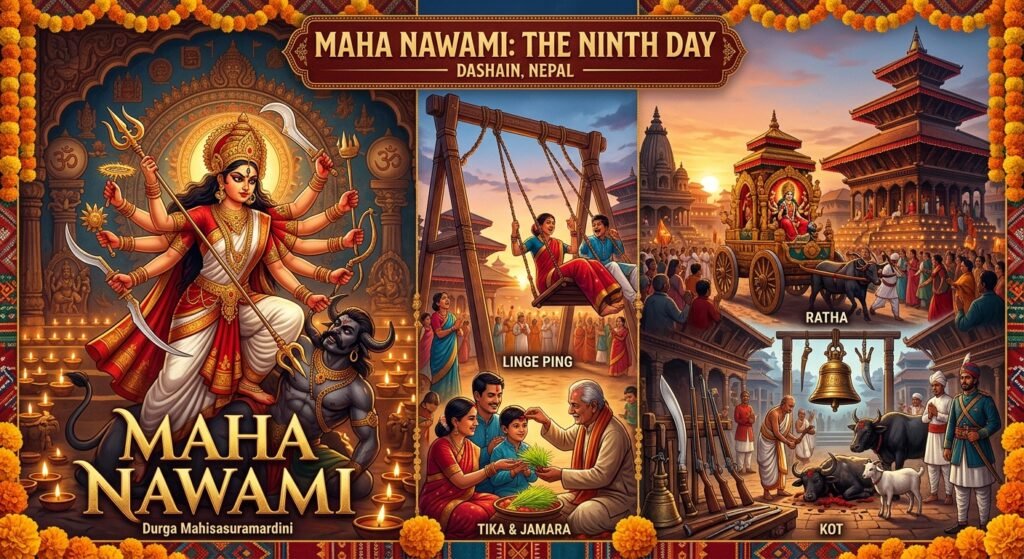
These customs are linked to the strength, protection and gratitude to the things people need in their daily life. There are a few variations in how Maha Navami is being celebrated across Nepal, so the rituals and practices of every home will differ slightly.
Vijaya Dashami: The Main Dashain
Tika Day Vijaya Dashami is one of the most important days of Dashain. It is well known as the principal time to be given tikas and Jamara by the elders.
During the ceremony, an elder put Tika on a younger family member’s forehead and offers blessings for health, happiness, long life and prosperity. Generally, the Tika mixture is made with rice, yoghurt and red vermilion, but different families can make other ingredients available.
Jamara is set on top of the head, behind the ear or in the hair as per family custom. Elders can also present Dakshina, a monetary gift that is traditionally given along with their blessings.
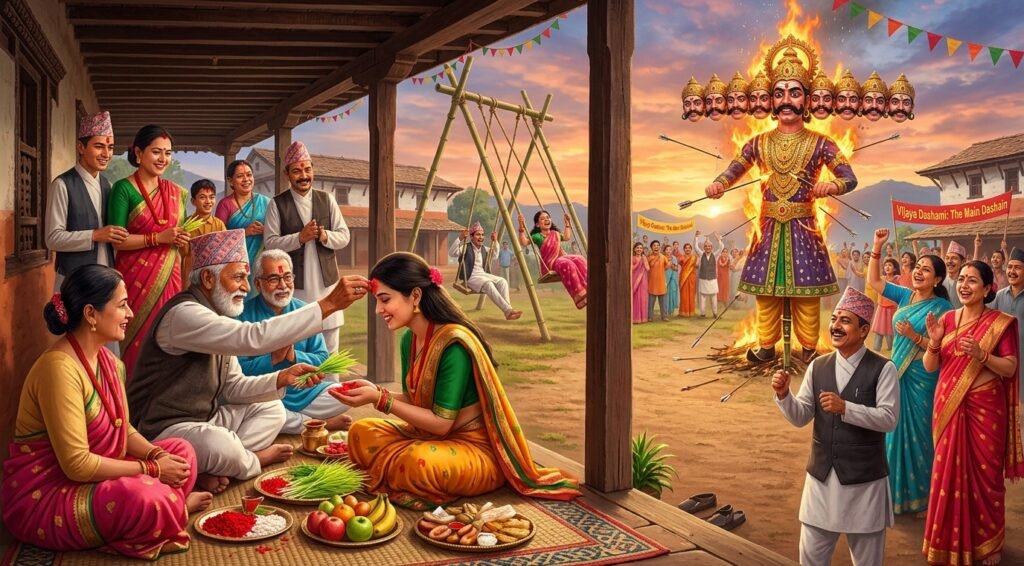
After receiving Tika, family members often share a meal, take photographs and visit other relatives. Some families travel long distances to receive blessings from parents, grandparents or other respected elders.
This is an historically significant day for many in Nepal. It connects together cross-generational relatives with whom family members may not have interacted for months or years.
The proper Tika Saait, or auspicious time, should be ascertained according to the official Nepali calendar or Panchang for that particular year.
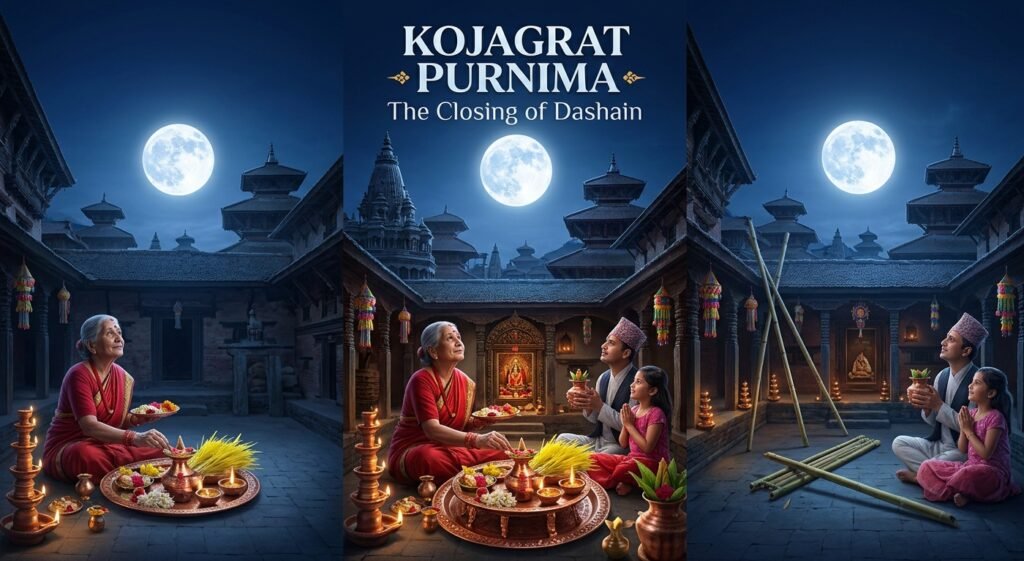
Kojagrat Purnima: The Closing of Dashain
“Kojagrat Purnima” is near the end of the traditional period of Dashain. It is associated with Goddess Lakshmi, who represents wealth and prosperity.
Some families observe night-time worship or other religious customs on this full-moon occasion. The practices differ and the final day of the Feast isn’t always marked in the same way in each household. This is the conclusion of the Dashain festivities and a gradual normalcy for many.
What is the Meaning of Tika and Jamara?
Tika and Jamara are two of the most recognisable symbols of Dashain.
Tika is placed on the forehead as part of a blessing ceremony. It represents good wishes for health, happiness, protection and prosperity. Giving and receiving Tika from an elder also denotes respect and enriches the bond between generations.
Jamara consists of young shoots grown from seeds planted during Ghatasthapana. These are specially cared for and given at the time of Tika dedication. They symbolise growth, renewal, prosperity and blessings.
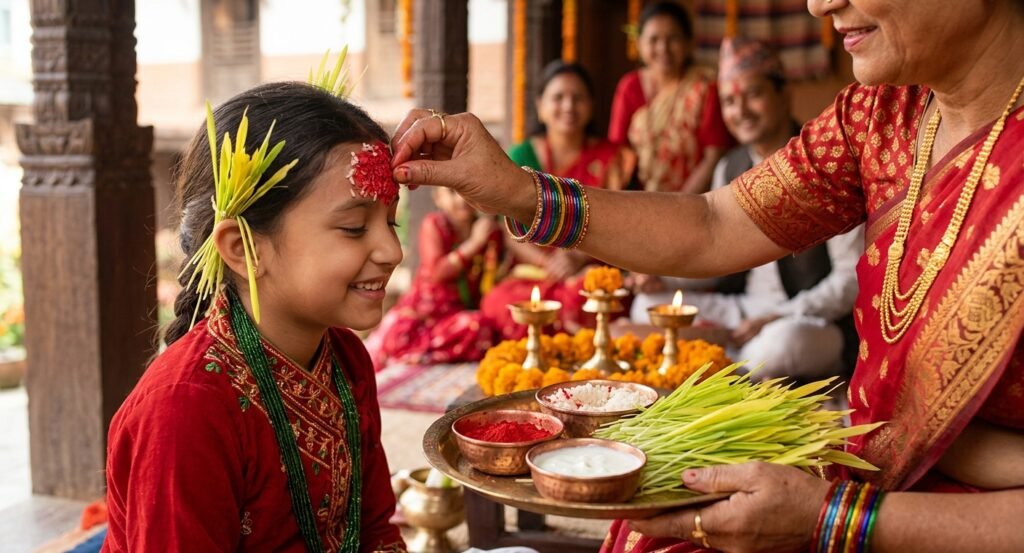
In Dakshina, an elderly person can give to their younger relatives in the form of monetary gift during Tika. Children going to it eagerly and deeper meaning is the blessing, love and bonding among families.
These traditions combine together and hence Dashain Tika is meaningful more than it is a religious ritual. For many in Nepal it is a reminder of their family, a reminder of belonging and of the valuing they’ve got transmitted from generation to generation.
How is Dashain celebrated in Nepal?
The festival of Dashain brings together people from the family and the community, enriching it with religious sentiments. Traditions vary from one region and family to another but there are some that are commonly recognized.
Family Reunions and Travelling Home
Returning home to meet family members is one of the most critical aspects of Dashain. People living in cities may travel to their ancestral villages, while students and workers arrange time off to visit their parents, grandparents and relatives.
As the festival nears, the transportation may become congested. The homecoming is a crucial element of the celebration for many and the trip home is often spent enjoying reconnections with family and revisiting familiar areas.
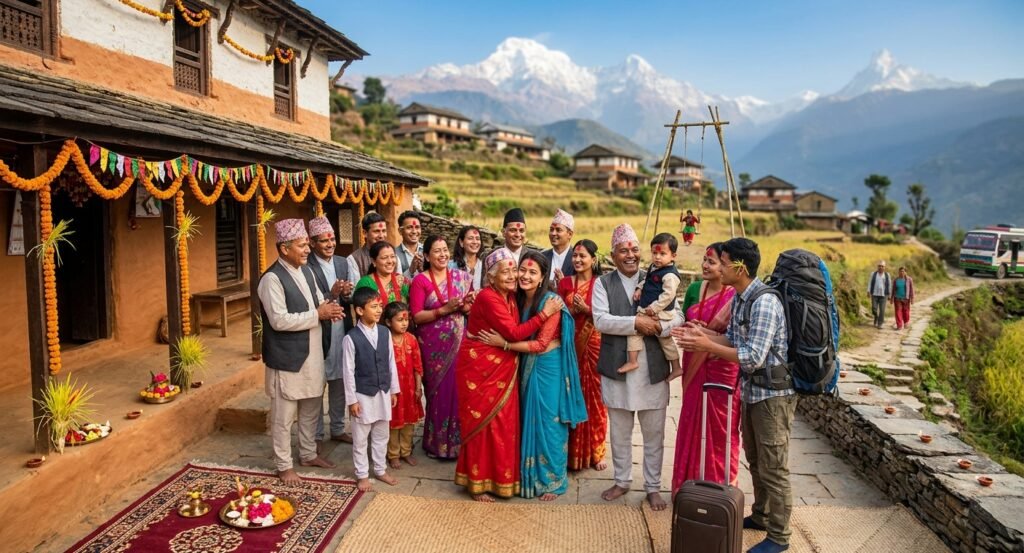
A meal shared, a conversation with Grandparents or a Tika ceremony can be a happy memory. For families apart due to work or school – sometimes these moments are more meaningful in your life than big celebrations.
New Clothes and Shopping
Buying new clothes is a familiar Dashain tradition. Children and adults may choose outfits to wear when visiting relatives or receiving Tika.
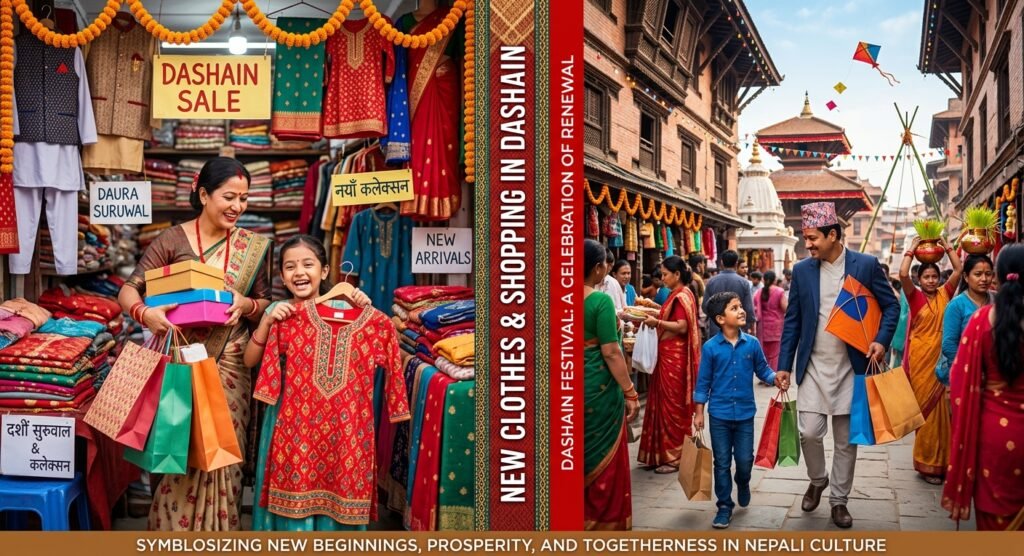
Markets often become busy before the festival as families purchase clothes, food, gifts and household supplies. However, buying new things is not essential to celebrating Dashain. Most people stick to the worship, family time and simple rituals.
Traditional Dashain Food
Food is great important part of Dashain celebration. Special food is cooked for both family and guests, and is different regionally, depending on taste and dietary needs within the family.
Common festive foods include goat curry, rice, sel roti, pickles and sweets. There are families that feast on a large scale while others enjoy simple home-cooked meals.
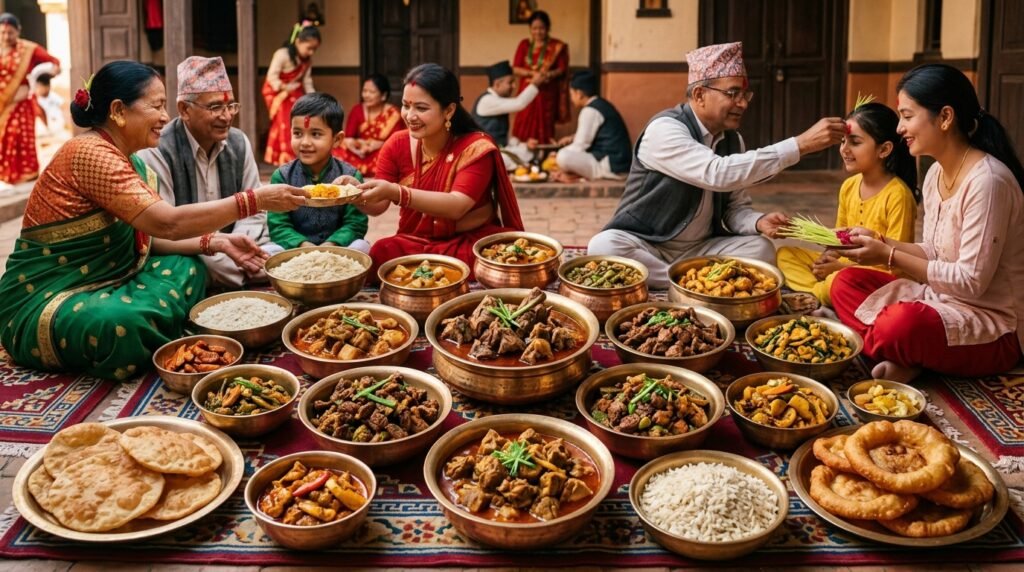
Sharing food is an important part of welcoming visitors and spending time together. Conversations around the dinner table can be just as memorable as the actual meal for many families.
Kite Flying and Bamboo Swings
During Dashain it is a well known tradition to fly kites. Children, teenagers and adults gather outdoors to fly kites, enjoy the autumn weather and spend time with friends.
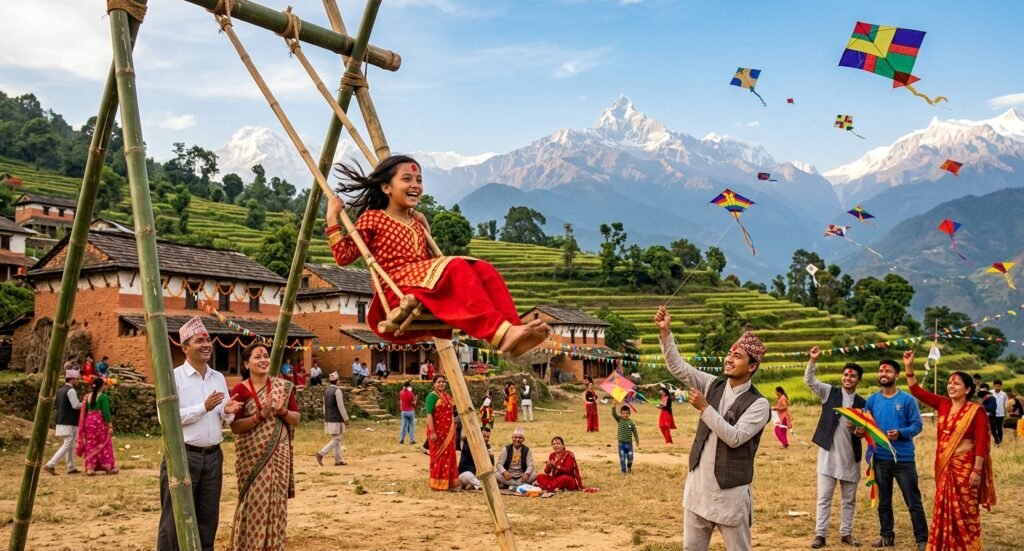
Another common element that many communities have at the festival are the traditional bamboos which are typically known as ping. These swings may be built in villages and neighbourhoods, giving people a place to gather and enjoy the celebrations.
This kind of fun brings an enjoyable aspect to Dashain and enables the younger generation to get in touch with traditions they might have recollected as kids.
Temple Visits and Religious Worship
Many devotees visit temples dedicated to Goddess Durga and other deities during Dashain. Families can also have their own home prayers.
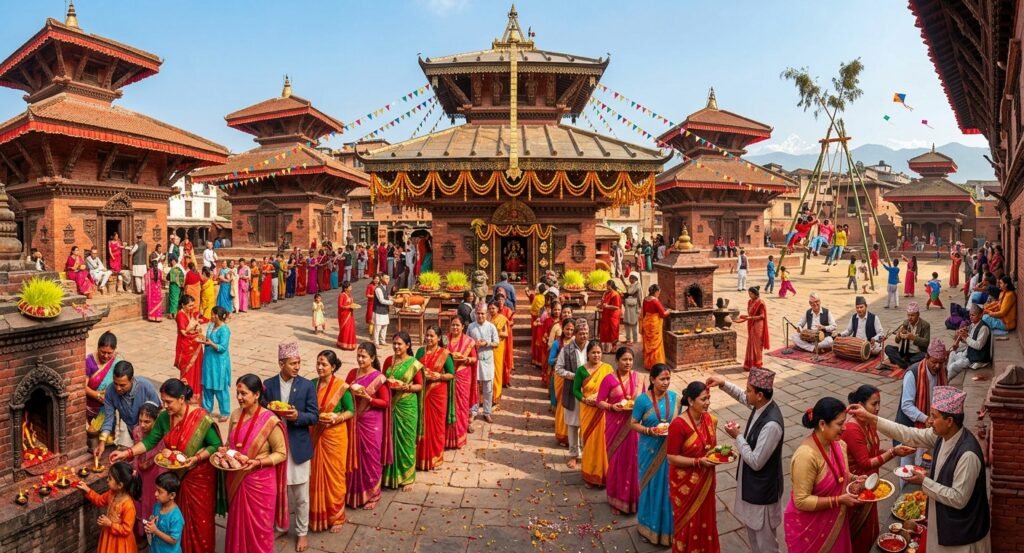
The crucial aspect of the festival, for some, is visiting the temples. Some focus more on the giving of Tika, visiting relatives or sharing families’ meals. These different approaches reflect the variety of ways Nepalis celebrate Dashain.
A Short Essay about Dashain in English
Dashain is one of the most important festivals celebrated in Nepal. It symbolises the victory of good over evil and is associated with the worship of Goddess Durga. Main celebrations of the festival start with Ghatasthapana – planting of the seed for Jamara while concluding at Vijaya Dashami. On this day, elders place Tika and Jamara on younger family members and bless them with health, happiness and prosperity. People also visit relatives, wear new clothes, prepare traditional food, fly kites and enjoy bamboo swings. Dashain brings families together and helps preserve Nepal’s cultural and religious traditions. It is a time of gratitude, hope, respect and togetherness.
Celebrating Dashain Away from Nepal
Many Nepalis live, study or work overseas and cannot travel home for Dashain every year. Despite this, they can still maintain their traditions and celebrate the festival with younger generations.
Families may cook traditional food, hold a ‘Tika’ event, if possible, cultivate Jamara or connect with relatives by video calls from outside. Nepali community groups and cultural associations sometimes organise gatherings where people can meet, share food and celebrate together.
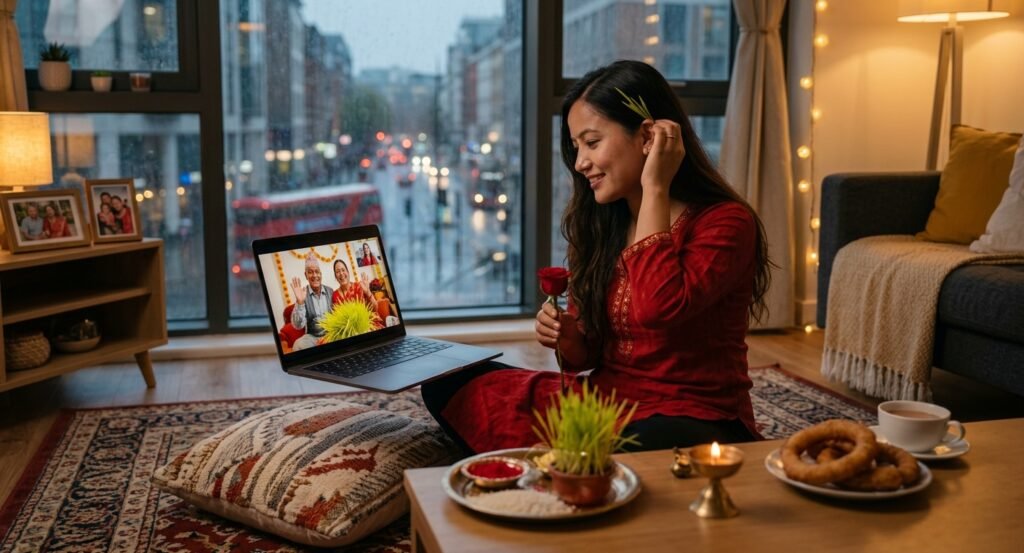
For children growing up outside Nepal, Dashain can be an opportunity to learn about family history, the Nepali language, religious stories and cultural values. Explaining the meaning behind Tika and Jamara can help make the celebration more meaningful.
People who cannot attend a gathering in person can still exchange blessings and good wishes. Relationships may alter with distance, but need to be maintained.
How to Celebrate Dashain Thoughtfully
A little planning can help families enjoy Dashain without unnecessary pressure.
- Travel in advance: Make travel arrangements in advance, especially to a remote hometown: buses or flights or driving, etc.
- Set a reasonable budget: budget clothing, gifts, travel and food to prevent unnecessary financial strain.
- Take time for family: A phone call or video chat can be very special to distant relatives.
- Respect other customs: Religious practices and need for respect of food vary.
- Keep celebrations safe: Keep following road-safety rules and overseeing children around swings and kites, and be careful with cooking or travelling.
- Reduce unnecessary waste: Reuse decorations where possible, avoid excessive food waste and consider sharing meals with neighbours or people who may be spending the festival alone.
A meaningful Dashain does not depend on expensive gifts or elaborate celebrations. Time, thoughtfulness and respect can be just as valuable.
Why Dashain Remains Important to Nepali Culture
The Dashain festival remains significant in Nepal’s cultural landscape, embodying its religious faith, familial bonds, and collective history. It tells stories about people who are brave and how they do good over evil. It provides families an opportunity to meet with close extended family members, recognize elders, and pass on traditions to the younger generations through its customs.
Some will view the festival as an opportunity to visit temples and offer worship there. For others, the most memorable moments are travelling home, preparing food with family, receiving Tika from grandparents or watching children fly kites. These experiences can coexist, reflecting the different ways people understand and celebrate Dashain.
Educating children about how Jamara is planted, the significance of elders giving blessings, and sharing stories of your family can help pass on cultural knowledge to the next generation.
Frequently Asked Questions About Dashain 2083
When is Dashain 2083?
Dashain 2083 falls in October 2026. Ghatasthapana has been noted for 11 October while the principle Tika day, Vijaya Dashami, is noted on 21 October 2026. For the official Tika saait or other date specific observances, please check the date with a reliable Nepali calendar or panchang.
Why is Dashain celebrated?
Dashain is celebrated to honour the victory of good over evil. It’s connected to the victory of Goddess Durga over Mahishasura and in another tradition, Lord Ram over Ravana. The festival is also a time of family reuniting and worship and receiving family blessings.
What is the importance of Jamara during Dashain?
Jamara is grown from seeds planted during Ghatasthapana and offered during the Tika ceremony. It symbolises growth, prosperity, renewal and blessings.
What is Dashain 2083 Tika?
DASHAIN TIKA is a blessing ceremony where the mixture, which is usually mixed from rice, yoghurt and red vermilion, is put on the foreheads of younger relatives. Commonly paired with Jamara, Jamara wishes health, happiness and prosperity.
How long does Dashain last?
The celebration of Dashain traditionally spans 15 days from Ghatasthapana to Kojagrat Purnima (Full Moon). The importance given to individual days and the duration of family visits can vary by community and household.
What are the most important customs of Dashain ?
Traditions are important activities such as planting of Jamara, worshipping of Goddess Durga, Phulpati, Tika, receiving blessings on Vijaya Dashami, visiting the relatives, sharing food, flying kites, enjoying traditional swings etc on Maha Ashtami and Nawami is Maha Ashtami and enjoying the event to Onam on Maha Nawami.
What are the most important customs of Dashain ?
Nepali families in the abroad can celebrate with traditional food ‘Tika and Jamara,’ community gathering and video call with family members in Nepal. They celebrate according to local schedules and the situation and they also keep hold of one of the most important family traditions.
How people celebrate Dashain 2026 in abroad?
Nepali families in the abroad can celebrate with traditional food ‘Tika and Jamara,’ community gathering and video call with family members in Nepal. They celebrate according to local schedules and the situation and they also keep hold of one of the most important family traditions.
Conclusion
During Dashain 2083, you can gain insights into one of the most significant festivals in Nepal’s religious history while learning about its associated customs and cultural traditions within the family. Each practice has its own meaning, from the Ghatasthapana to the growth of Jamara, to the Tika on Vijaya Dashami.
For many in Nepal, the most memorable aspect of Dashain will be the opportunity for reconnection, honors to elders, sharing of food and the transfer of traditions to the next generation. Whether celebrated in Nepal or overseas, Dashain continues to bring people together through faith, family and hope for the future.
[…] Dashain 2083: Traditions, Tika, Jamara and Why Nepal celebrates […]
[…] पढ्न चाहनुहुन्छ भने दशैँ २०८३ को बारेमा हाम्रो विस्तृत लेख […]