

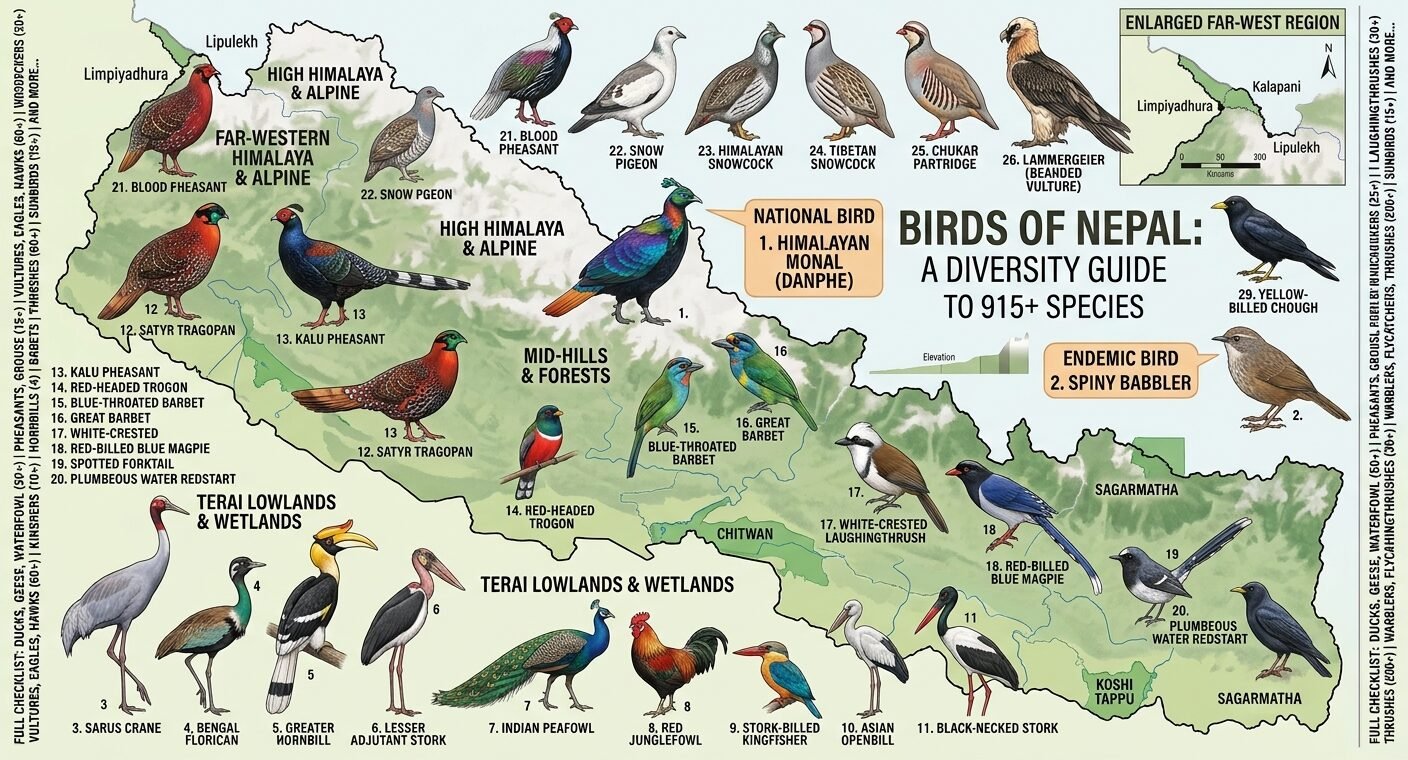
Nepal is home to an extraordinary variety of birds, from the colourful Himalayan monal in the mountains to migratory waterbirds in the wetlands of the Terai. According to birds of Nepal, an official checklist (2025), published by the Department of National Parks and Wildlife Conservation and Bird Conservation Nepal, 902 bird species are recorded in Nepal. This makes the country an important destination for birdwatchers, wildlife photographers and nature lovers.
However, how many of these birds can actually be seen and which are the most interesting, and how to find them? Here is a closer look at Nepal’s bird diversity, notable species, best birdwatching destinations and the conservation challenges facing its feathered wildlife.
How many bird species are found in Nepal ?
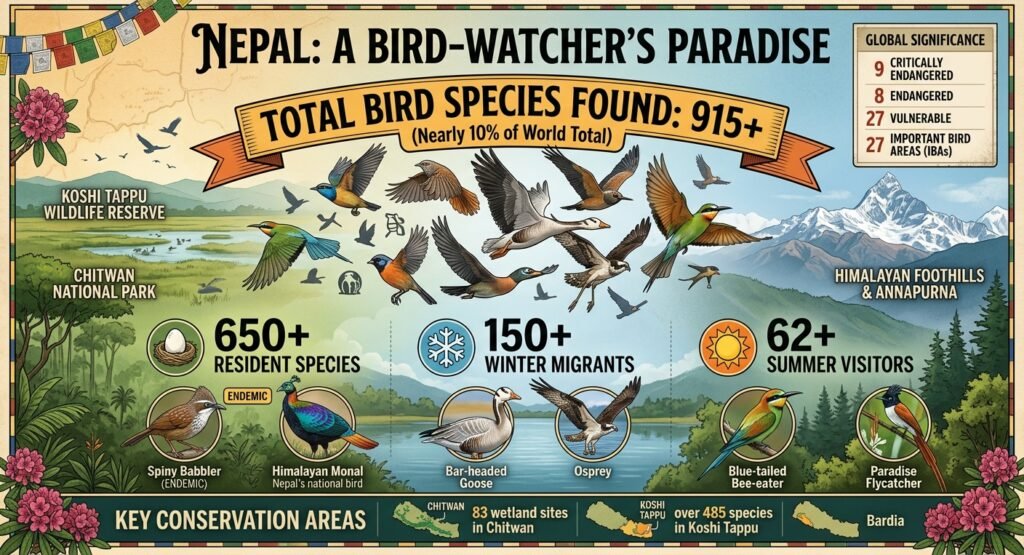
As per the official checklist (2025), there are 915+ recorded bird species in Nepal. The number may vary from one database to another as organisations use different taxonomic classifications and update their records at different times.
For example, Avibase lists 929 species, while Birdlife International lists 823. These are not in contradiction; the figures indicate differences in checklists and classifications used.
| Source | Reported number |
|---|---|
| Birds of Nepal: An Official Checklist (2025) | 915 + |
| Avibase bird checklist | 929 |
| BirdLife International | 823 |
This article will highlight the 2025 official checklist compiled by the Department of National Parks and Wildlife Conservation and Bird Conservation Nepal for the most accurate national estimate.
Nepal’s bird diversity is particularly remarkable considering its relatively small geographical area. It spans lowland grasslands, subtropical forests to temperate hills, alpine meadows and the high Himalayas. Each of these environment offers habitat, foods, and breeding places to a variety of bird species.
you may like to read about Ghodaghodi Lake (घोडाघोडी ताल)
Why does Nepal have So many different birds?
One of the main reasons for Nepal’s bird diversity is its dramatic change in elevation. The land surface goes from warm and humid lowlands to cold mountain areas within a fairly short distance. Each habitat supports different types of birds.
The Terai’s Grasslands and Wetlands
The southern Terai contains rivers, marshes, floodplains, grasslands and forests. These habitats support waterbirds, storks, eagles, kingfishers and many other species.
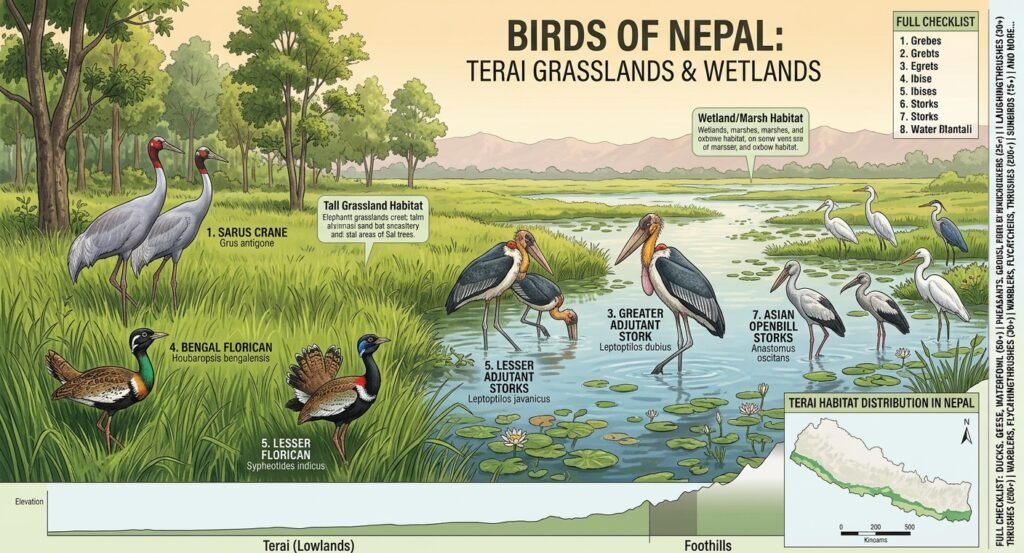
Wetlands play a particular role in the migratory birds which visit the country during the season. The Koshi Tappu Wildlife Reserve has been one of the most eminent places to see wetland birds in the country.
The Hills and Forests
Forests, farmland, streams and woodland edges are found in the middle hills of Nepal. Habitats are home to babblers, bulbuls, flycatchers, woodpeckers and a large array of birds characteristic of the forest environment.
The Kathmandu Valley itself provides good birding in relatively undisturbed habitat at locations like Phulchowki, Godavari and Nagarjun Forest, which are readily accessible from the capital city.
The High Himalayas
This is a very different landscape on higher elevations. Climate of alpine slopes, rocky ground and mountain forests support colder adapted species.
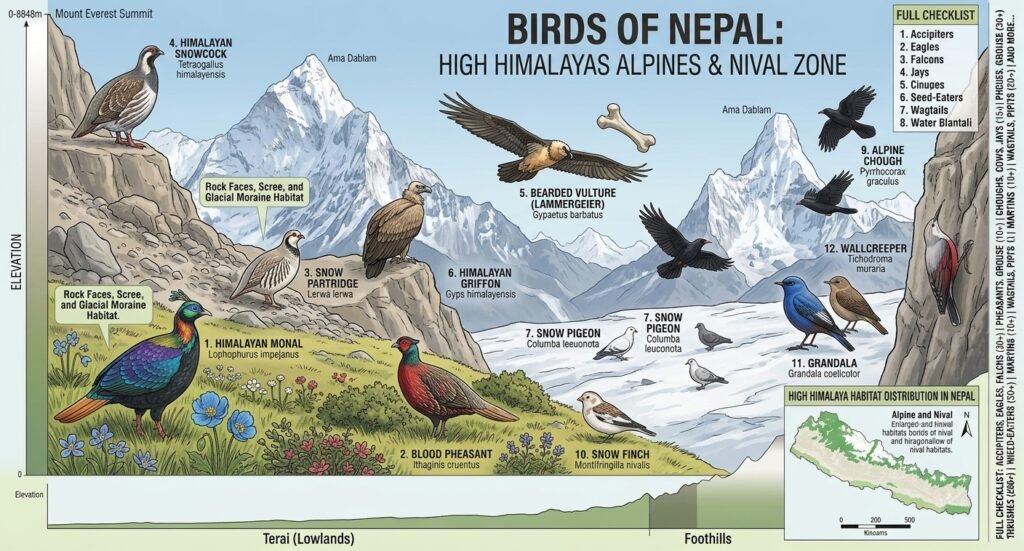
The Himalayan monal is certainly one of the most recognizable examples of a bird species whose name is associated with the country of Nepal. Snowcocks and blood pheasants and mountain raptors are among other high altitude birds.
Seasonal Migration
Only some of the birds recorded in Nepal spend their entire lives in the country. Some species winter here, some migrate here to breed and some migrate through here in warmer seasons. As a result, the species a visitor can observe depends on the season, location and local weather conditions.
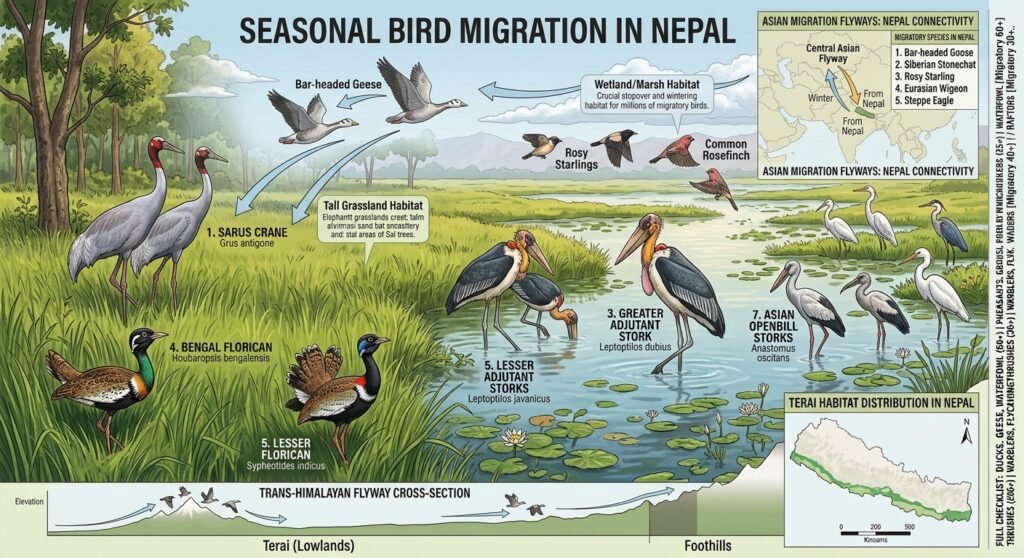
10 Fascinating Birds Found in Nepal
Nepal’s birdlife includes colourful pheasants, powerful birds of prey, rare grassland species and birds that are particularly associated with Himalayan environments.
Himalayan Monal (Danphe)
The Himalayan monal, locally known as Danphe, is Nepal’s national bird. This is one of the most recognisable birds around the Himalayas with its striking iridescent blue, green, purple and copper plumage.
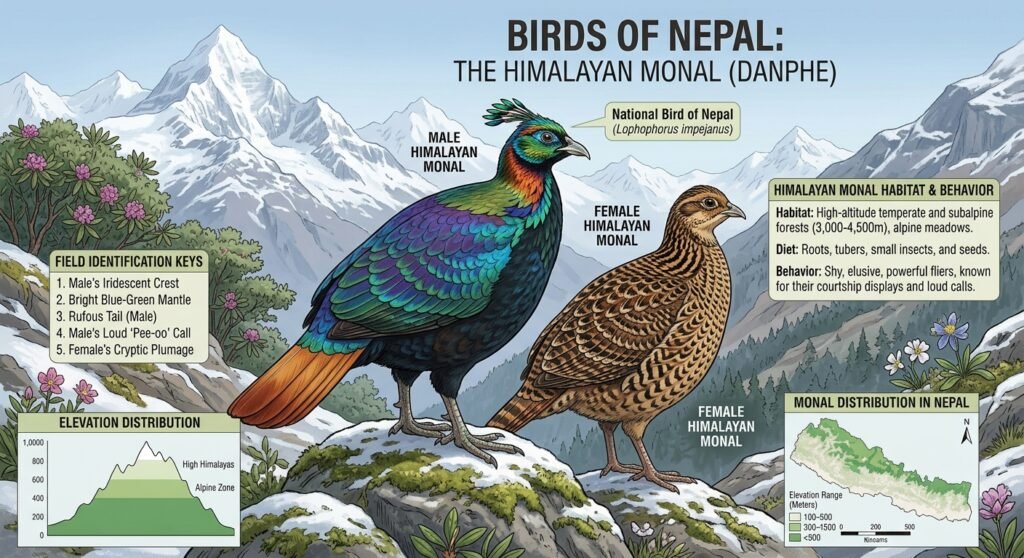
It inhabits mountain forests and alpine slopes, generally at higher elevations. Birdwatchers exploring suitable Himalayan habitats may have a chance to see this spectacular pheasant.
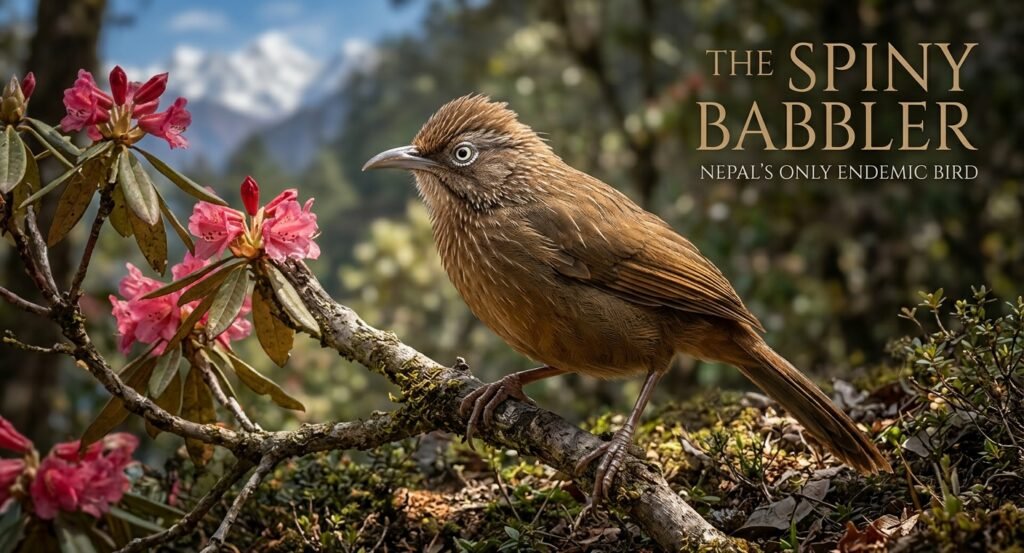
Spiny Babbler
This is because the spiny babbler is an endemic bird species of Nepal:found no where else on earth. This bird has relatively plain brown coloration as compared with the brightly colored Himalayan monal. It is important because of its limited distribution and significant value to the natural heritage in Nepal.
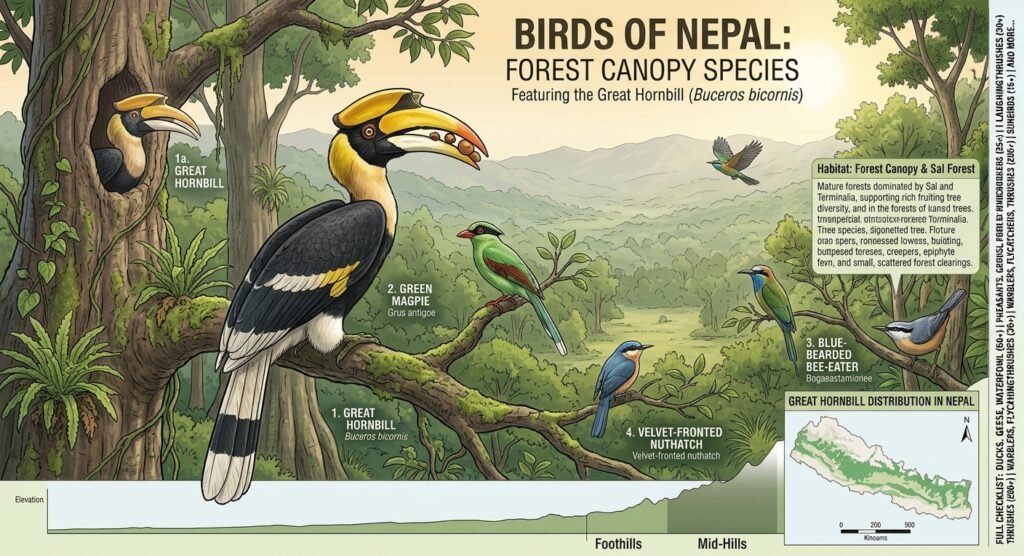
Great Hornbill
Great hornbills are a large forest bird that has a very prominent casque above it, and a yellow and black bill. Its size and striking appearance make it a favourite among wildlife photographers. It has been seen associated with forest habitats in lowlands and foothills where the mature trees offer feeding and nesting opportunity.
Sarus Crane
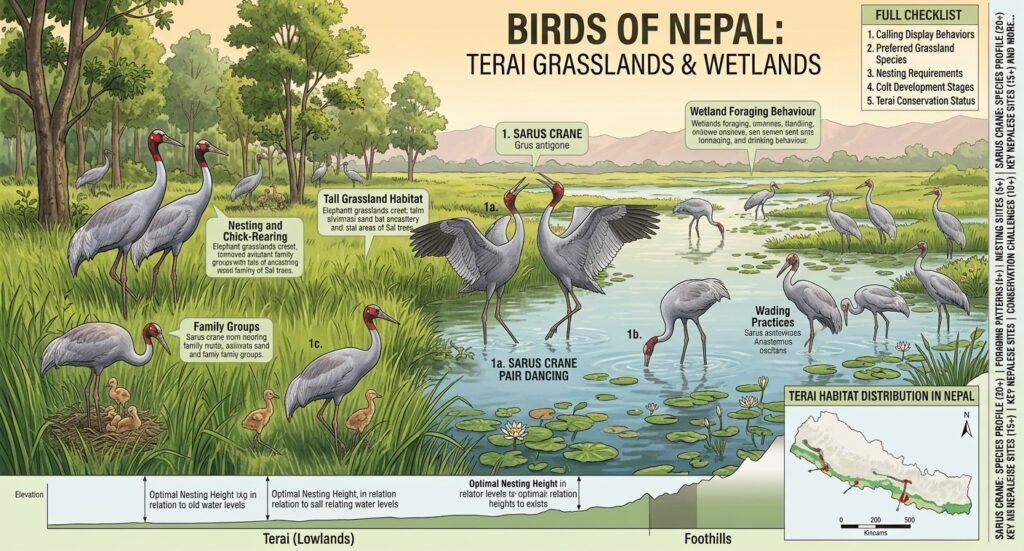
The sarus crane is a tall wetland bird recognised by its long legs, grey body and red head and upper neck. It requires wetlands and open farmland to feed on and nest. The conservation of such habitats is necessary to conserve the species.
Satyr Tragopan
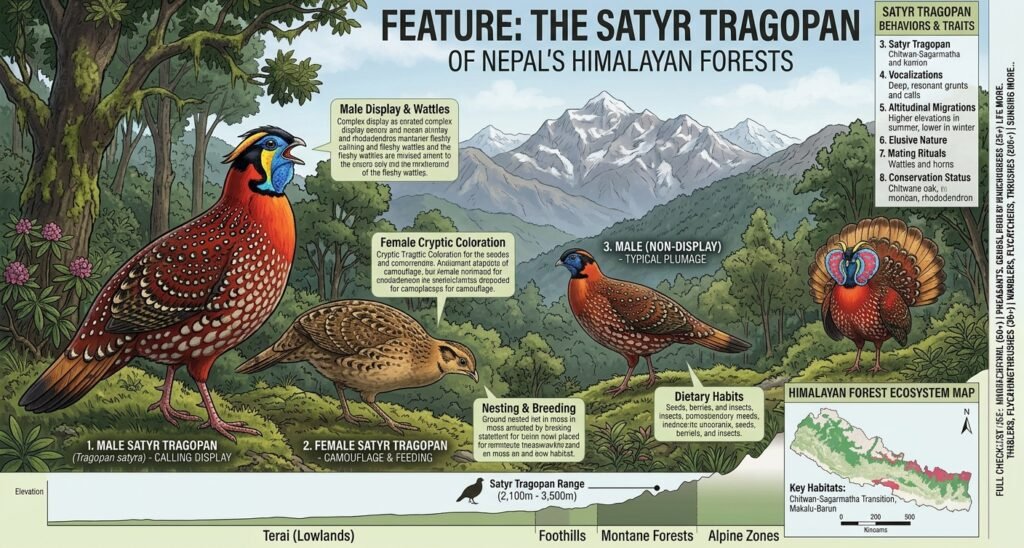
The satyr tragopan is a brilliant pheasant in the habitats of forests of the Himalayas. The male is particularly colourful, with red plumage and distinctive blue facial skin. It is also a notable species from the timber forest birds of Nepal but finding it may be a patience and careful bird watching exercise.
Bengal Florican
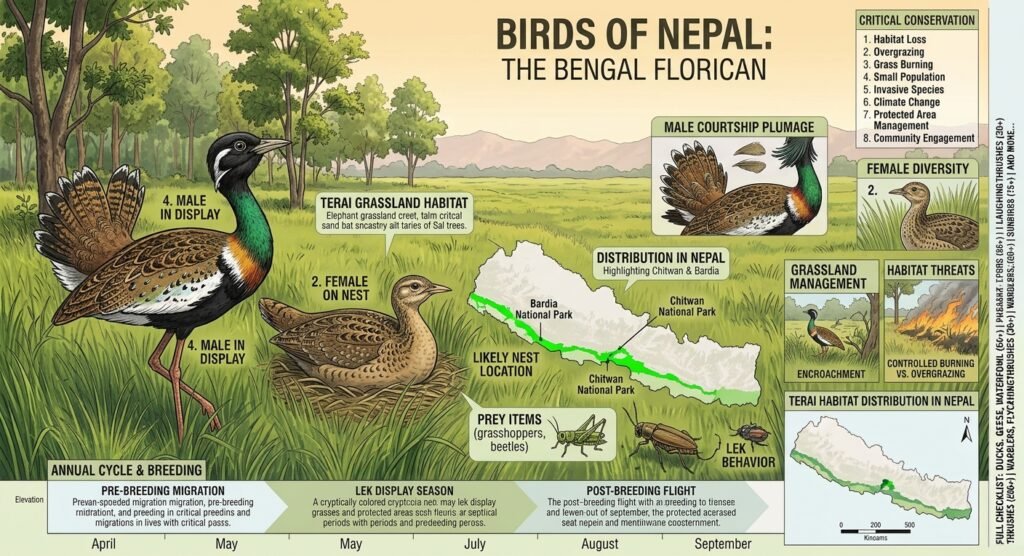
The Bengal florican is a rare grassland bird, found in tall natural grasslands found in the foothills of Himalaya and lowlands around it. Its population has been greatly affected by loss and destruction of its habitat, particularly as grasslands were converted to other types of land use. It relies heavily on ensuring and managing appropriate grassland habitat.
Black Stork
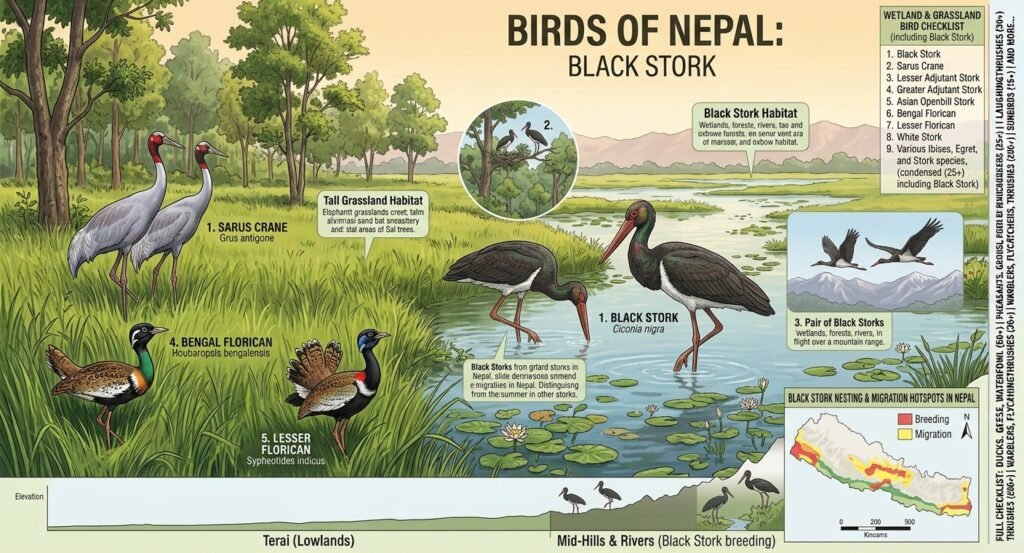
The black stork is a large bird with predominantly dark plumage and a contrasting white belly. It is associated with wetlands, rivers and other suitable feeding habitats. Observations depend on time of year and location, so birders are encouraged to inquire about what has been observed in recent years before dedicating a trip to seeing this species.
Ruddy Shelduck
The ruddy shelduck, sometimes called the Brahminy duck, is a distinctive orange-brown waterbird often seen around lakes, rivers and wetlands. It is particularly interesting to observe when birds gather on open water or along riverbanks. Some birds species move seasonally, making the time of year important for sightings.

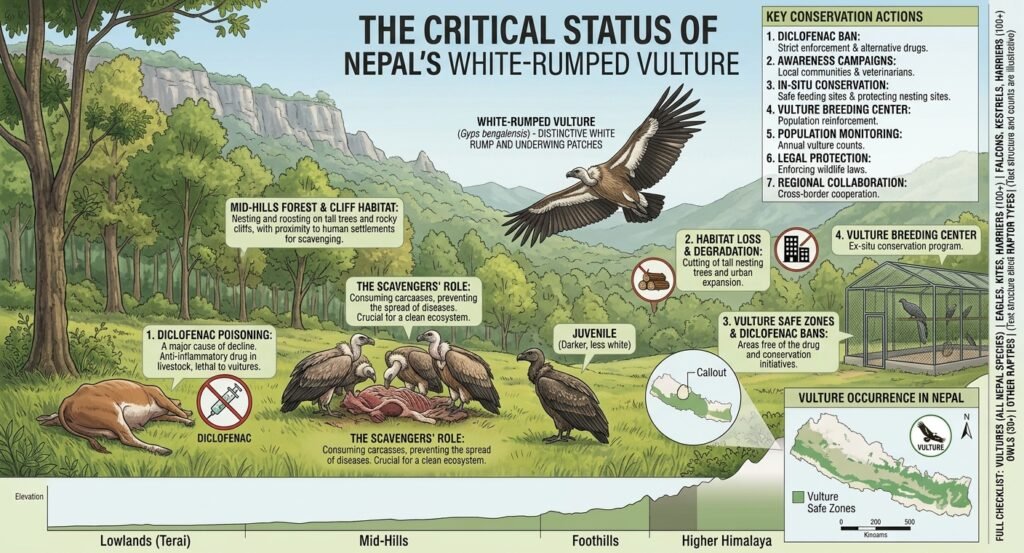
White-rumped Vulture
The white-rumped vulture is a large scavenging bird that plays an important ecological role by feeding on animal carcasses. In South Asia, vultures have seen a dramatic decline in both numbers and diversity despite the use of diclofenac, a veterinary drug, on cattle meat carcasses. Conservation measures and safer veterinary practices are important for their recovery.
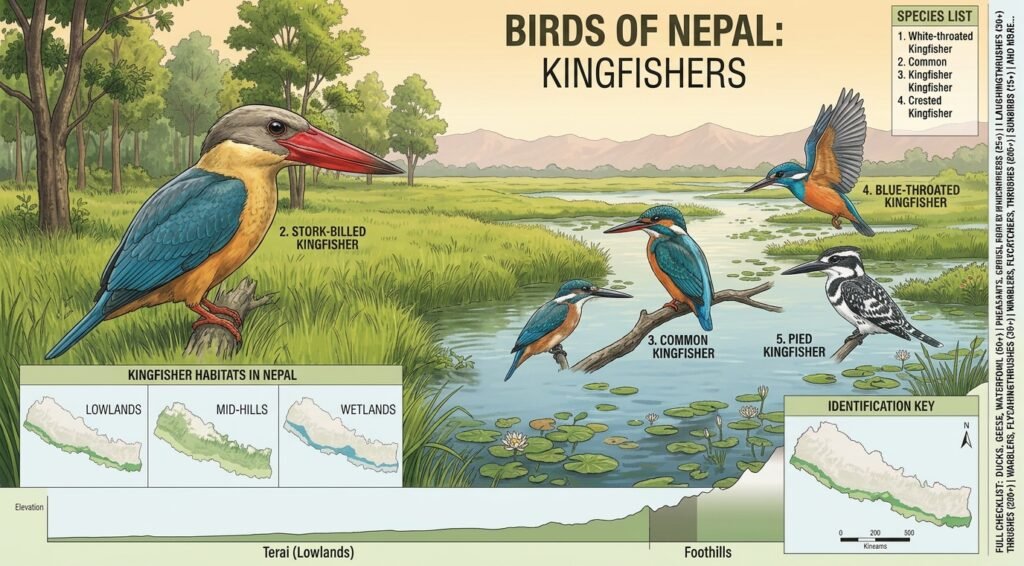
Kingfishers
Several kingfisher species occur in Nepal. Depending on the species, they may be found along rivers, ponds, wetlands and forest streams. Their colourful plumage and rapid dives make them attractive subjects for wildlife photography. Observe them in a quiet manner without disturbing them by sitting near appropriate water sources.
Best Places for Birdwatching in Nepal
Nepal offers birdwatching opportunities in wetlands, forests, protected areas and mountain landscapes. The destination is to your liking depending on what species you would like to see and how much time you have.
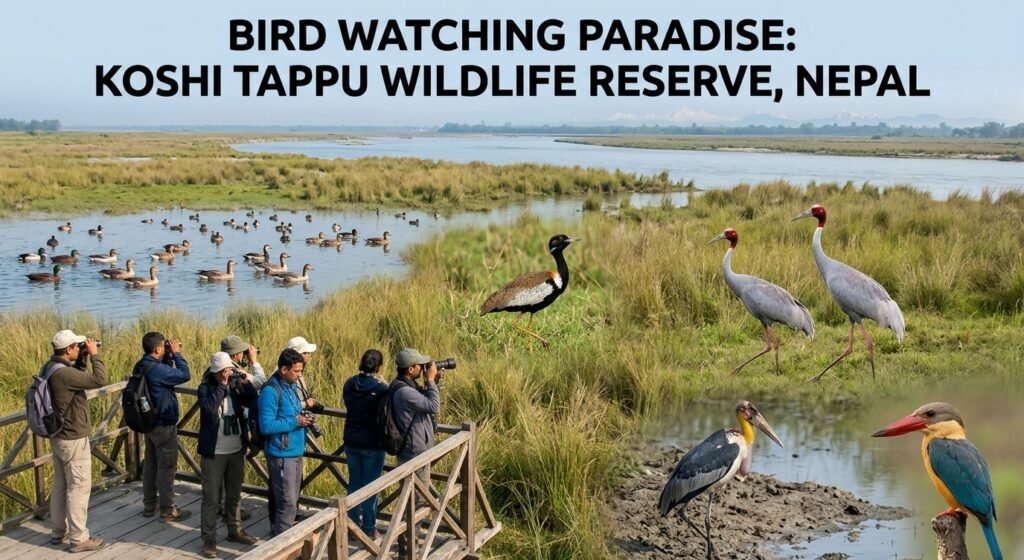
Koshi Tappu Wildlife Reserve
Koshi Tappu in eastern Nepal is famous for its bird species associated with the wetland and grassland habitats. This is a good alternative for people interested in waterbirds, migrating birds and open-country birds.
A separate trip to the reserve and other wetlands are a good idea.
Chitwan National Park
Chitwan combines riverine forests, grasslands and wetlands. The Nepal Tourism Board reports that more than 450 bird species have been spotted in Chitwan National Park.
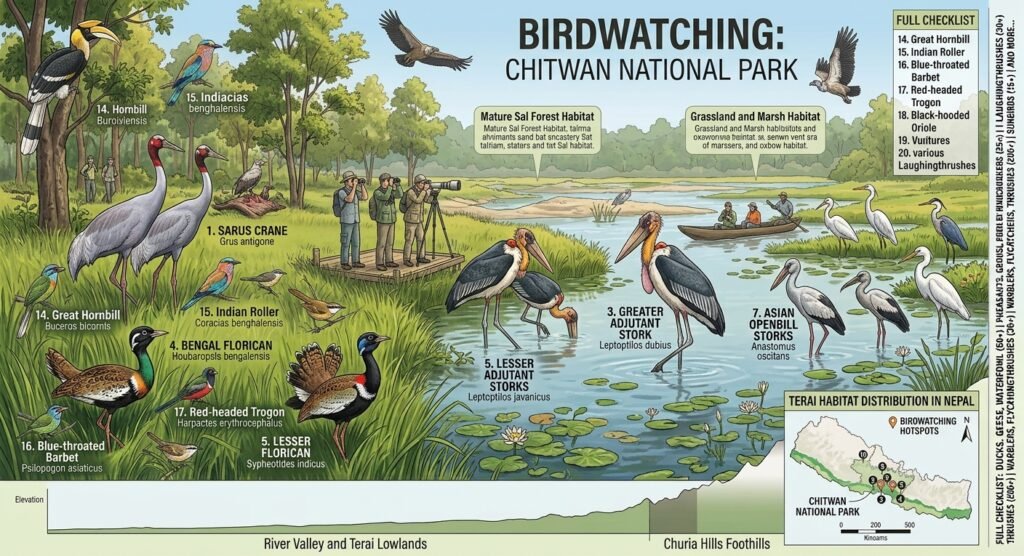
Visitors may encounter kingfishers, hornbills, storks, eagles and numerous other birds. A nature walk or well-organized wildlife outing may be a helpful way to explore appropriate wildlife habitats.
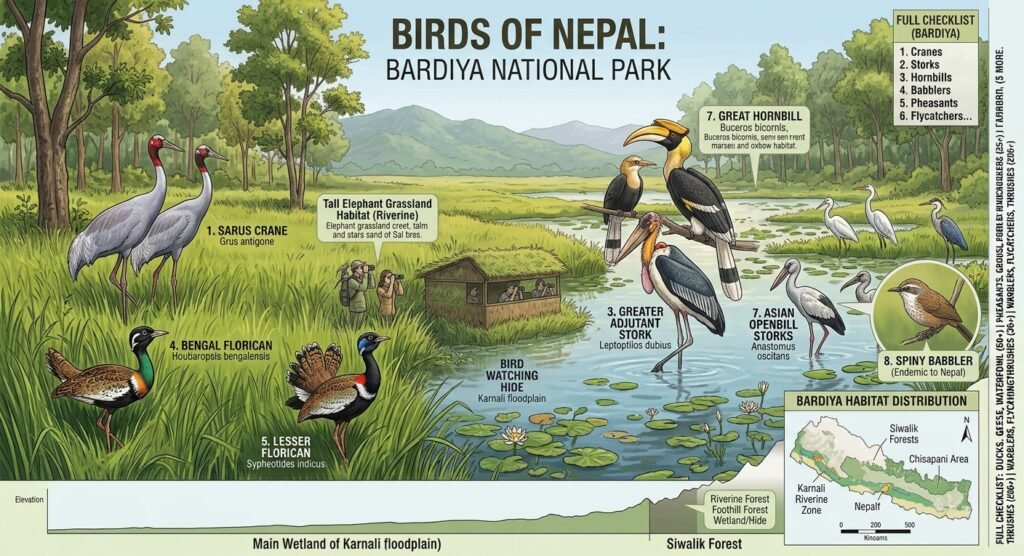
Bardiya National Park
Bardiya is rich in natural habitats in western Nepal, such as forests, river systems, and grasslands. It is a good spot for those wishing to experience general wild animal viewing with a focus on birding.
Species seen are dependent on habitat and season and a local guide might help identify good areas.
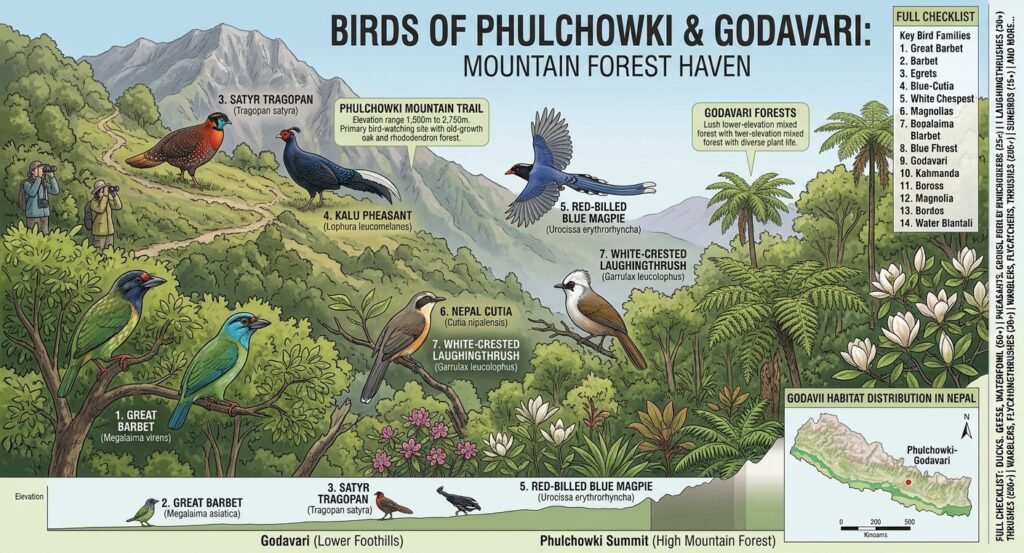
Phulchowki and Godavari
Phulchowki and Godavari are good destinations for exploring forest birds for those staying in Kathmandu. Local birders are familiar with these places for their diversity of forest habitats. Visit early in the morning and many birds will be active during the cooler hours of the day.
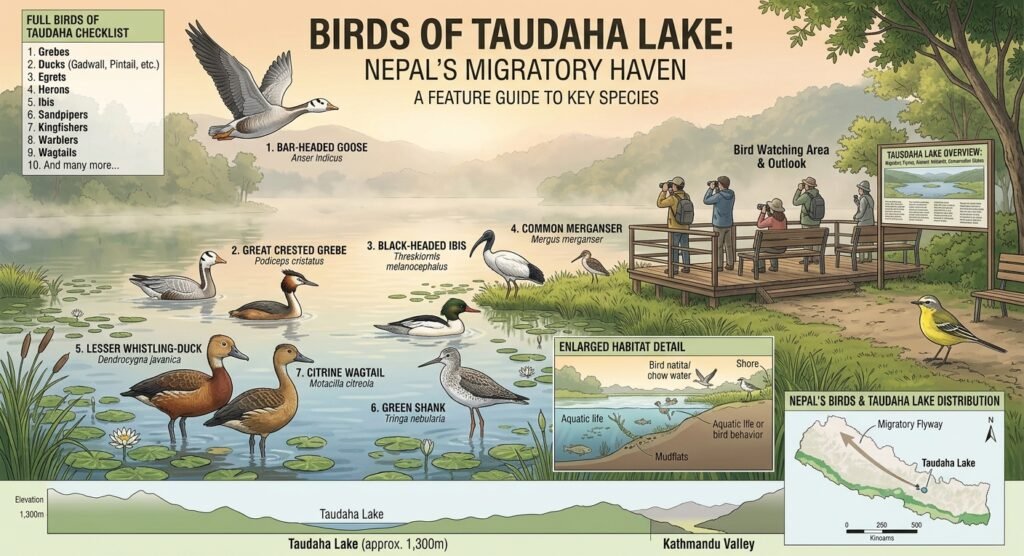
Taudaha Lake
Taudaha Lake, on the southern outskirts of Kathmandu, is a useful place to observe waterbirds, particularly during the winter season. Please maintain a respectful distance from the birds and don’t feed them. Binoculars will help you to observe the animals without disturbing them.
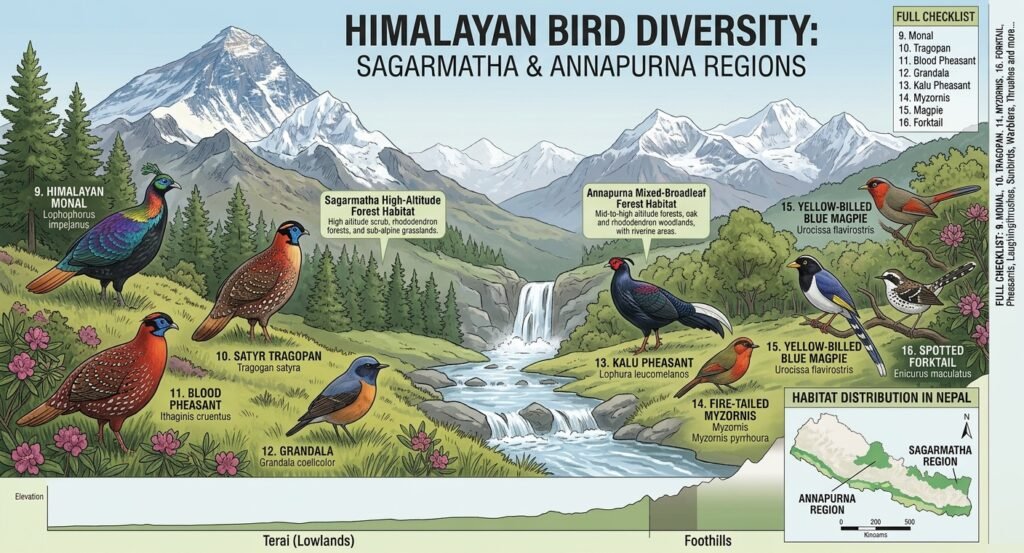
Sagarmatha and Annapurna region
The Himalayan regions offer opportunities to observe mountain birds in forests, alpine habitats and rocky landscapes. These places are particularly popular with those interested in combining trekking with birdwatching. However, an observation requires a certain amount of time, route and season, and some species is hard to find!
What is the Best Time for Birdwatching in Nepal?
This will vary based on the habitat and the species you are looking for.
Fall (September to November): This is a desirable time for travel and outdoor photography because of the clear skies. Migratory movements may also provide interesting opportunities, depending on the location.
Winter (December to February): Winter can be particularly rewarding for observing migratory waterbirds in wetlands and lakes. Taudaha lake and the lowland wetlands are worth considering.
Spring (March to May): Forest birds become active, and spring can be a good time to explore the hills and foothills. Weather and local conditions influence sighting.
Monsoon (June to August): Rain, humidity and difficult trail conditions can complicate birdwatching. The season also causes changes in activity and reproduction trends in birds.
The best way to enjoy this is to pick a destination according to your desired species, verify that the birds are present and visit when it is fairly favorable, and to use a local bird guide with experience.
Why are birds important to Nepal’s ecosystem?
Birds play a role in healthy ecosystems in several ways.
Seed dispersal: fruits eaten by birds are dispersed into the soil to aid forest regeneration.
- Insect control: Many birds feed on insects and other invertebrates, helping regulate their populations.
- Scavenging: Vultures and other scavengers remove carcasses, contributing to ecosystem health.
- Pollination: Some nectar-feeding birds assist with the pollination of flowering plants.
Environmental monitoring: Changes in bird populations can provide useful information about habitat quality and environmental pressures.
Birds also promote nature-based-tourism, environmental education and scientific research. Wetlands conservation protects birds and helps ensure a population of wildlife and people that benefits from healthy natural habitats.
Threats Facing Nepal’s Birds
Despite its remarkable bird diversity, Nepal faces several conservation challenges.
Habitat Loss and degradation
Forests, grasslands and wetlands can be damaged or fragmented by urban expansion, infrastructure development, agricultural conversion and other land-use changes.
Certain species rely on specific habitats and may be most susceptible to the loss of such areas.
Pollution and Poisoning
Pollution may impact feeding and nesting habitat, and pollution from toxic chemicals may pose a direct risk to birds. Birds such as crows, kites, vultures and other scavengers may visit rubbish dumps because they can find leftover food easily. However, the waste can expose them to several dangers.
- Poisoned food: Food contaminated with pesticides, toxic chemicals or other poisons can make birds seriously ill or kill them.
- Plastic waste: Birds can ingest plastic as food or it can strangle them, a cause of blockage or death.
- Chemical contamination: Industrial waste and discarded chemicals can contaminate soil and water and food.
- Polluted water: Birds drinking contaminated water may be exposed to harmful substances.
- Medicines in animal remains: Certain veterinary drugs can poison scavenging birds. For instance, the massive loss of vulture species in South Asia has been attributed to the use of drugs in livestock, particularly diclofenac, which remains in their body).
Is this a threat to birds in Nepal?
Yes, it is a potential threat, particularly where waste is dumped in the open and hazardous materials are not properly separated. However, not every bird that feeds at a rubbish dump is poisoned, and a specific poisoning incident needs evidence before its cause can be confirmed.
For your article, you could add a section called “How Rubbish Dumps and Toxic Waste Threaten Birds in Nepal?.” It would explain impact of unsafe disposal of waste on bird health, survival and biodiversity. One important distinction are you asking about birds being poisoned by rubbish dumps generally, or about a particular incident in Nepal where birds died after eating food from a dump yard?
Climate Change
Changing temperatures and rainfall patterns may alter the distribution of suitable habitats, food availability and seasonal migration patterns. Responses vary among species and sites.
Disturbance
Excessive noise, uncontrolled tourism and disturbance around nesting or feeding areas can affect birds’ behaviour. These risks are minimized by responsible birding.
The 2025 official checklist has 172 bird species deemed nationally threatened, and 40 are deemed globally threatened. The statistics demonstrate the need for conservation even in a country with so much biodiversity.
How can you help protect birds in Nepal?
Major conservation projects aren’t the only way to protect birds. Minor responsible actions can make an impact.
- Avoid disturbing nests, chicks and breeding colonies.
- Never capture wild birds or purchase illegally traded wildlife.
- Keep plastic and other waste away from rivers, lakes and forests.
- Support responsible ecotourism and conservation organisations.
- Take a photograph of a bird at a safe distance using non-repeated playback calls and other peaceful methods.
Report quality sightings of birds to reputable citizen science groups or bird conservation organisations.
Birdwatchers can also contribute valuable information by recording observations accurately, including the date, location and identification details.
Frequently asked Questions about Birds in Nepal
How many bird species are found in Nepal?
According to the official checklist of Nepal for 2025, there are 915+ bird species in Nepal. Different databases will report different numbers, due to varying taxonomies and changes to checklists.
What is the national bird of Nepal?
Danphe, or the Himalayan Monal is the national bird of Nepal. It is famous for the male’s colourful, iridescent plumage.
Which bird is found only in Nepal?
The spiny babbler is endemic to Nepal, where it is only found in the country.
Where is the best place for birdwatching in Nepal?
Koshi Tappu Wildlife Reserve is a leading destination for wetland and migratory birds. Chitwan National Park, Bardia National Park, Phulchowki, Godavari and Taudaha Lake are also worthwhile options.
What is the best season to see migratory birds in Nepal?
Winter is a particularly useful season to look for migratory waterbirds in suitable wetlands and lakes. Different species can be best seen at different times and places.
Are there endangered birds in Nepal?
Yes. The 2025 checklist lists 40 bird species as threatened at a global level and 172 species at a national level. The conservation status of individual species varies, so current assessments should be consulted when discussing a particular bird.
Why does the number of bird species in Nepal vary between websites?
Different organisations use different taxonomic authorities and may update their checklists at different times. The total recorded may change as a result of species splits, classification changes, and new national records.
Final Thoughts
Nepal has 902 bird species, and the diversity of these species has been a source of wonder in its varied landforms ranging from wetlands on the Terai to forestlands of the middle Himalayas and the high Himalayas. The Himalayan monal, spiny babbler, great hornbill, sarus crane and many other species illustrate the country’s importance for birdwatching and wildlife conservation.
Nepal is a great resource for anyone looking to see birds in protected areas, community landscapes and within the reach of major cities. The challenge for conservationists and nature lovers is to make sure that forests, wetlands and grasslands are healthy enough to sustain the birds for generations to come.
Recognising the birds of Nepal is a good way to explore the country’s natural heritage, whether you are an experienced wildlife watcher or you are just curious.
[…] you may also like to read about How many bird species are found in Nepal? A Complete Guide […]