

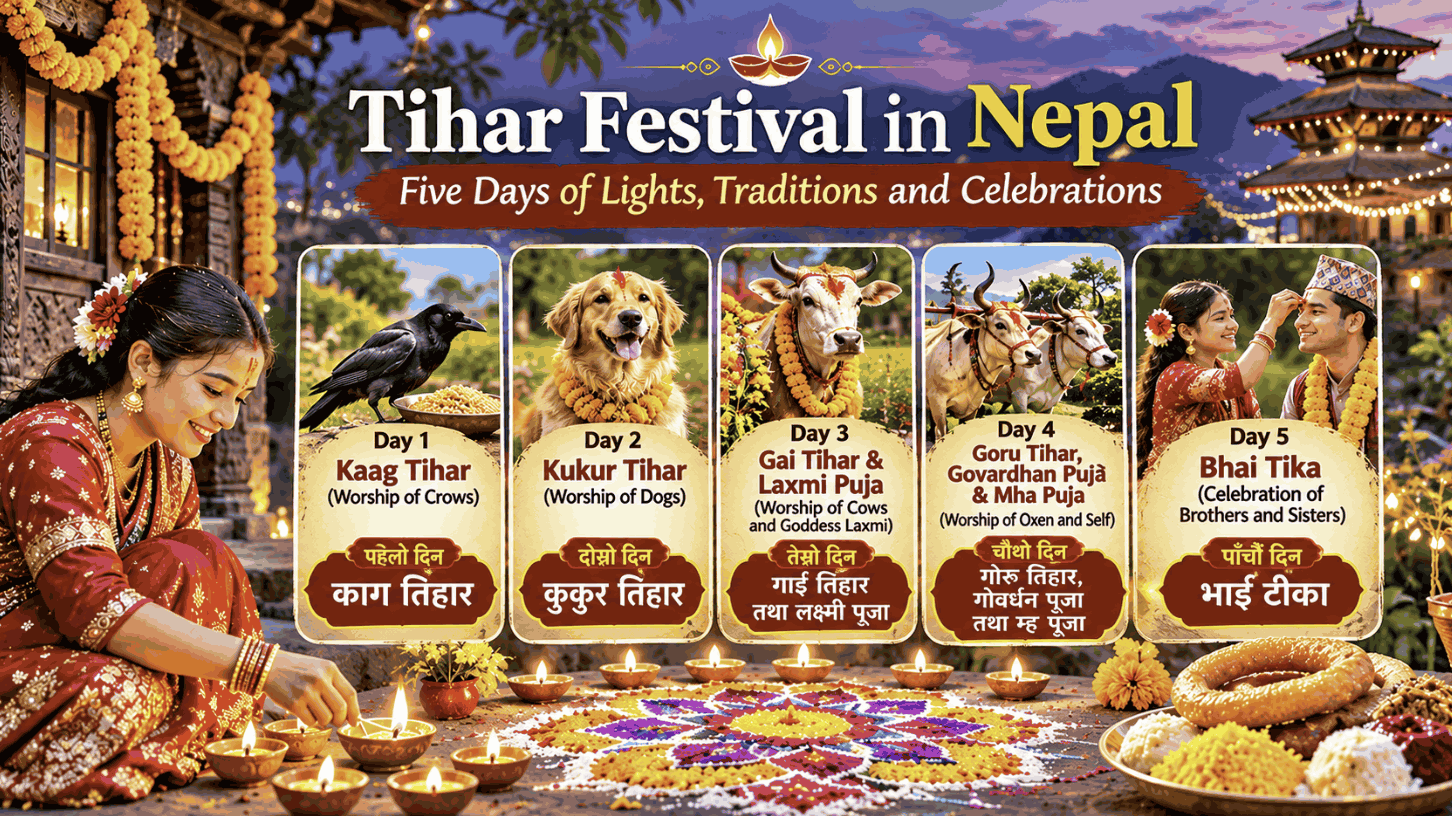
Tihar festival in Nepal, also known as Deepawali or Yamapanchak, is one of the biggest Hindu festivals in Nepal. Popularly known as the festival of lights, Tihar is celebrated over five days with the worship of crows, dogs, cows and oxen, prayers to Goddess Laxmi, and celebrations of the bond between brothers and sisters.
The celebration typically happens during the month of Kartik after Dashain (in October/November). During Tihar, homes are cleaned and decorated with marigold garlands, colourful rangoli, oil lamps and electric lights. Families prepare traditional foods such as sel roti, sweets and other festive dishes.
While festivals primarily focussed on religious rituals gather animals, nature, family relationships, and community celebration, Tihar is a festival that brings all together. Deusi-Bhailo songs, traditional music, dancing and the exchange of gifts make Tihar an important part of Nepali cultural life.
What is Tihar and why it is celebrated in Nepal?
Tihar is a five-day Hindu festival celebrated throughout Nepal. It is also known for the Yamapanchak as several of its rituals are traditionally associated with the Hindu god of death, Yamaraj. Each day has a different religious meaning. People worship crows and dogs, honour cows and oxen, welcome Goddess Laxmi into their homes and celebrate the relationship between brothers and sisters.
In Tihar, one of the core principles is that of respecting living things. Animals that have close connections with human life are honoured through food offerings, garlands and religious rituals. The festival also celebrates prosperity, happiness, family unity and the victory of light over darkness. At night, homes and neighbourhoods glow with rows of traditional oil lamps called diyos.
Five days of Tihar festival in Nepal
The five days of Tihar have different names, customs and religious significance.
Kaag Tihar – worship of crows
Kaag Tihar marks the beginning of the Tihar festival in Nepal. On this day, people worship crows and offer them food such as rice, sweets and other traditional dishes. According to Hindu beliefs, crows are considered messengers of Yamaraj. People believe that feeding them helps prevent sorrow and misfortune and brings good news to their families.
Food is left on the rooftops, terraces and courtyards for the crows. The ritual reflects the traditional belief that birds also have a connection with the spiritual world.
Kukur Tihar – worship of dogs
Kukur Tihar is dedicated to dogs, which are respected for their loyalty, companionship and protective nature. People decorate dogs with marigold garlands, apply red tika to their foreheads and offer them special food. Both pet dogs and street dogs are included in the celebration.
Dogs are known as the guardians of Bhairav in Hindu mythology and are also associated with Yamaraj. Kukur Tihar reminds people to appreciate the role dogs play in human life.
Gai Tihar and Laxmi Puja – worship of cows and Goddess Laxmi
The worship of cows and Goddess Laxmi is among the most important parts of Tihar. During the day, people worship cows, which are traditionally associated with Goddess Laxmi, purity and prosperity. Laxmi Puja is conducted by the families at night time to welcome the goddess of wealth.
People clean their houses, decorate entrances with rangoli and create footprints leading towards their homes to symbolically invite Goddess Laxmi inside. Oil lamps, candles and colourful lights are placed around doors, windows and balconies. Businesses and households also perform prayers for financial success and prosperity.
Goru Tihar, Govardhan Puja and Mha Puja
On the fourth day, people traditionally worship oxen, a vital asset for agriculture in Nepal. Farmers honour oxen for their contribution to farming and everyday life. In many Hindu households, Govardhan Puja takes place on the same day, too.
The Newar community celebrates Mha Puja, a ritual of worshipping oneself. It is also the beginning of the Nepal Sambat New Year. The ceremony involves religious offerings and prayers for good health, prosperity and a long life.
Bhai Tika – celebration of brothers and sisters
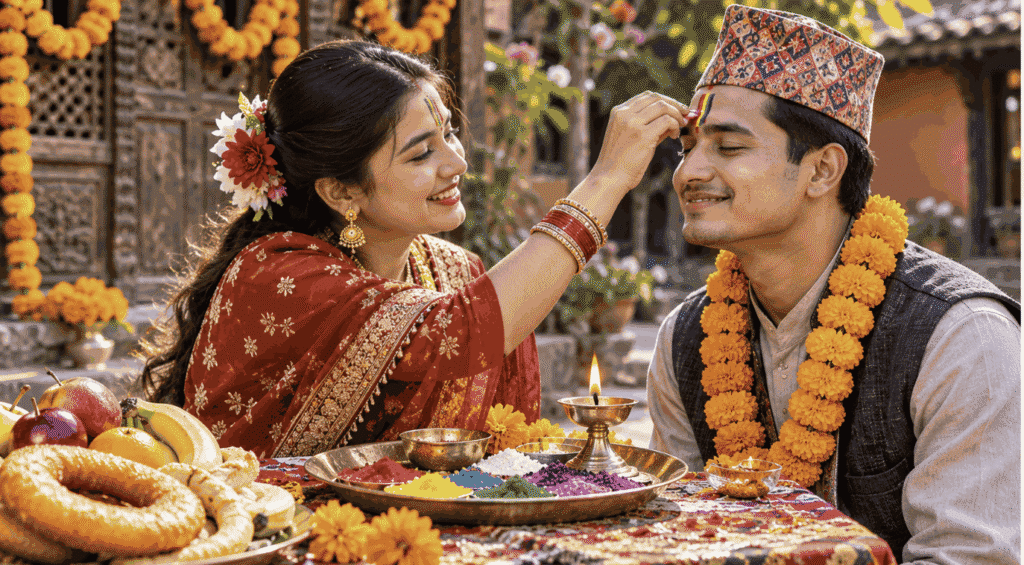
Bhai Tika is the last day of Tihar which celebrates a brother-sister bond. On this day, sisters apply colourful seven-coloured tika, known as saptarangi tika, to their brothers’ foreheads. They offer garlands, sweets and prayers for their brothers’ long lives, good health and happiness.
Brothers give gifts and blessings to their sisters in return. Families sit down to celebration at meals and togetherness at the table. The tradition also ties in to the Hindu tale of the God Yamaraj and his sister Yamuna, whose mantras are for longevity and safeguarding.
Deusi-Bhailo: the musical tradition of Tihar
Deusi-Bhailo is one of the most enjoyable traditions of the Tihar festival in Nepal. During the celebrations, groups of children, young people and adults visit neighbourhood homes singing traditional songs and performing dances. Bhailo is traditionally performed by girls and women, with Deusi being more associated with boys and men, although in modern times these practices are becoming more flexible.
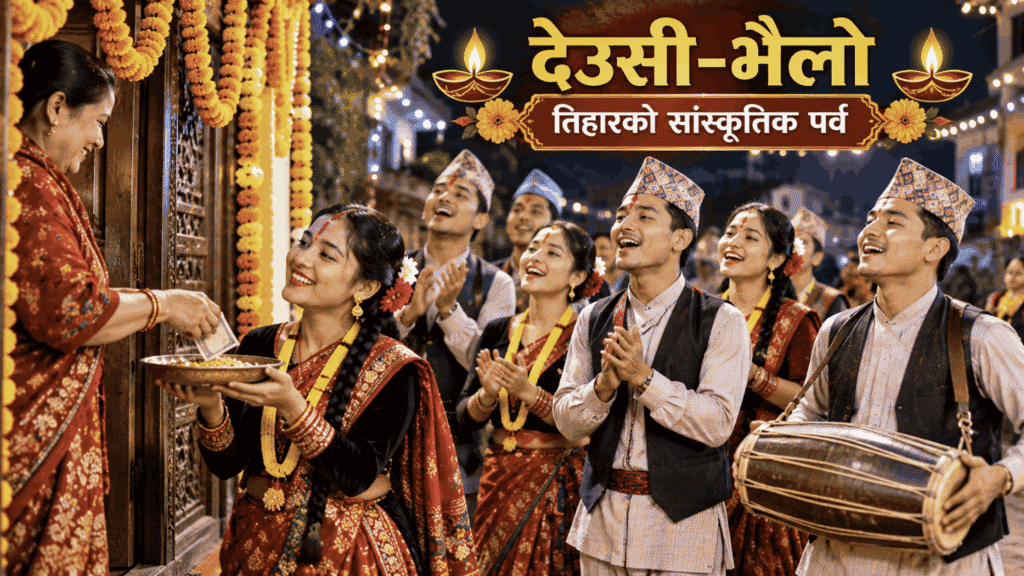
Householders welcome the performers and offer money, rice, fruits, sel roti and sweets. In return, the groups sing blessings and good wishes for the family. There are also many communities that dedicate the raised funds to local clubs, schools and community events.
Traditional foods and decorations during Tihar
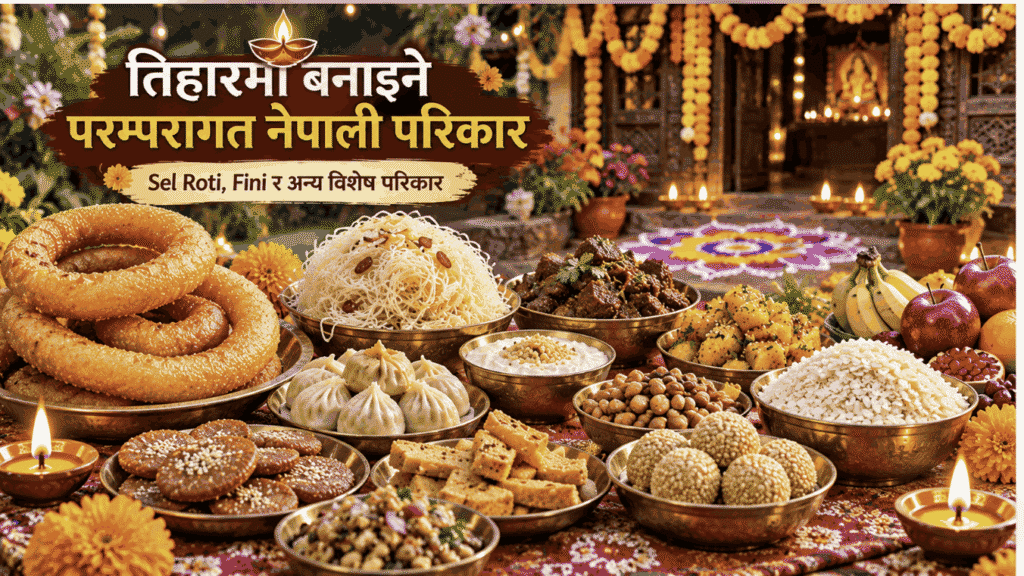
Food and decorations are an important part of Tihar celebrations. Family gathers and presents sel-rotis, sweets, fruits and traditional foods to their family and guests.
Marigold flowers are used to decorate doors, windows and prayer areas. Beautiful and colourful rangoli designs brighten up the entrance and the classic clay lamps light up the house during the celebration of Laxmi Puja. Special dishes are also made in many families to eat – and some even share sweets with their neighbours.
When is Tihar celebrated in Nepal?
Tihar is celebrated in the Nepali month of Kartik (usually October/November). The exact dates change every year according to the lunar calendar. The festival is typically observed over five days but the pattern of some observances may differ based on the overall calendar and traditions.
The Tihar festival is also celebrated by Nepalis who live outside Nepal, maintaining their religious and cultural practices outside the country.
Frequently asked questions about Tihar
How many days is Tihar celebrated in Nepal?
Tihar is traditionally celebrated over five days, with each day having its own religious and cultural significance.
Why Tihar is also called the festival of lights?
People light traditional oil lamps, candles and decorative lights to welcome Goddess Laxmi and celebrate the victory of light over darkness.
What is the importance of Deusi-Bhailo during Tihar?
Deusi-Bhailo is a traditional singing and dancing activity in which groups visit neighbourhood homes, perform songs and receive gifts or food.
Which goddess is worshipped during Tihar?
Goddess Laxmi, the Hindu goddess of wealth and prosperity, is worshipped particularly during Laxmi Puja.
What is the difference between Dashain and Tihar?
Dashain is primarily associated with Goddess Durga and the victory of good over evil, while Tihar focuses on animal worship, Goddess Laxmi, family relationships and the festival of lights.
Tihar is much more than Nepal’s festival of lights. It combines religious beliefs with the worship of animals, family bonding and community traditions into five days of festivities.
From feeding crows during Kaag Tihar and honouring dogs during Kukur Tihar to welcoming Goddess Laxmi and celebrating Bhai Tika, each day carries its own meaning.
Through Deusi-Bhailo, traditional food, marigold decorations and glowing oil lamps, Tihar continues to connect generations and bring Nepali families and communities together.
source: tikapur.com