

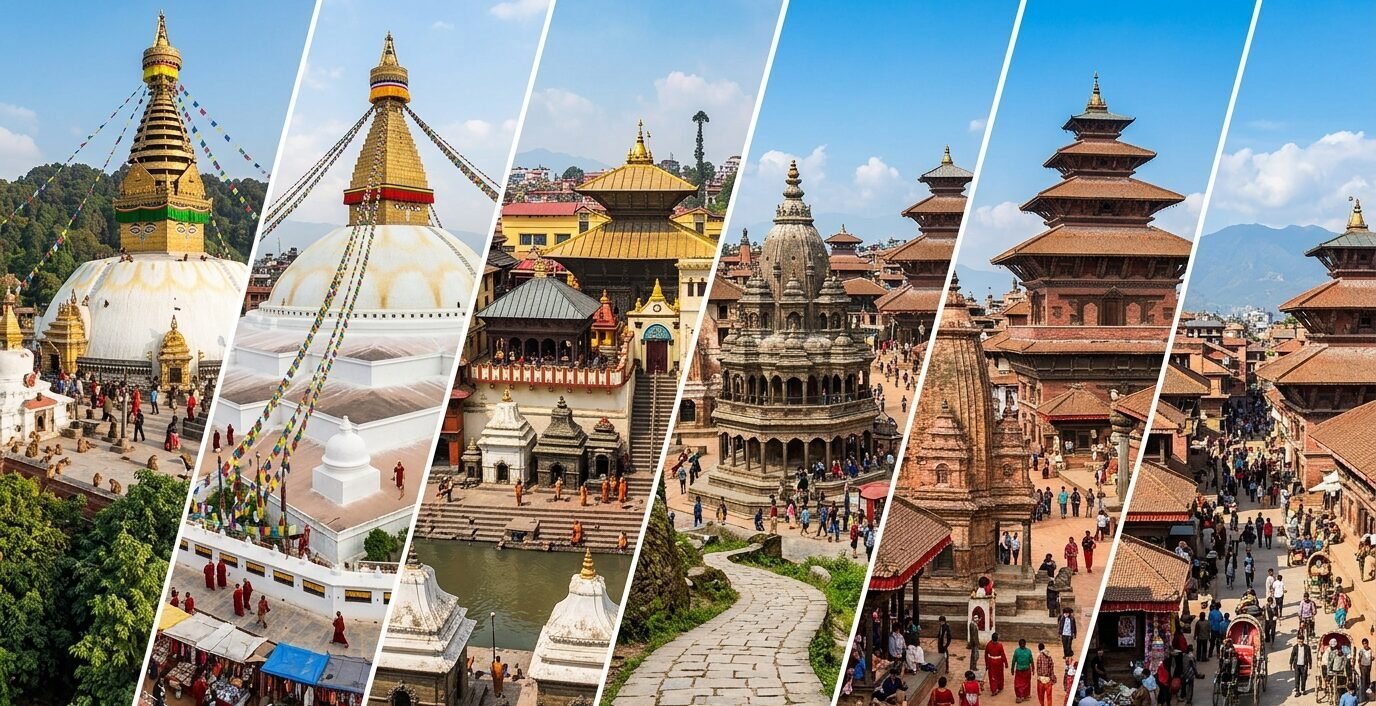
Kathmandu is a city that can surprise you at every turn. You are strolling through an ancient temple or a traditional Newari courtyard, and all the sudden you are in a bustling market with motor bikes, street vendors and some small café. A blend of old and new is part of Kathmandu, Nepal’s attractiveness.
Kathmandu has several historical like KTM, Kastamandap, Kantipur and traditional names, each with its own cultural significance.
- Kantipur – A famous historical name for KTM, meaning roughly “City of Glory” in traditional interpretations.
- Kasthamandap – The name of a historic wooden pavilion traditionally associated with the origin of the name KTM.
- Yen (यें) – A traditional Newar name for KTM in Nepal Bhasa.
- Yambu (यम्बु) – Another traditional Newar name, particularly associated with the northern part of historic KTM.
- Nepal Mandala – The historical cultural region encompassing KTM Valley and surrounding areas; it is not simply another name for KTM city.
As the capital of Nepal, Kastamandap is the country’s political and cultural centre. It is also the main gateway for travellers heading towards the Himalayas. But the city has plenty to offer in its own right, from historic royal squares and Buddhist stupas to traditional food, lively neighbourhoods and centuries-old religious traditions.
Kathmandu is also an excellent place for travellers to explore the rest of the Kathmandu Valley, including the historic cities of Patan and Bhaktapur. Whether you are curious about the Kathmandu origin, want to know where Kathmandu is located, or are planning a visit, this guide covers the essential facts, history and travel advice.
Where is Kathmandu located?
Kathmandu is located in central Nepal of Bagmati Province and the Kathmandu Valley. The city sits at approximately 1,400 metres above sea level and is surrounded by hills.
Nepal is a landlocked country between India and China, home to some of the world’s highest mountains. Kathmandu is located in a relatively sheltered valley that has supported settlements, trade and cultural development for centuries.
Tribhuvan International Airport is the country’s primary international airport and is located in the city, making it a popular destination for travelers coming into the country.
It is worth to understand the difference between KTM city and Kathmandu Valley. काठमाडौं महानगरपालिका is just one part of the wider Kathmandu Valley, which also encompasses Lalitpur, Bhaktapur and several other municipalities.
These neighbouring areas are known for their historic architecture, traditional crafts, temples and cultural festivals. Venturing beyond central Kathmandu allows visitors to discover more of the region’s rich history, local culture and everyday way of life.
What is the origin of Kathmandu?
The origin of Kathmandu is said to be the old ‘wooden pavilion’ of Kasthamandap, which was situated close to Kathmandu Durbar Square. The name is usually associated with two Sanskrit terms: kāṣṭha wood and maṇḍapa pavilion covered structure. Kasthamandap served as a public gathering place and a resting shelter for travellers.
The historic structure was severely damaged in the 2015 earthquake and was later reconstructed using traditional building techniques. Today, it remains an important part of Kathmandu’s cultural heritage and reflects the city’s long-standing connection with its history and architecture.
The city of KTM has also been called by other names over the years. Kantipur is a traditional historical name for the city, while Yen is its name in Nepal Bhasa, the language of the Newar community. Yambu is another customary Newari name with specialties to the northern part of old KTM. The names are a representation of the multi-cultural culture of the city and of its Newari roots.
These names reflect the city’s long history and the different cultural traditions that have shaped it.
A brief history of Kathmandu
Kathmandu’s history stretches back many centuries. The Valley was home to early settlements that gradually grew into a major political, commercial and cultural centre. Successive ruling dynasties, particularly the Licchavis and Mallas
During the medieval period, Kathmandu, Patan and Bhaktapur became separate royal centres. Their rulers built temples, palaces, courtyards and public squares, many of which remain among Nepal’s most treasured landmarks.
Competition between these historic cities encouraged the development of distinctive architecture and craftsmanship. Traditional woodcarving, metalwork, stone sculpture and brick construction became defining features of the KTM Valley.
Pashupatinath Temple beside the Bagmati River in Kathmandu
The Kathmandu Valley was conquered by Prithvi Narayan Shah, the 18th century founder of Gorkha rule, in its campaign for the unification of Nepal. Kathmandu later became the capital of the unified country, establishing its position as Nepal’s political centre.
The city, as a whole, is much larger today than its original boundaries. The Ancient Temples, Historic Monuments and Traditional Streets have been complemented by modern neighbourhoods, shopping centres, offices and educational institutions, delivering a unique mix of the old and the new.
The legend behind काठमाडौँ Valley
There is a well-known legend about how KTM Valley came into existence. The Buddhist Manjushree is believed to carved a gorge at Chobhar and the water drained away leaving the fertile land suitable for human settlement.
This story is not a scientific description of the geographical formation of the Kathmandu Valley but it is an important part of Kathmandu’s heritage. The legend emphasises the relationship between the physical environment, religious values and longstanding local folklore.
It is a interesting piece of the cultural heritage of Kathmandu and helps to decipher the intimate relationship between the valley landscape and its traditional narratives.
What is the population of Kathmandu Valley?
The population of Kathmandu valley depends on which geographical area is being measured. The figures refer to different areas (काठमाडौँ महानगरपालिका vs. Kathmandu District and Kathmandu Valley) which must be understood in this context.
Nepal’s National Population and Housing Census 2021 recorded the following populations for three major districts in the Kathmandu Valley region:
| District | Population in 2021 |
|---|---|
| Kathmandu District | 2,041,587 |
| Lalitpur District | 551,667 |
| Bhaktapur District | 432,132 |
| Combined total | 3,025,386 |
The statistics give a meaningful illustration of the region but the total number for the three districts does not correspond to an exact figure of the total population of a clearly defined Kathmandu Valley. Apart from Kathmandu Metropolitan City, areas in Kathmandu District are also covered.
Why is Kathmandu’s population growing?
KTM has grown rapidly as people from different parts of Nepal have moved to the capital region for jobs, education, healthcare and business opportunities.
New residential areas, universities, offices and commercial centres have expanded across the valley. What began as a group of historic settlements has grown into a large urban region where communities are increasingly connected.
As the city has grown, it has created new opportunities but also brought challenges such as traffic congestion, air pollution, waste management and increasing pressure on water supplies.
One thing to keep in mind when visiting, is to recognize the great size of the metropolitan region. A map may suggest they are near each other but it might take much longer, particularly during rush hour.
What is Kathmandu famous for?
KTM is famous for its historic temples, Buddhist stupas, royal squares, traditional Newari architecture and religious festivals. It is also known for its markets, local food and the lively visitor district of Thamel.
The entire Kathmandu Valley is home to seven monument zones that have been designated a UNESCO World Heritage Site. These include the Durbar Squares of Kathmandu, Patan and Bhaktapur, as well as Swayambhunath, Boudhanath, Pashupatinath and Changu Narayan.
One of the most fascinating aspects of the area is the coexistence of the Hindu and Buddhist beliefs. Shrines, temples, stupas and traditional courtyards are woven into the everyday life of many neighbourhoods.
Kathmandu is also the main starting point for many trips around Nepal. Many tourists stay in Kathmandu before going to Pokhara, Chitwan National Park or the Himalayan trekking areas of Nepal.
Nevertheless, more can be done for Kathmandu before a trek. Its old streets, traditional food and living cultural traditions are reasons enough to spend a few days exploring.
Best places to visit in Kathmandu
If you are looking for places to visit in Kathmandu, there is a good mix of historic landmarks, religious sites, traditional markets and quieter places to take a break from the busy streets.
1. Kathmandu Durbar Square – काठमाडौँ दरबार स्क्वायर
Kathmandu Durbar Square is one of the most significant historical sites of the city. It is situated in the old centre and houses temples, courtyards, palace buildings and traditional architecture from Nepal’s royal past.
It has some of the most famous attractions such as Hanuman Dhoka and the Kumari Ghar. Kumari Ghar is linked with the Kumari, a living goddess worshipped in the local religious practices.
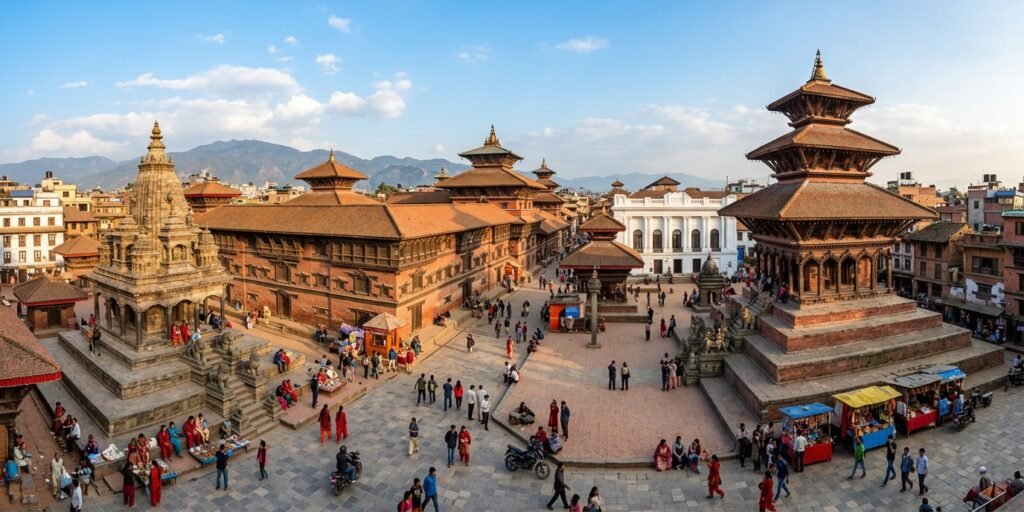
The surrounding streets are worth exploring too. You will find traditional shops, small shrines, local markets and courtyards that offer a glimpse of everyday life in historic Kathmandu.
Allow a few hours to explore the square and nearby neighbourhood at a relaxed pace.
2. Swayambhunath Stupa – स्वयम्भूनाथ स्तूप|
Swayambhunath is located on a hill to the west of central Kathmandu and is also known as the Monkey Temple. One of the most recognizable Buddhist landmarks in the valley.
The white dome, golden spire and Buddha’s eyes make the stupa instantly recognisable. The surrounding complex contains shrines, prayer wheels and other religious structures.
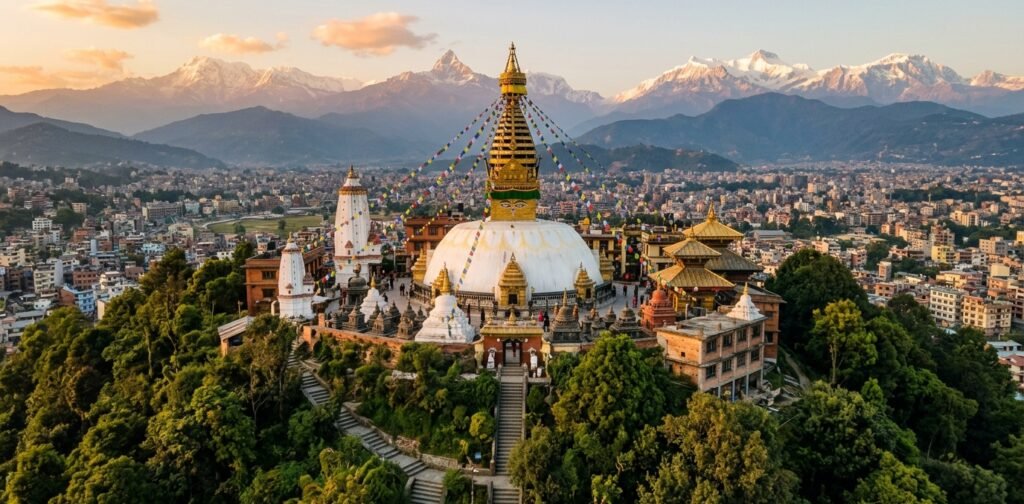
It is also located on top of a hill, offering a panoramic view of Kathmandu; however, visibility may be limited by haze and air quality.
With steps to climb, take time to take it slow. The complex is home to monkeys, which are common and it is advisable not to feed the monkeys or leave food lying around.
3. Boudhanath Stupa – बौद्धनाथ स्तूप|
Boudhanath is one of the significant points of Buddhist culture in Nepal.
Its enormous white dome, colourful prayer flags and surrounding monasteries create a distinctive atmosphere. The visitors walk around the stupa and turn the prayer wheels in a clockwise direction.
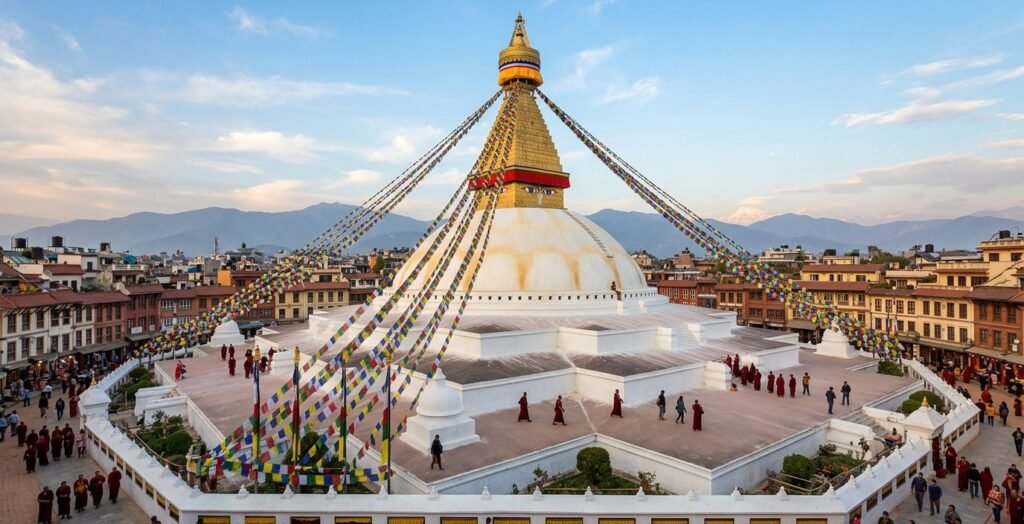
The surrounding streets are home to monasteries, shops selling religious objects and cafés overlooking the monument. The best time to visit is early morning or late afternoon, when you can see people going through their daily religious rituals and enjoy the ambience without the rush.
4. Pashupatinath Temple – पशुपतिनाथ मन्दिर
Pashupatinath Temple is one of the holiest Hindu pilgrimage sites in Nepal, and it is dedicated to Lord Shiva.
Situated beside the Bagmati River, the complex contains shrines, courtyards and traditional religious structures. The riverbanks are also connected to the Hindu cremation rituals.
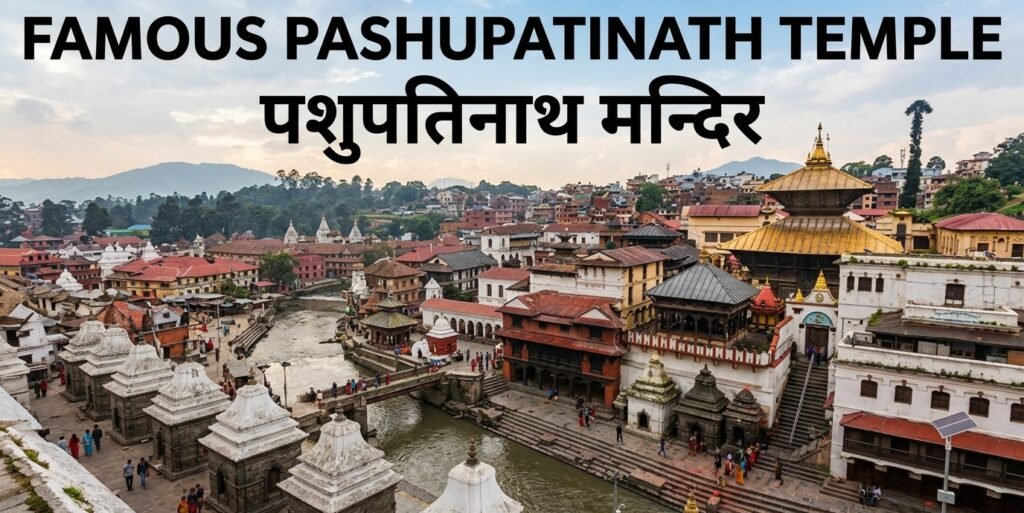
Non Hindu visitors are not allowed to enter the main temple building, although some surrounding areas are accessible. Please read the rules for entry before coming.
Be particularly respectful around religious ceremonies and cremations. Respect the privacy of worshippers and grieving families, avoiding intrusive photography.
5. Garden of Dreams – गार्डेन अफ ड्रीम्स
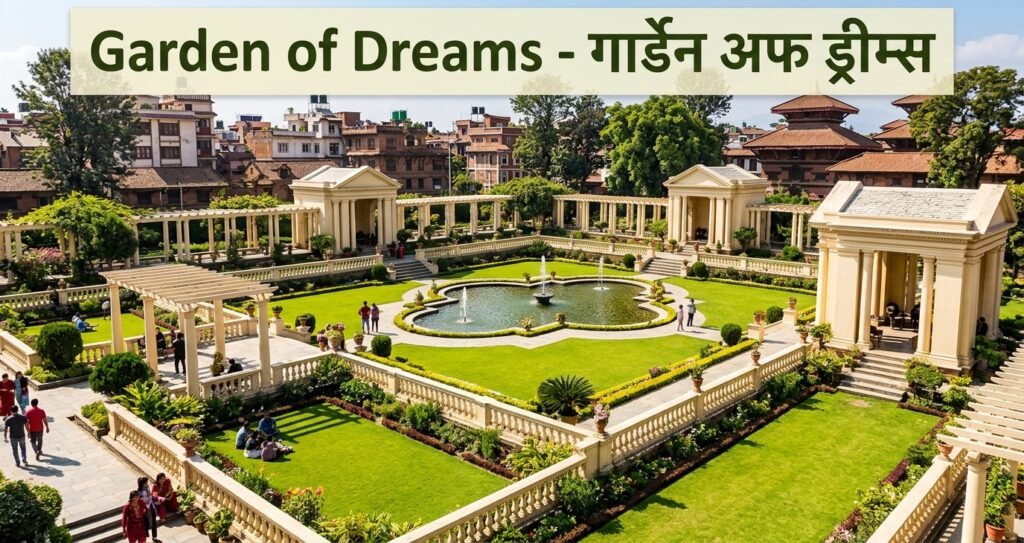
The Garden of Dreams is a restored historic garden in central Kathmandu. With landscaped grounds, fountains, pavilions and quiet seating areas, it offers a welcome break from the city’s busy streets.
It is a good place to relax between sightseeing activities and is conveniently located for visitors exploring Thamel.
6. Thamel – ठमेल
Thamel is the most famous tourist area of Kathmandu. Its streets are filled with hotels, restaurants, cafés, souvenir shops, trekking agencies and outdoor equipment stores.
It is especially useful to first timers or travellers planning trekking and onward travel around Nepal.
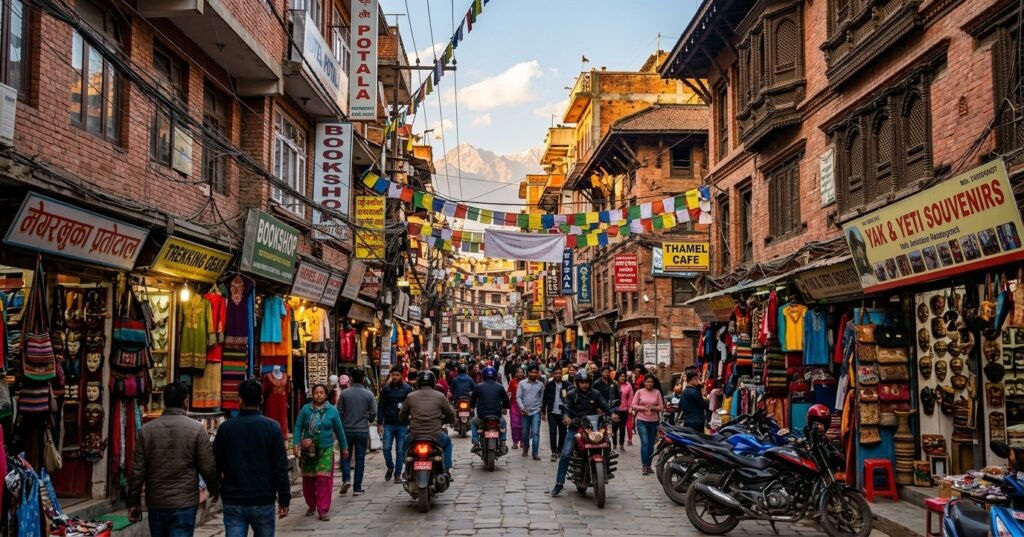
Thamel can get crowded, so it may not suit everyone looking for a quiet place to stay. If you have the plans, it is worth considering alternatives like Lazimpat, Boudhanath and parts of Patan.
7. Asan Market – असन बजार
Asan is one of Kathmandu’s historic market areas. Its narrow streets and courtyards contain shops selling spices, vegetables, clothing, household goods and other everyday products.
The small temples and shrines are integrated into the layout of the market, further highlighting the relationship between commerce, community and religion in the old city.
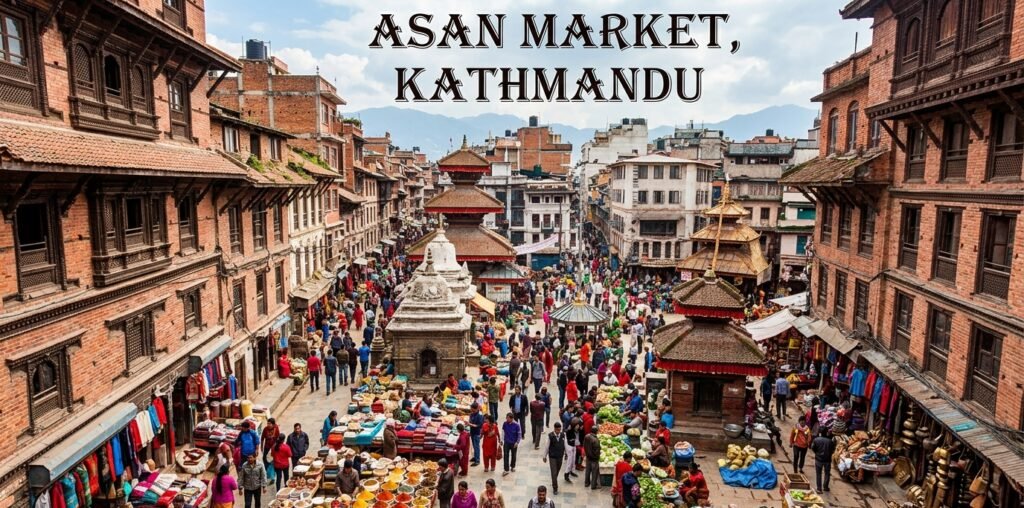
It’s a place to enjoy local life outside of the tourist hot spots. Visit with time to wander, keep valuables secure in crowded areas and ask permission before photographing people.
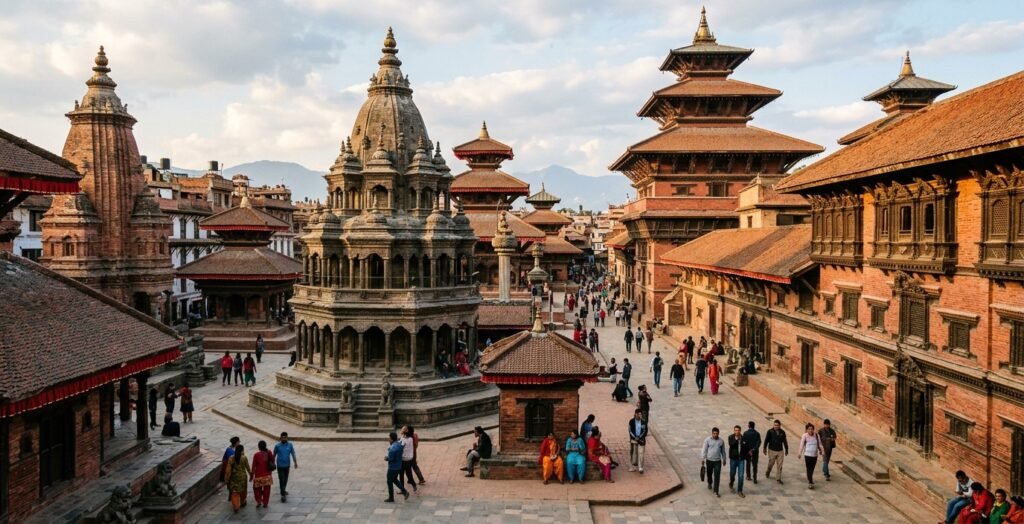
8. Patan Durbar Square – पाटन दरबार स्क्वायर
Patan, also known as Lalitpur, is a historic city within Kathmandu Valley. It is close enough to central Kathmandu to include in a day trip.
Patan Durbar Square is known for its temples, palace courtyards, traditional brick buildings and metalworking heritage. The Patan Museum offers a deeper look at the valley’s art, architecture and religious traditions.
Allow several hours to explore the square, museum and surrounding streets.
9. Bhaktapur Durbar Square – भक्तपुर दरबार स्क्वायर
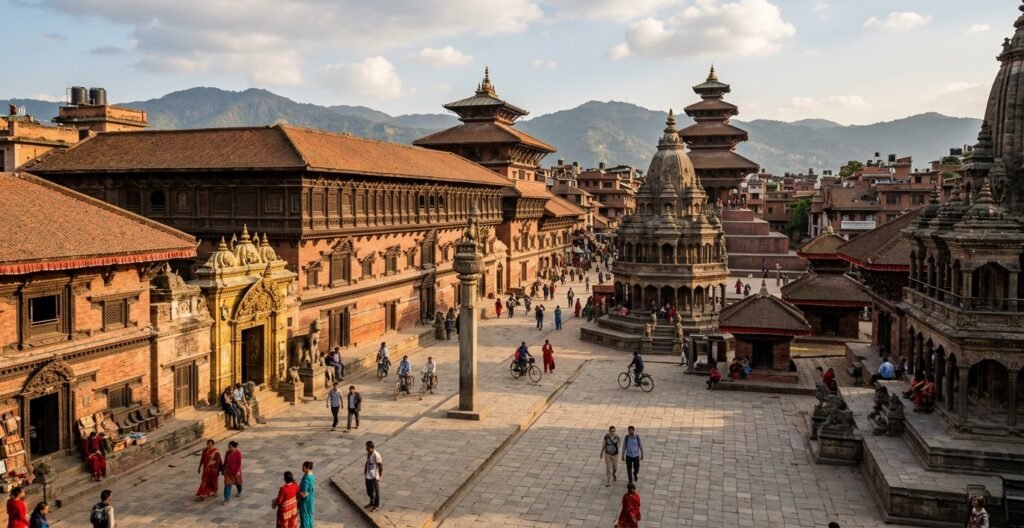
Bhaktapur is another historic city in Kathmandu Valley, famous for its traditional architecture, temples, public squares and pottery-making heritage.
Highlights include Nyatapola Temple and the 55 Window Palace. Visit the old streets as well, see local crafts, and see local food items.
Bhaktapur is especially interesting for those who have a historical or traditional interest in urban life. Leave half a day to take your time and explore.
10. Chobhar Gorge – चोभार गल्छी
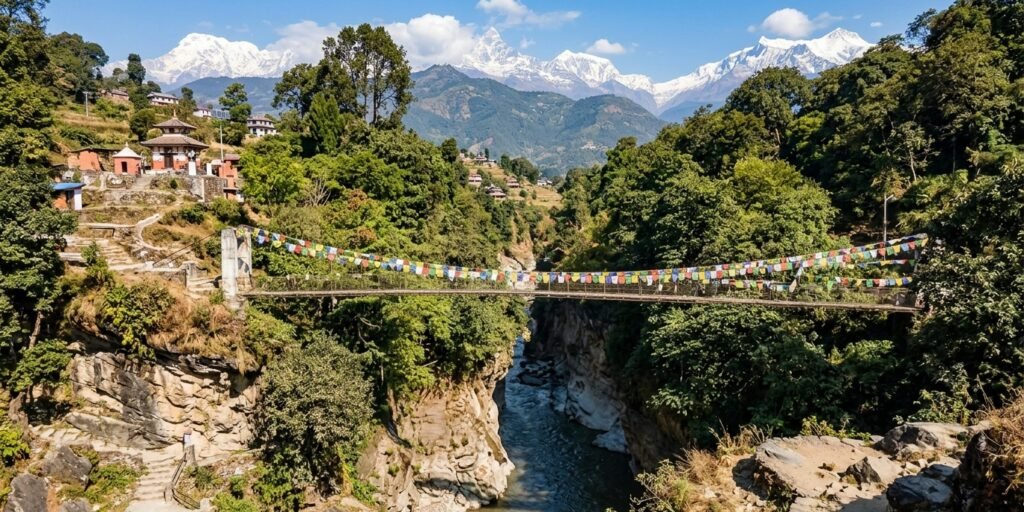
Chobhar Gorge is south of the central Kathmandu region, and reflects the traditional legend about the ancient lake that filled the valley.
The area provides a new look at Kathmandu’s geography and cultural history. If you are interested in going beyond the most popular temples and squares, it is a good idea to consider it.
Please review local access and transport details before travelling.
Best Things to Do in Kathmandu
There is more to Kathmandu than visiting famous monuments. Some of the best experiences come from taking time to explore its streets, food and neighbourhoods.
Here are a few things to do in Kathmandu:
- Explore the old streets surrounding Kathmandu Durbar Square.
- Observe Buddhist traditions at Boudhanath and Swayambhunath.
- Try traditional Newari dishes at local eateries.
- Visit the Patan Museum to learn about the valley’s artistic heritage.
- Browse handicrafts and trekking shops in Thamel.
- Explore Asan Market and its traditional trading streets.
- Take a day trip to Bhaktapur.
- Go to a local festival, if available.
- Take time to enjoy the traditional courtyard or café, and observe the daily life of the city.
- Pick activities that you are interested in and leave time for surprise discoveries.
Kathmandu Culture and Traditions
In the context of Kathmandu’s culture, these centuries of interaction between the Hindu and Buddhist traditions are evident especially in the Newar communities.
Newar artisans, traders and craftspeople have helped shape the valley’s architecture, religious art, food, music and festivals. Traditional woodcarving, metalwork, pottery and brick construction remain important parts of its cultural heritage.
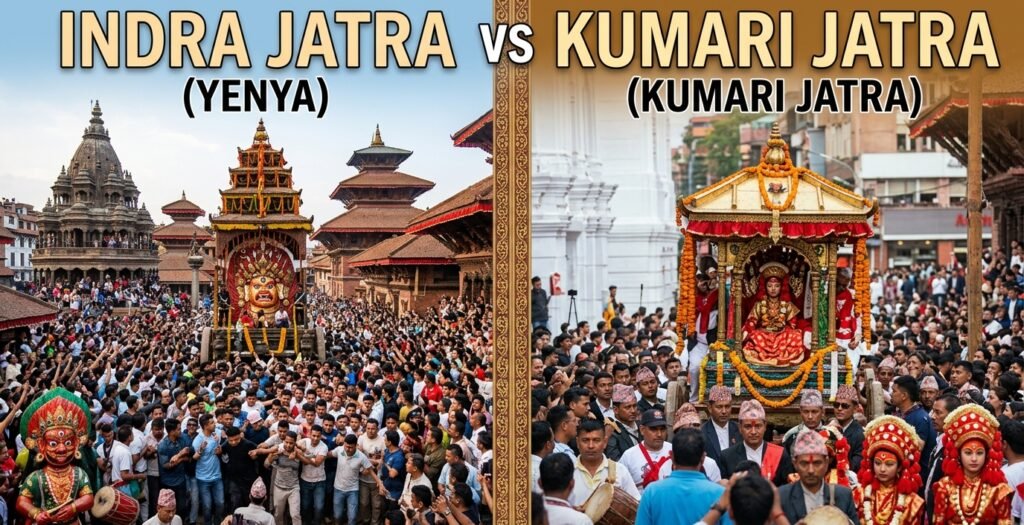
Another big aspect of Kathmandu life is the festivals. Dashain and Tihar are observed in Nepal and Indra Jatra showcases some of the unique local traditions of Kathmandu.
During festivals, streets and public squares may host chariot processions, music, dances and religious ceremonies. Many festival dates are based on traditional lunar calendars, so be sure to check the local dates if you wish to attend a specific festival.
Visitors are encouraged to dress modestly at religious locations, take off their shoes when necessary, respect the rules of entering the temple and seek permission before taking photographs of people or ceremonies.
Kathmandu’s culture is not limited to Museums and Monuments. It remains part of everyday life in the city’s neighbourhoods.
Best time to visit Kathmandu
Kathmandu can be visited throughout the year, but the weather and travel conditions change with the seasons.
Autumn (September to November) is a popular time to visit Nepal. Monsoon typically ebbs and clearer weather should make it easier to see the surrounding hills. This time period may also include major festivals such as Dashain and Tihar.
Spring (March to May) has more pleasant weather, and flowers trees and overall pleasant conditions for sightseeing. Temperatures can rise before the monsoon arrives.
Monsoon (June to September) offers regular rains and greener landscapes. Heavy rainfall can make travel less convenient and may disrupt road journeys elsewhere in Nepal.
Winter (December to February) can offer pleasant days for sightseeing, although mornings and evenings are cold. Layer up when spending time outside.
Fall and spring are the best seasons for many travellers. But, the best time will depend on you, your interests, your budget and your broader travel plans.
How many days do you need in Kathmandu?
This is a good time frame to spend two to three days visiting the main sights in Kathmandu. The longer you stay, the more time you will have for Patan, Bhaktapur, the museums, the food and less-visited neighbourhoods.
A three-day KTM itinerary
Day 1: Historic Kastmandav
Start at Kathmandu Durbar Square and explore the surrounding old city. Walk through Asan Market before taking a break in Thamel.
Day 2: Buddhist and Hindu heritage
Make a morning visit to Swayambhunath and then Boudhanath. Later, explore the accessible areas of Pashupatinath and learn about its religious importance.
Day 3: Explore the wider KTM Valley
Choose Patan or Bhaktapur for a day of historic architecture, museums, traditional streets and local food. If you have extra time, visit the other city on a separate day.
Plan for extra time for travel as traffic is often chaotic. It’s more convenient to have nearby attractions bunched together than to make multiple trips across the valley during the day.
How to get around Kathmandu?
Travel in KTM requires planning especially during peak times.
Taxis: Useful for reaching attractions across the city. Check the fare/meter before departure.
Ride-hailing services: Locally available apps may offer convenient transport, depending on availability.
Local buses and microbuses: These tend to be more affordable, but may not be very popular among first-time visitors because of their erratic schedules and routes.
Walking: Ideal for exploring historic neighbourhoods, traditional markets and narrow streets.
Private vehicles/guided tours: Good for viewing multiple attractions on one day.
Check distances and likely traffic before planning your route. What might appear to be a short trip on a map can be lengthy on a crowded road.
Food to Try in Kathmandu
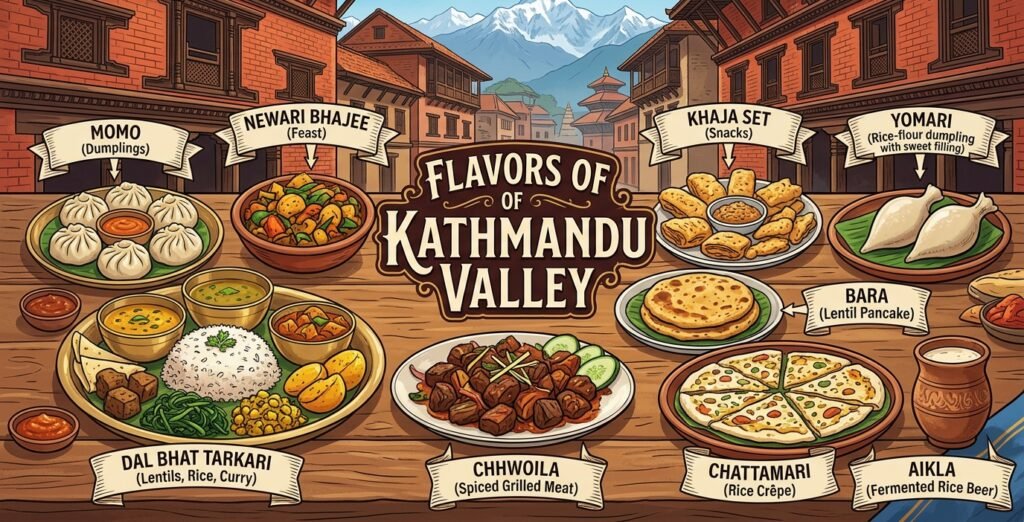
Food is an important part of any Kathmandu travel experience. The city is a fusion of traditional Newari food and regular Nepali foods with different food traditions of different parts of the country.
Some dishes worth trying include:
Momo: Dumplings filled with vegetables or meat and served with dipping sauce.
Dal bhat: A traditional meal of rice, lentil soup and accompanying vegetables or other dishes.
Chatamari: A savoury Newari dish made from rice flour.
Bara: A traditional Newari lentil pancake.
Yomari: A steamed Newari dumpling stuffed with sweet materials like molasses and sesame.
Juju dhau: A famous sweet yoghurt associated with Bhaktapur.
If you want to try a local hangout, go off of the main tourist roads. If you have dietary restrictions, ask about the ingredients and select providers that keep food well prepared.
Practical Travel Tips for KTM, Nepal
A little preparation can make exploring KTM much easier.
Carry Nepalese rupees. Cash is helpful in small stores, public transportation, food stalls and for some entrance fees.
Allow extra travel time. Traffic congestion may impact travel throughout the city and the entire valley/basin.
Check air quality. Dust and vehicle emissions can have an impact on air quality, especially in dry conditions. If you have to be outdoors for extended periods, please monitor the local weather forecast.
Keep valuables secure. Take regular precautions in busy touristy areas, transport hubs and markets.
Look up the days and times of operation, as well as any admission fees. Access arrangements and charges may vary, so please check prior to visiting.
Respect local customs. Some religious sites restrict entry to certain areas. Obey all signs and local instructions.
Choose accommodation carefully. Thamel offers a good choice of restaurant and travel services, while some areas might appeal to those who prefer a more relaxed vibe.
You may like to read Top 5 things to do in Kathmandu Fun Park in 2023
[…] fantastic place to have a blast with family and friends in the heart of Nepal’s capital city, Kathmandu. This amusement park offers a wide range of thrilling rides and attractions that are sure to make […]