

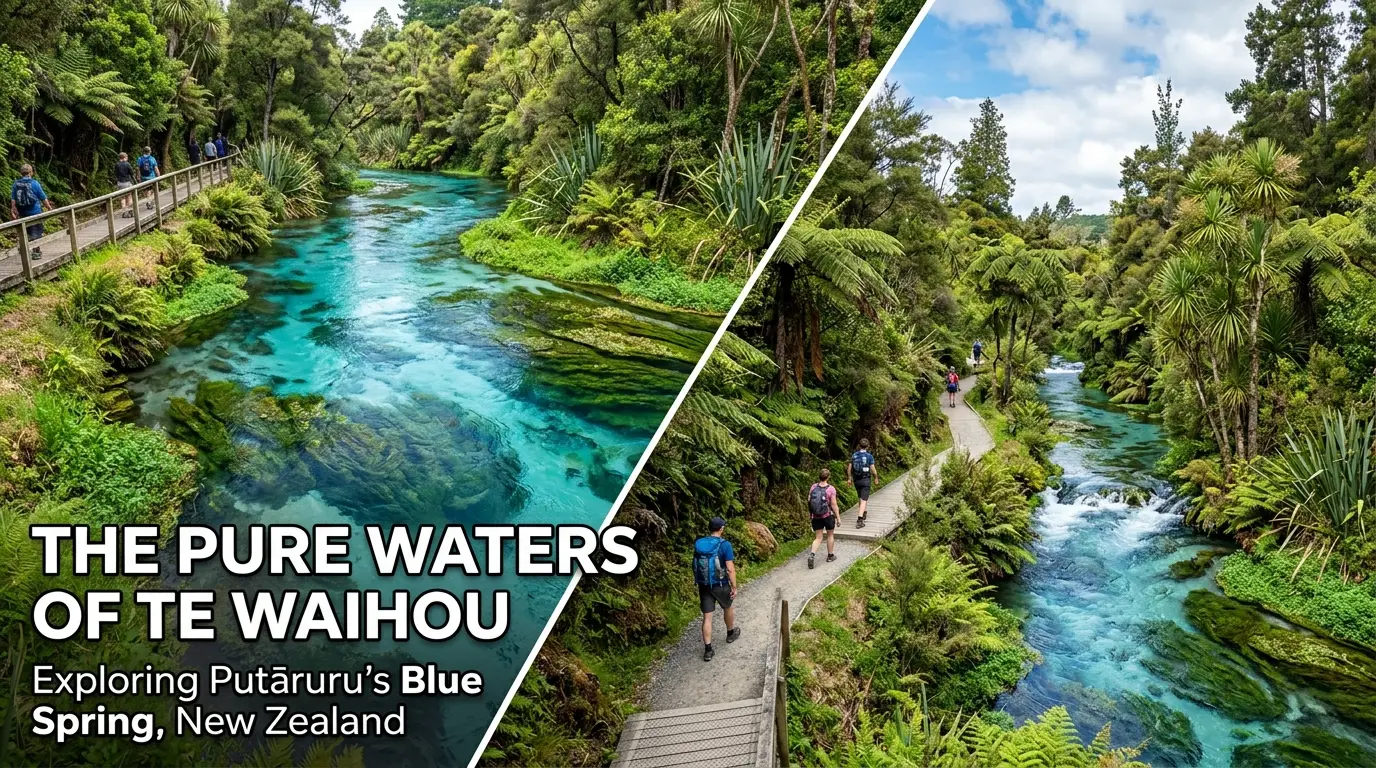
Located in the South Waikato district near Putāruru, Blue Spring (known in Māori as Te Puna) is recognized as one of New Zealand’s most stunning natural treasures (taonga). World-famous for its crystal-clear turquoise water, lush underwater ribbons of river grass, and rich cultural heritage, this sanctuary offers visitors an unforgettable glimpse into pure nature.
Quick visitor guide
| Detail | Information |
|---|---|
| Location | Near Putāruru, South Waikato, North Island, New Zealand |
| Walking route | Te Waihou Walkway |
| Full track | Approximately 4.7 km one way |
| Walking time | Around 1.5 hours one way; allow about 3 hours return |
| Main entrances | Whites Road and Leslie Road |
| Water flow | Approximately 700 litres per second |
| Water temperature | Commonly reported as around 11°C |
| Dogs | Not permitted on the walkway |
| Camping | Not permitted along the walkway or in its car parks |
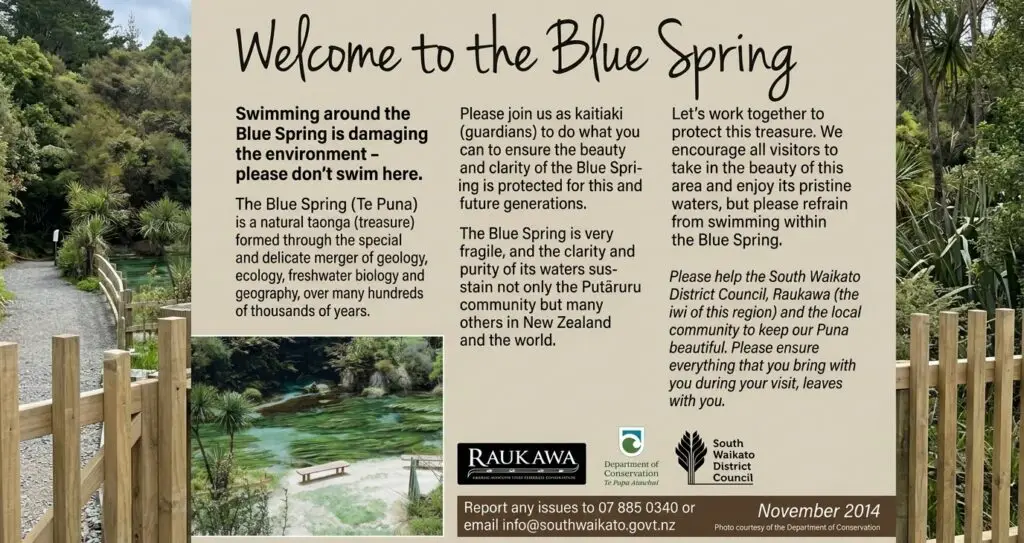
| Swimming | Discouraged at the Blue Spring itself to protect the fragile environment |
| Official information | South Waikato District Council |
Visitor details and walking times are based on published council information. Check the official website for current access conditions before travelling.
The science behind the Crystal Clarity.
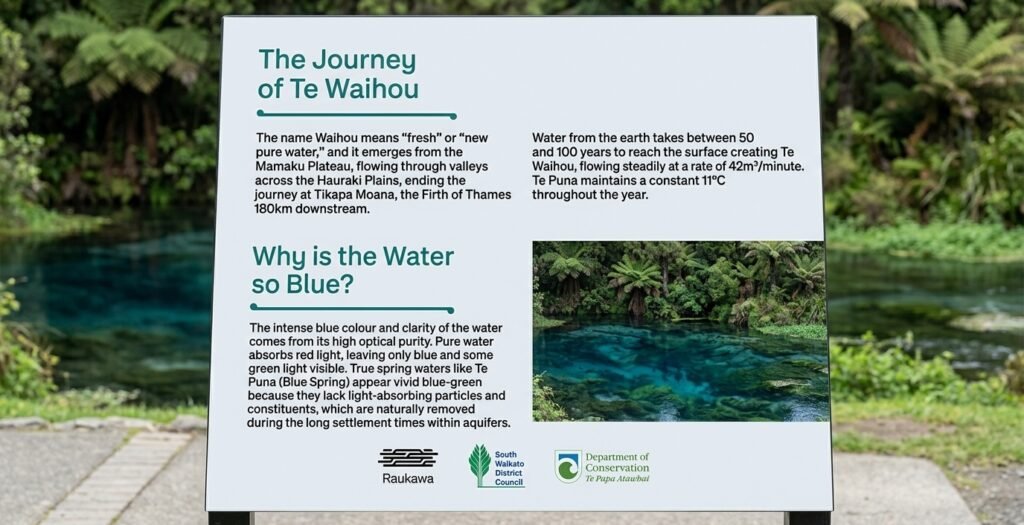
The journey of the Blue Spring’s water begins high up at the Mamaku Plateau. The rainwater falls and gradually filters through the deep volcanic rock aquifers for 50-100 years until it emerges at Te Puna.
Key Hydrological Facts:
Natural Filtration – decades of subterranean travel efficiently filter out all light-absorbing particles and organic impurities.
The Pure Blue Hue: Pure water inherently absorbs red light while transmitting blue and green light back to the human eye, giving Te Waihou its signature luminous hue.
Exceptional Flow Rate: Water gushes from the spring bed at 42 m3/minute (700 liters/second)—a volume capable of filling a 6-lane, 25-meter swimming pool in under 12 minutes!
Constant Cold Temperature: Regardless of whether it’s summer or winter, the spring stays a chilly 11°C year-round.
Bottled Water Origin: The spring’s extraordinary purity accounts for approximately 70% of New Zealand’s bottled water supply.
Cultural Significance & Ancestral Connections
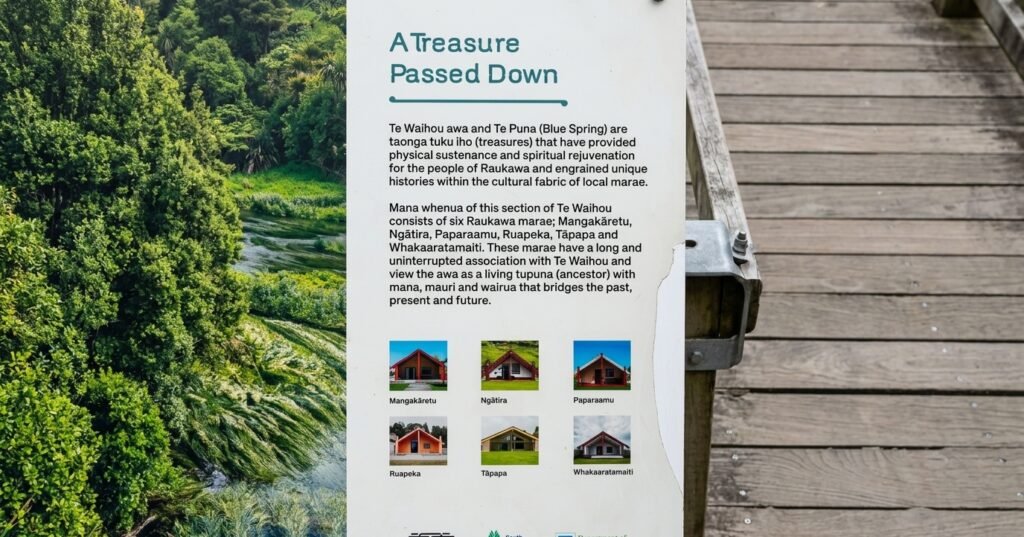
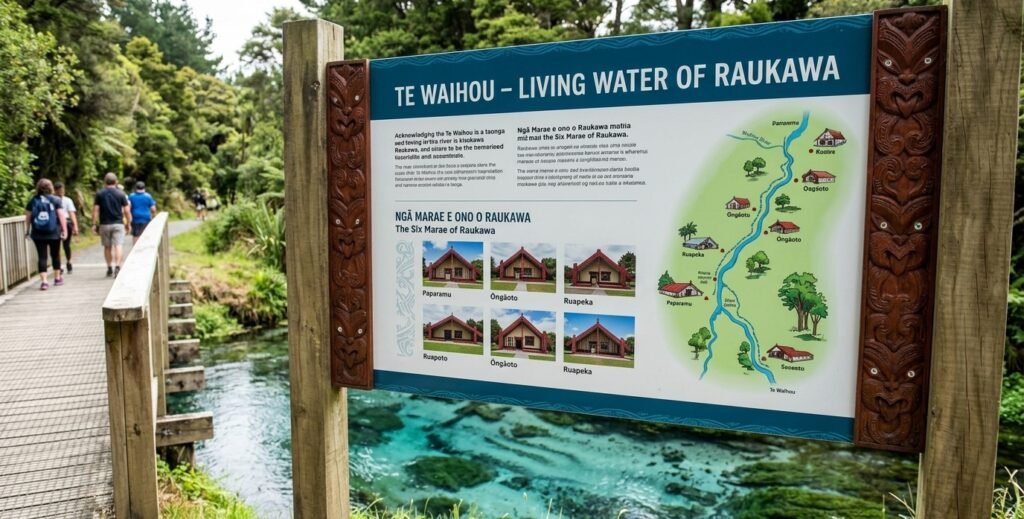
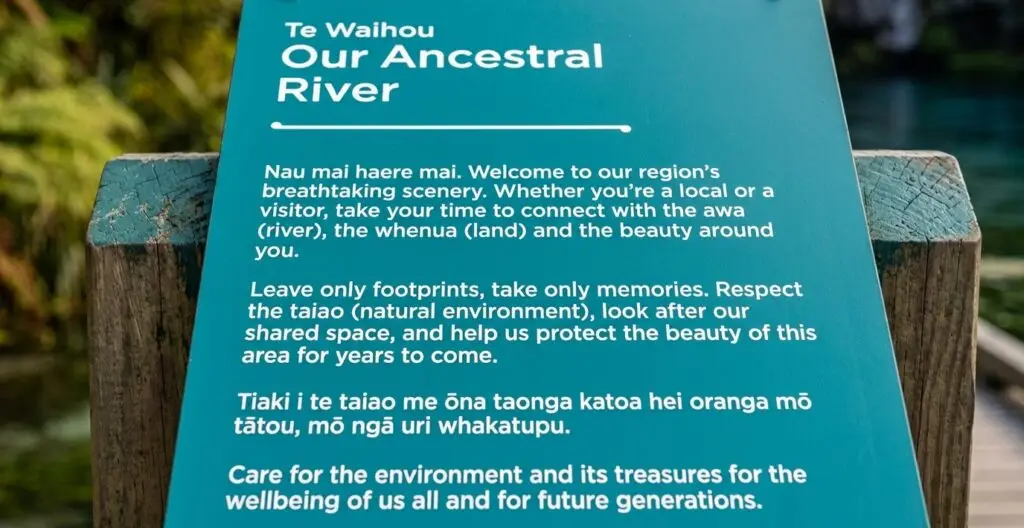
To the local iwi, Raukawa, Te Waihou River and Te Puna are taonga tuku iho—treasured gifts passed down through generations.
Ecological and spiritual connections to the Earth.
A Living Ancestor: Raukawa considers the awa (river) a living tupuna (ancestor) possessing mana (prestige), mauri (life force), and wairua (spiritual connection).
Six local Raukawa marae maintain an unbroken connection to this section of Te Waihou:
- Mangakāretu
- Ngātira
- Paparaamu
- Ruapeka
- Tāpapa
- Whakaaratamaiti
The river is also of historical importance, having played a role in shaping the region’s past. South Waikato District Council describes its importance as a route for travel and a source of food and materials for generations of Māori.
Visitors are welcomed as kaitiaki (guardians) and asked to respect the environment by protecting the water, land (whenua), and surrounding ecosystem (taiao).
Biodiversity: Flora & Fauna of Te Waihou
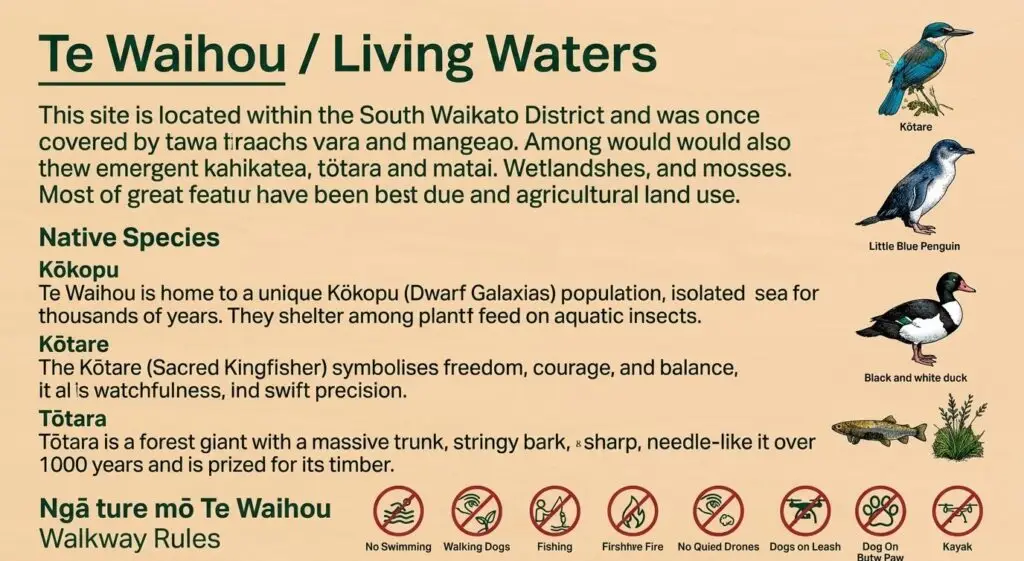
The valley was historically blanketed in heavy indigenous forests of tawa, mangeao, kahikatea, tōtara, and mataī. Active restoration projects along the boardwalks continue to restore and preserve native flora and wildlife habitats.
Native species to look out for
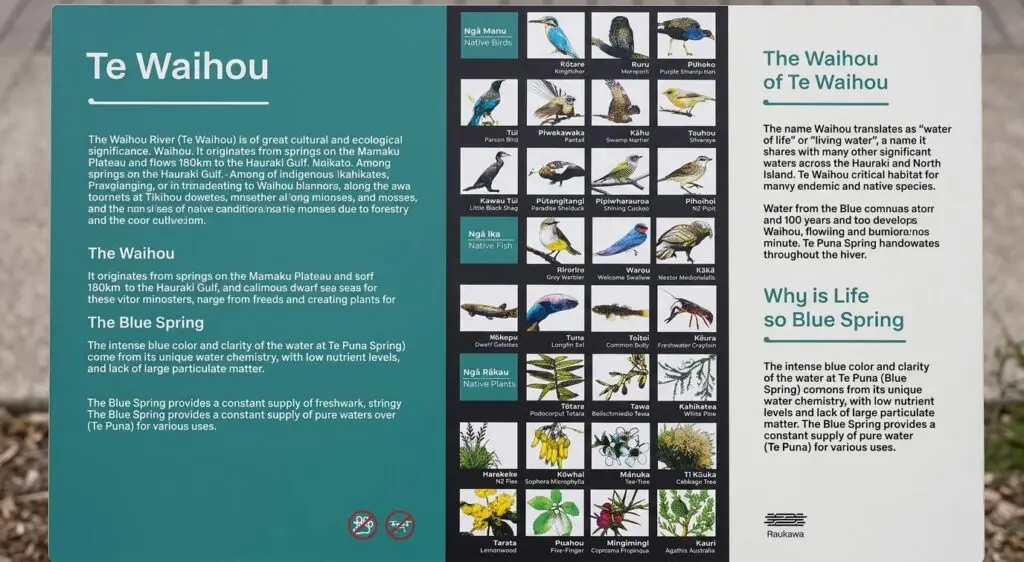
Kōkopu and other native freshwater fish– Te Waihou’s freshwater environment supports aquatic life. Different native fish species have different habitat requirements, and the vegetation along the river can provide shelter and feeding areas. Exact species identifications should be checked against the information displayed on site.
Kōtare (sacred kingfisher)– Symbolizes freedom, courage, and balance along the waterway. This distinctive bird may be seen around waterways and open areas, where it hunts for small prey.
Native forest trees– Ancient Tōtara trees can live for over 1,000 years. Other key plant species include Kahikatea, Mānuka, Harakeke (NZ Flax), Kōwhai, and Tī Kōuka (Cabbage Trees). Ancient Tōtara, kahikatea, mataī and other indigenous species form part of the wider ecological heritage of the Waikato. Harakeke (New Zealand flax), mānuka, kōwhai and tī kōuka (cabbage tree) are also familiar native plants in New Zealand landscapes.
Aquatic vegetation– One of the most striking features of Blue Spring is the long, ribbon-like vegetation visible beneath the exceptionally clear water. The river’s flowing green currents resemble ribbons, rendering it particularly appealing to photographers.
Kōkopu (Dwarf Galaxias)– An isolated population of native freshwater fish that shelter in the underwater vegetation and feed on aquatic insects.
How to get to Blue Spring Putāruru
Blue Spring is located near Putāruru in the South Waikato district. The Te Waihou Walkway has two main access points: Whites Road and Leslie Road. The spring viewing area is nearer to the entrance at Leslie Road.
Leslie Road entrance
Your best bet for understanding this bioreservoir is to watch it while it’s living normally. Fortunately, the approach to the viewing area is considerably shorter than the full route.
Whites Road entrance
Choose this entrance if you want to experience more of the Te Waihou Walkway, including the river scenery, farmland, wetlands and sections of native vegetation along the route.
Parking and road safety
Use designated parking areas at the entrance you choose. Do not park on the highway, on marked no-stopping areas or where your vehicle obstructs traffic or pedestrians. Take extra care when crossing roads and follow all signs.
It has found that parking is a problem and there are too many visitors, especially at the time of holiday. Anyone using Blue Spring and Te Waihou Walkway is advised to check the official Blue Spring and Te Waihou Walkway page before leaving.
There is no regular bus service from Putāruru township to the walkway, according to the council’s visitor information. Plan your own transport.
Walking the Te Waihou Walkway
One of the best ways to see the landscape around Blue Spring is to take the Te Waihou Walkway. Tracing the river, the route passes through undulating farmland, wetlands and indigenous landscape, including boardwalk sections, and offers views of several small waterfalls.
The entire walkaway is about 4. 7 km in each direction and roughly 1. 5 hours in one direction, or about 3 hours for the return walk. Allow extra time if you want to take photographs, read the interpretation panels or enjoy the scenery.
The track is generally considered easy, although there are some short, steep sections. Wear comfortable walking shoes and take care on uneven or wet surfaces.
Is the walkway suitable for everyone?
The full route is not the same as a flat, fully accessible footpath. Its rural setting, slopes, boardwalks and uneven sections may present challenges for people with limited mobility.
The path from the Leslie Road entrance to the viewing deck is relatively accessible, but the unpaved approach and surface conditions may make it difficult for some wheelchairs and pushchairs. Please refer to the council’s latest accessibility guidance if a step-free or wheelchair-accessible route is required.
Best Time to Visit Blue Spring
The Blue Spring is open year-round, but the conditions of the light, the track, and the visitors, combined with the weather, will all influence the experience.
Morning visits-Visiting in the morning may allow more time to capture the river without large crowds in the background. Solitude cannot be guaranteed however, especially during school holidays or long weekends.
Overcast conditions: Soft, diffused light can reduce harsh reflections and bright highlights when photographing the water.
Sunny conditions: Sunlight can enhance the blue-green colour of the spring, although strong reflections and bright patches may make exposure more challenging.
After rain: The surrounding vegetation may appear particularly fresh, but wet surfaces can be slippery. Visitors are encouraged to observe forecast and conditions before travelling.
Peak holiday periods: Parking areas and the viewing area can become busy. If you want to take a more relaxed approach, you might want to travel during the week, away from the summer holidays.
Access details should be always up-to-date before travel, especially when amenities are being serviced, and/or in busy seasons.
Protecting a Fragile Ecosystem: Rules & Guidelines
To safeguard the delicate aquatic flora and maintain the water’s world-renowned clarity, local authorities and iwi strictly enforce rules along Te Waihou Walkway.
Walkway guidelines and kaitiakitanga instructions for visitors.
Visitor rules & regulations
| Activity | Rules |
|---|---|
| Swimming | Discouraged at the Blue Spring itself because it damages aquatic vegetation and riverbank habitat. Note: swimming is allowed at the Whites Road end and at other points, as per site guidance. |
| Dogs | Not allowed on the walkway. |
| Camping | Not permitted along the walkway or in either car park. |
| Fishing | Council guidance says fishing is permitted with a fishing licence. |
| Drones | Check the applicable council policy and any site-specific restrictions before stating a blanket ban. |
| Rubbish | Take all rubbish away and stay on marked tracks. |
Visitor Guidelines:
NO Swimming / NO Water Entry: Swimming severely damages aquatic plant beds, causes erosion, and destroys fish breeding grounds.
NO Dogs / Pets: Prohibited to protect local farm stock and wildlife.
NO Drones: Drones are banned to respect visitor privacy and protect native bird species.
NO Fires, Fishing, or Camping: Strictly prohibited along the trail to prevent environmental destruction.
Pack Out All Trash: Ensure everything you bring in leaves with you.
Water Infrastructure & Community Utility
In addition to being a beloved natural site, Te Waihou is a critical water source for the region.
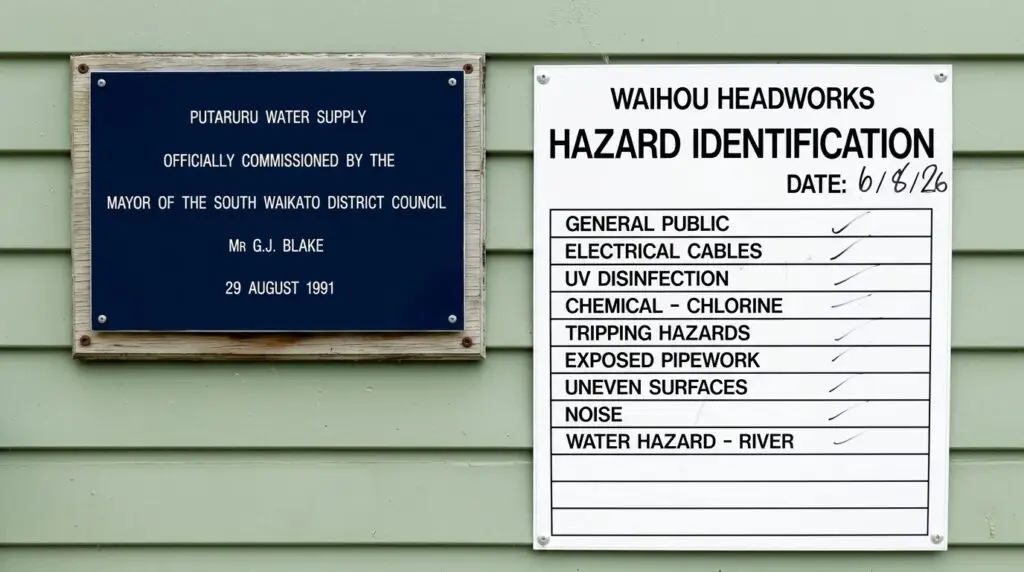

Putāruru Water Supply: Commissioned on August 29, 1991, by former Mayor G.J. Blake, the Waihou headworks supply drinking water to Putāruru.
Safety & Treatment: Water drawn for the town undergoes UV disinfection and monitoring at the site’s water station to meet drinking standards.
Summary Visitor Guide
| Detail | Information |
| Location | Te Waihou Walkway, South Waikato (near Putāruru) |
| Walkway Access | Whites Road Entrance (Full 4.7 km walk) or Leslie Road Entrance (Shorter 1.5 km walk) |
| Water Flow | 42 m3/minute (700 liters/second) |
| Water Temp | Constant 11°C year-round |
| Key Rules | No Swimming, No Dogs, No Drones, No Camping |
| Council Contact | South Waikato District Council (07 885 0340 / info@southwaikato.govt.nz) |
Frequently asked questions about Putaruru Blue Spring
Is Blue Spring open during public holidays?
Maintenance, track conditions and high visitor numbers can all make access a problem. Please refer to the council’s latest information before making your journey. The council has specifically warned of high volumes of traffic on Leslie Road during Labour weekend 23-26 October 2026, and has noted very few parking spaces at the Leslie Road car park.
Is the Te Waihou Walkway wheelchair accessible?
The full route has uneven and sloping sections. The approach from Leslie Road to the viewing deck is relatively accessible, but the unpaved surface may make access difficult for some wheelchair users. Note that if it is important for your visit that you listened to the latest official advice.
Are toilets available?
Yes. The council lists toilet facilities at several points around the walkway, including the car parks and the area near the Blue Spring viewing deck. Check the official website for current facility availability.
Is Blue Spring suitable for photography?
Yes. The clear water, underwater river grass, boardwalks, native vegetation and surrounding landscapes offer a range of photographic opportunities. Photographers are encouraged to shoot from areas that allow photographing and not disturb the environment.
Are dogs allowed at Blue Spring?
No. Dogs are not permitted on the Te Waihou Walkway because it passes through private farmland and the area supports wildlife.
Can you swim in Blue Spring?
Swimming at the Blue Spring is not encouraged because it can cause damage to the aquatic vegetation and the riverbank habitats. The council identifies other parts of Te Waihou where swimming is permitted, so check the specific location’s rules before entering the water.
Why is Blue Spring so clear?
Rainwater filters through underground geological layers on its journey from the Mamaku Plateau. This natural process removes many particles, contributing to the water’s exceptional clarity. The clarity and depth in its waters, also add to this unique blue green hue.
Where is Blue Spring located?
Blue Spring is near Putāruru in the South Waikato district of New Zealand’s North Island. The spring can be visited via the Te Waihou Walkway, which has entrances on Whites Road and Leslie Road.
How long does it take to walk to Blue Spring?
The entire Te Waihou Walkway, roughly 4.7 km long, is about 1.5 hours in one direction or three hours round trip. The shorter approach from Leslie Road is more suitable if you only want to visit the spring viewing area.
Final thoughts
Blue Spring is one of the South Waikato’s most remarkable natural attractions. Its crystal-clear water, flowing underwater vegetation, surrounding landscapes and deep cultural connections make it much more than a scenic place to take photographs.
The Te Waihou Walkway offers visitors an opportunity to slow down and appreciate the natural environment, whether they choose the shorter approach to the spring or the full walking route.
However, the spring’s beauty comes with a responsibility to protect it. Respecting local iwi, following visitor guidelines, staying on marked tracks and leaving the environment undisturbed all help preserve this special place.
For photographers and travellers alike, the best visit is one that captures the beauty of Blue Spring while helping ensure that future generations can experience it too.
https://www.checkthephotography.com/water-falls-auckland-2026/