

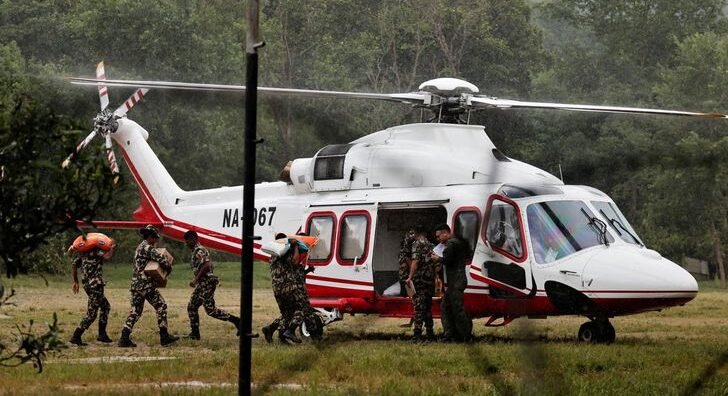
Some doubts have been raised by the Nepalese government regarding valuable time that might have been lost in the first few critical days following the Bhote Koshi disaster due to the way they dealt with the international search-and-rescue (SAR) assistance.
It is not only a matter of adding up accepting foreign aid that eventually happened in Nepal. It is about when the foreigners came to rescue and when Nepal accepted them and how it is different from the explanation made on the initial days of the disaster.
Nepal Foreign Rescue Assistance: Timeline: What Happened After the Flood?
| Date | What happened | Why it matters |
|---|---|---|
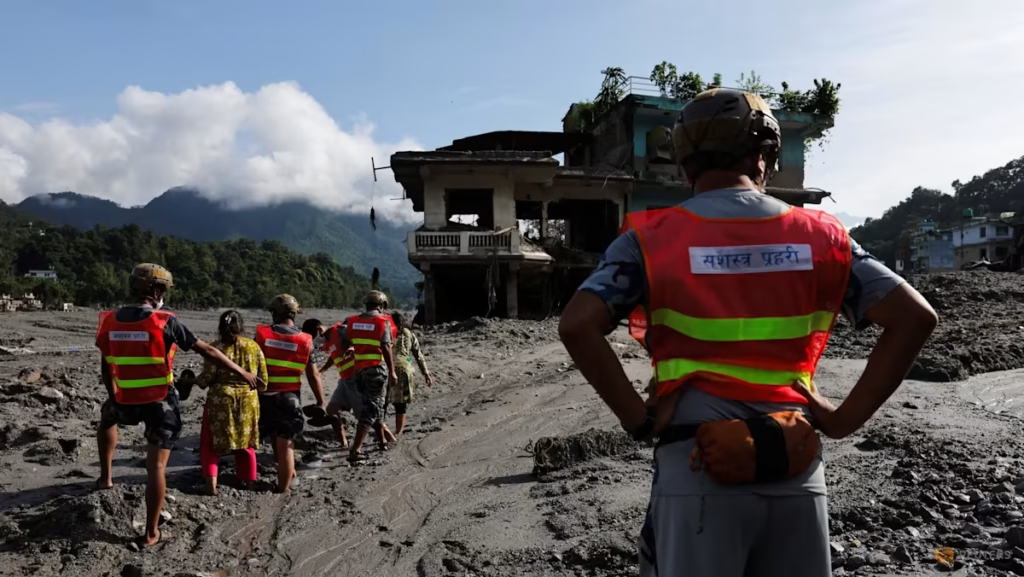
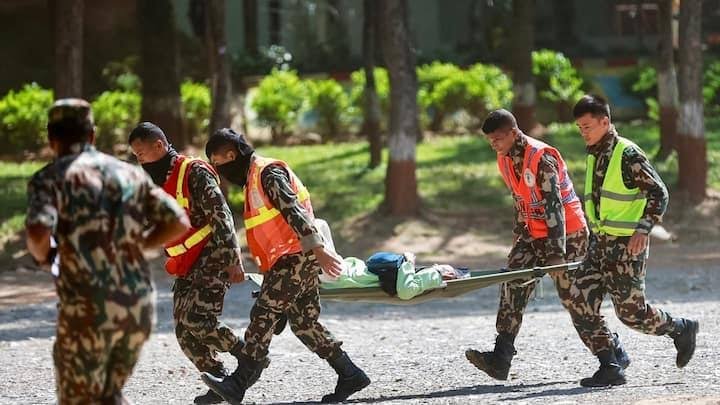
| 26 August 2026 | The flood of Bhote Koshi hits. Nepal begins a nationally led search-and-rescue operation using the Army, Police, Armed Police Force and helicopters. | Nepal initially relies heavily on its own emergency-response capacity. |
| 27 August 2026 | The Kathmandu Post reports that Nepal had declined offers from several countries to send foreign search-and-rescue teams, saying its own security agencies could handle the operation. | This is where the debate over the swiftness of the acceptance of foreign rescue capacity begins. |
| 28 August 2026 | Reuters reports that Nepal said it did not require foreign search-and-rescue assistance for the time being, despite offers from several countries. | This appears to conflict with later government statements that Nepal had been seeking international assistance from the beginning. |
| 29 August 2026 | Foreign Minister Shisir Khanal says Nepal “has not rejected foreign rescue aid.” He explains that Nepal was using its own forces while considering international assistance where specialised expertise was required. | The government’s words in the public release start to vary from the previous account of foreign combat teams being denied. |
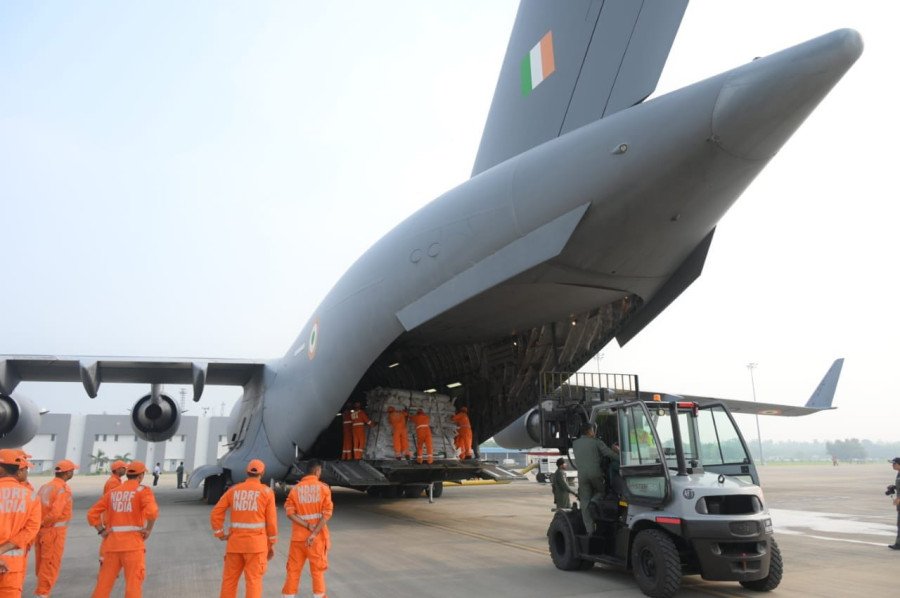
| 30 August 2026 | Nepal’s Foreign Secretary says the country is accepting international support “as necessitated” and confirms that tunnel-rescue experts from India, China and South Koreahave been mobilised. At this stage, approximately 2498 people are missing. | Foreign specialist aid has now officially joined the role of aid and thousands are still missing. |
| 2 September 2026 | Prime Minister Balen Sah tells Parliament that it was “unthinkable” for Nepal not to seek foreign assistance and says the government had been coordinating with the international community from the beginning. | The Prime Minister’s account raises questions about how his statement fits with the August 27–28 reports that foreign rescue teams were initially declined or deemed unnecessary. |
| 3 September 2026 | The Foreign Minister outlines specialised international assistance, including tunnel-rescue, forensic and technical support. Foreign rescue teams and equipment become increasingly involved. | International involvement has expanded substantially after a week the initial nationally led response. |
The key question
If Nepal had been coordinating international rescue assistance from the beginning, as the Prime Minister later told Parliament, why did the Foreign Ministry spokesperson on August 28 say that foreign search-and-rescue assistance was not required at that time?
In what ways is this timeline relevant?
The existing timeline shows a stark difference in government publicity of its response.
According to the modern reports, on 27-28 August, Nepal had not asked for foreign search-and-rescue teams and was falling down in it.
But on Aug. 29, the Foreign Minister asserted that Nepal had not turned down foreign assistance to rescue.
On August 30, the Foreign Ministry confirmed foreign specialist teams were being mobilised by August 30.
MTI, meanwhile, on September 2, has told Parliament that it was “unthinkable” for Nepal to not ask for assistance from outside forces and it has been coordinating from the outset.
These statements could be balanced if the government makes a distinction between international assistance in general and the use of foreign search and rescue teams.
The distinction, however, was never made clear in the first few days.
The question of lost time
That is not, then, the point of whether eventually an international assistance was given to Nepal. It clearly did.
A more important question is: Could foreign search and rescue capacity which was already available have been made available earlier?
That’s an important question to consider because of the first few days that are critical immediately after disaster when survivors could be trapped in buildings, in tunnels or in isolated areas.
There were thousands of people left unaccounted for at the time the controversy arose. The Foreign Ministry on Wednesday reported that there were about 2,498 people still missing, and 734 body remains were found, as of August 30.
At the moment though, there is no conclusive proof that the government’s first decision on foreign rescue teams contributed towards more deaths.
This type of assertion would only be possible after a separate reconstruction of the rescue; examples of this include:
- When each country offered assistance
- When Nepal received those offers
- Who took the decision to accept/reject them?
- When foreign teams were allowed inside Nepal.In the year of authorization to foreign teams to Nepal.
- These groups reached affected areas, but when.Those groups did reach affected areas, but when.
- What kind of equipment is there in our country?
- What additional capabilities foreign teams could have provided
- Whether there was any potential survivor who could have been reached during the alleged time of the dead.
- Could earlier deployment potentially have had an impact on survival outcomes?
This disagreement is significant because it wasn’t simply a political interpretation that occurred months afterwards. They are expressions that occurred during the disaster response.
According to Reuters report, the current position on August 28th suggested that Nepal were in no need of a search-and-rescue from the outside at this time.
However, the next day, the Foreign Minister assured that the rescue assistance from foreign countries was not rejected by Nepal.
Foreign tunnel-rescue experts were then mobilised, the Foreign Secretary confirmed.
Lastly, says the Prime Minister in his address to Parliament, the thought of seeking overseas assistance from the start was never lost on him.
So the public has a right to know the answer to a simple question:
In retrospect, consider when was the foreign search and rescue teams offered, when were they accepted in Nepal, and why were some search and rescue teams not deployed immediately in Nepal if coordination for international rescue assistance was done from the beginning?
What needs to be analysed in an Independent Review.
With such a crisis, an independent review may assess the situation by producing a full timeline of events involving the rescue process.
It should review the government’s communications with other governments, any diplomatic communications the government has received, the offers of assistance by the National Rescue Teams, the responses the government has received, airport clearances, time of deployment as well as reports from affected areas during the operations.
This type of review may help to ascertain whether the country’s decision to depend on rescue forces in its own country initially was a proper operational move or not and also check whether the country’s attempt to galvanise unnecessary delays in mobilising international rescue capabilities.
This evidence is not yet available so we don’t know yet if the delay led to more deaths.
It has been factually proven that there was a publicly documented conflict regarding when and why Nepal accepted foreign S&R assistance.
That makes the timeline an important piece of the puzzle in trying to understand how Nepal has reacted to one of its most significant recent crises.