

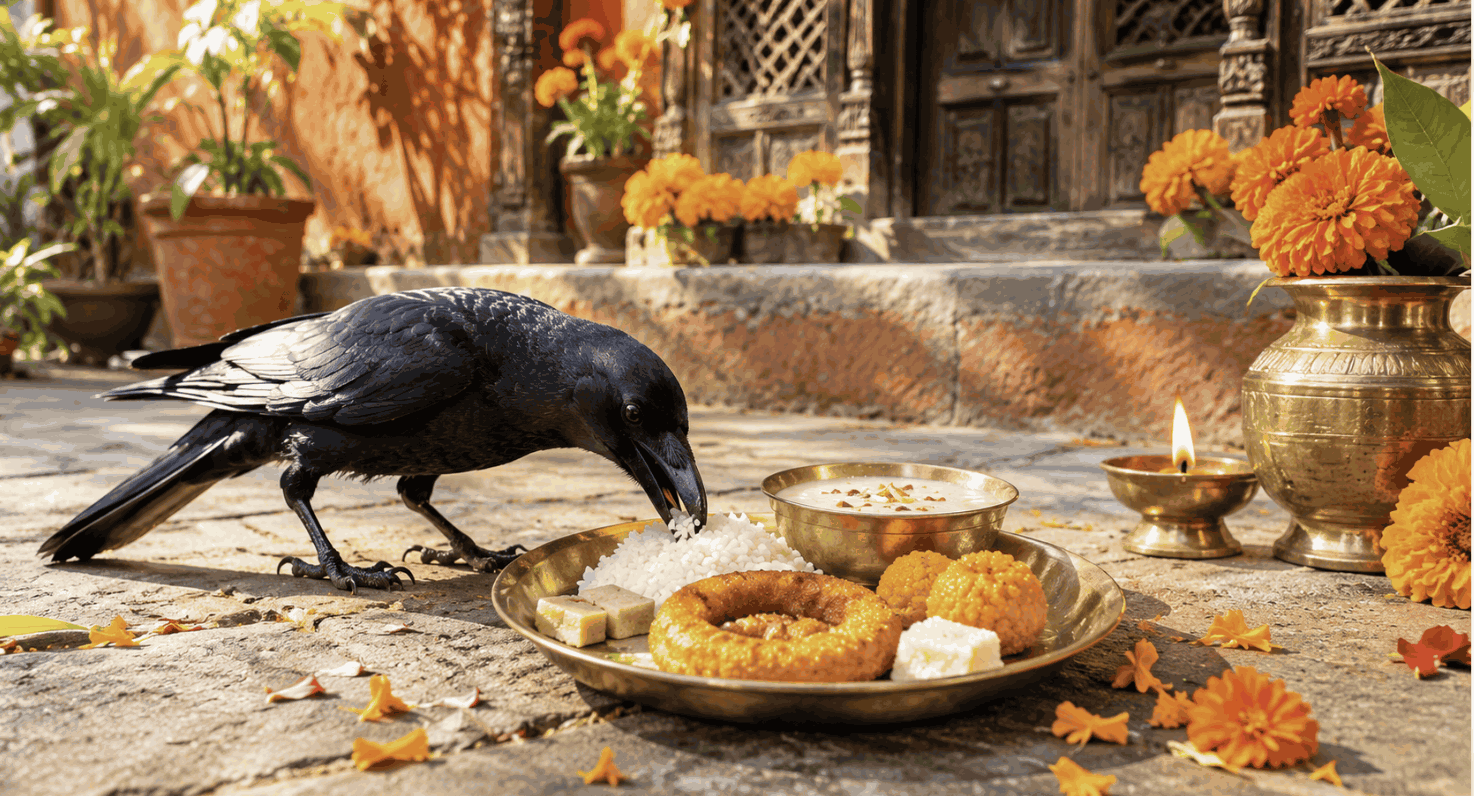
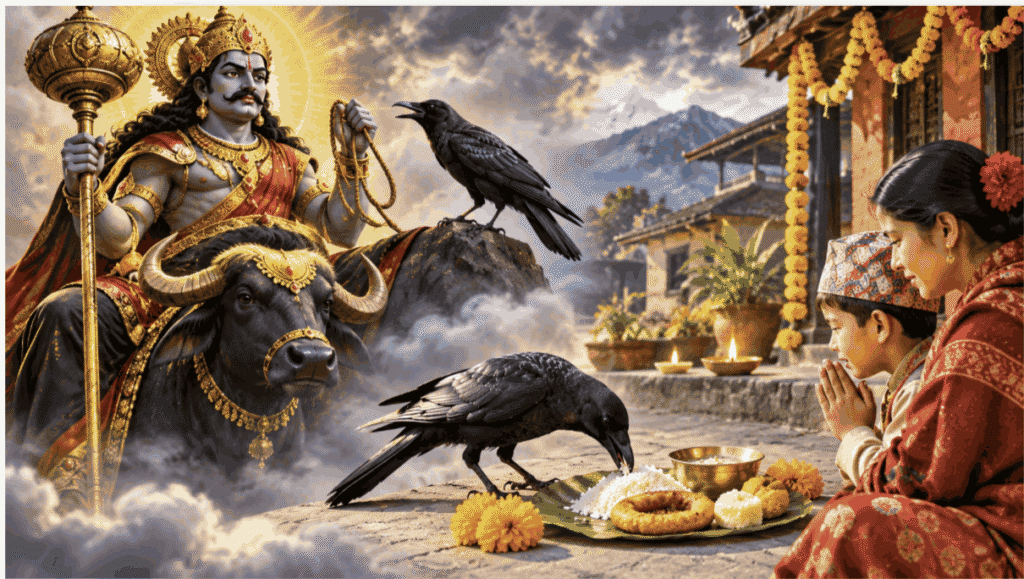
Kaag Tihar is the first day of Nepal’s five-day Tihar festival, when people worship crows and offer them food as a symbol of respect. It is celebrated during the Nepali month of Kartik, this traditional festival is closely connected with Hindu beliefs about Yamaraj, the god of death and justice. Crows are traditionally accepted as a messenger of Yamaraj and people believe to feed crows, sorrow and misfortune do not come to their house.
Kaag Tihar is observed with a simple but meaningful ritual as opposed to those colorful functions of Laxmi Puja and the family function of Bhai Tika. Families prepare food, place it on rooftops, courtyards or open spaces and wait for crows to arrive.
The festival marks the beginning of Yamapanchak, a five-day period during which different animals and birds are honoured. It also reflects a long-standing Nepali tradition of respecting living creatures and maintaining a connection between religious beliefs, nature and everyday life.
What is Kaag Tihar in Nepal?
Kaag Tihar is a Hindu festival dedicated to the worship of crows. Kaag, which in Nepali means crow and Tihar is the festival of lights. It is celebrated on Kartik Krishna Trayodashi, the 13th day of the falling lunar month of Nepali month Kartik. It marks the beginning of Yamapanchak, which includes several important religious and cultural celebrations.
Families feed the crows on this day because it is a time of religious celebration. People place food on rooftops, terraces, courtyards and other open spaces where birds can easily find them. Some family also perform Kaag Puja and offer prayers for the happiness and safety of their families. Although the rituals may differ from communities, the central practice remains the same: honouring crows and offering them food.
Why are Crows worshipped in Nepal during Kaag Tihar?
The worship of crows during Kaag Tihar is associated with Hindu mythology and traditional beliefs about Yamaraj. Yamaraj, also known as Yama, is the Hindu deity associated with death, justice and the afterlife. Traditionally, crows are believed to deliver messages from Yamaraj, the messenger of Maha Yama (the Lord of Death), and convey information between the human world and the world of Maha Yama.
So their presence and call have been given symbolic meanings in Nepali culture. A crow’s cawing near a house can be an indicator of visitors or news for some people. In this event or occasion, people feed the crows and pray for them to bring them good news instead of bad news. A familiar Nepali expression, Shubha bol, shubha bol, meaning “speak good news”, is sometimes used when a crow caws nearby.
The tradition does not mean that crows are considered evil. Their role, however, is very special during the festival of Tihar because of the connect that they have with Yamaraj (Yama is the god of death).
How is Kaag Tihar celebrated in Nepal?
Kaag Tihar is usually performed during the early morning. Families prepare food offerings and place them outside their homes for crows. Rooftops, courtyards, terraces and open spaces are common places for these offerings. At some homes, there is a small puja before putting the food.
The main customs include:
- Preparing traditional food for crows.
Placing offerings in open spaces where birds can reach them. - Performing prayers and Kaag Puja according to family traditions.
- Seeking blessings for peace, happiness and protection from misfortune.
- Allowing crows to eat the offerings without disturbing them.
The celebration is simple compared with other days of Tihar but it carries religious meaning for Nepali community.
In urban areas, individuals tend to hold offerings on their balcony space or on their roof tops, and in rural areas, families might hold offerings around their homes or their courtyards.
What food is offered to Crows on Kaag Tihar?
Food offerings are an important part of Kaag Tihar. Nepali families prepare different traditional dishes and offer small portions to crows. Common offerings include cooked rice, kheer, sel roti, sweets and other homemade foods. There are also some households that provide fruits and other suitable food items.
Sel roti, a traditional Nepali rice flour bread, is particularly associated with Tihar celebration. Kheer, prepared using rice, milk and sugar, is another traditional dish that may be included in food offerings. The choice of food varies according to household customs and regional practices. No fixed menu, that is, each family follows a different one.
This is done by placing the food on plates, banana leaves or other suitable surfaces traditionally. They wait then for crows to come and eat. Fresh food should be offered in small quantities. Spoiled food, heavily salted leftovers and plastic packaging should be avoided to prevent harm to birds and the surrounding environment.
Religious Significance of Kaag Tihar and Yamaraj
Kaag Tihar is closely linked with Yamarpanchak, the five day festival of Yamaraj. In Hindu mythology, Yamaraj is the lord of the dead and the god of justice. At this time the bird is given a symbolic role, as it is traditionally associated with him.
People believe that worshipping crows and offering them food can help protect their families from sorrow and unfortunate events. The ritual is linked as well to prayers for good fortune and good news.
Crows have connections with other Hindu customs as well. In some traditions, they are linked to ancestors and to the offerings in their honor of deceased family members. However, these ancestor-related rituals have their own religious meanings and should not be confused with Kaag Tihar. In regards to religious observance, for many Nepali families, Kaag Tihar is a chance to show their religion by presenting food.
Connection Between Kaag Tihar and the Five Days of Tihar
Kaag Tihar begins Yamapanchak, which includes several important celebrations. Each day has its own religious and cultural significance.
- Kaag Tihar: The first day is dedicated to crows. Traditionally known to people as messengers of Yamaraj, people offer food and worship them.
- Kukur Tihar: The second day honours dogs. People apply tika to their foreheads, decorate them with marigold garlands and offer them food. Dogs are respected for their loyalty and their association with Bhairav.
- Gai Tihar and Laxmi Puja: The third day is associated with cow worship and the worship of Goddess Laxmi, the Hindu goddess of wealth and prosperity. Families clean their homes, decorate entrances, light oil lamps and perform Laxmi Puja.
- Goru Tihar and Govardhan Puja:The fourth day is dedicated to Goru Tihar and Govardhan Puja and is a day of worship for oxen; which have been an integral part of the agricultural lifestyle of people. Mha Puja is another festival of the Newar community and Nepal Sambat is the New Year date celebrated accordingly.
- Bhai Tika: The final day celebrates the relationship between brothers and sisters. Sisters apply colourful tika to their brothers’ foreheads and pray for their long lives, happiness and good health.
The dates of some festivals may change year by year depending on the lunar calendar and local customs.
How is Kaag Tihar celebrated in different parts of Nepal?
Kaag Tihar is observed across Nepal, including Kathmandu Valley, the hills, the Terai and rural communities. Food is still left for the crows and prayer is verbally expressed for the safety of the family of people throughout the country.
Similarly, in Kathmandu Valley, religious activities surrounding the crow are linked with temples as well like Kageshwari Mahadev temple in Kageshwari Manohara. Kaag Tihar is the association regarding the temple area. In village areas, people often place food in courtyard, on roof top and in open spaces around their houses. In cities, balconies and terraces are often used for offerings.
Even those Nepalis who reside in other countries celebrate Kaag Tihar and carry on their cultural and religious practices.
When is Kaag Tihar celebrated?
Kaag Tihar is held on Kartik Krishna Trayodashi, 13th day of the waning lunar fortnight of Nepali month Kartik. The festival usually takes place in October or November, depending on the lunar calendar. The date in its Gregorian system varies annually.
The official date of the festival is fixed by following the Nepali lunar calendar and also by religious calculations. The annual calendar decided by the Nepal Panchanga Nirnayak Samiti provides the pole on which the people can check the exact date.
source:tikapur.com
[…] Kaag Tihar marks the beginning of the Tihar festival in Nepal. On this day, people worship crows and offer them food such as rice, sweets and other traditional dishes. According to Hindu beliefs, crows are considered messengers of Yamaraj. People believe that feeding them helps prevent sorrow and misfortune and brings good news to their families. […]