

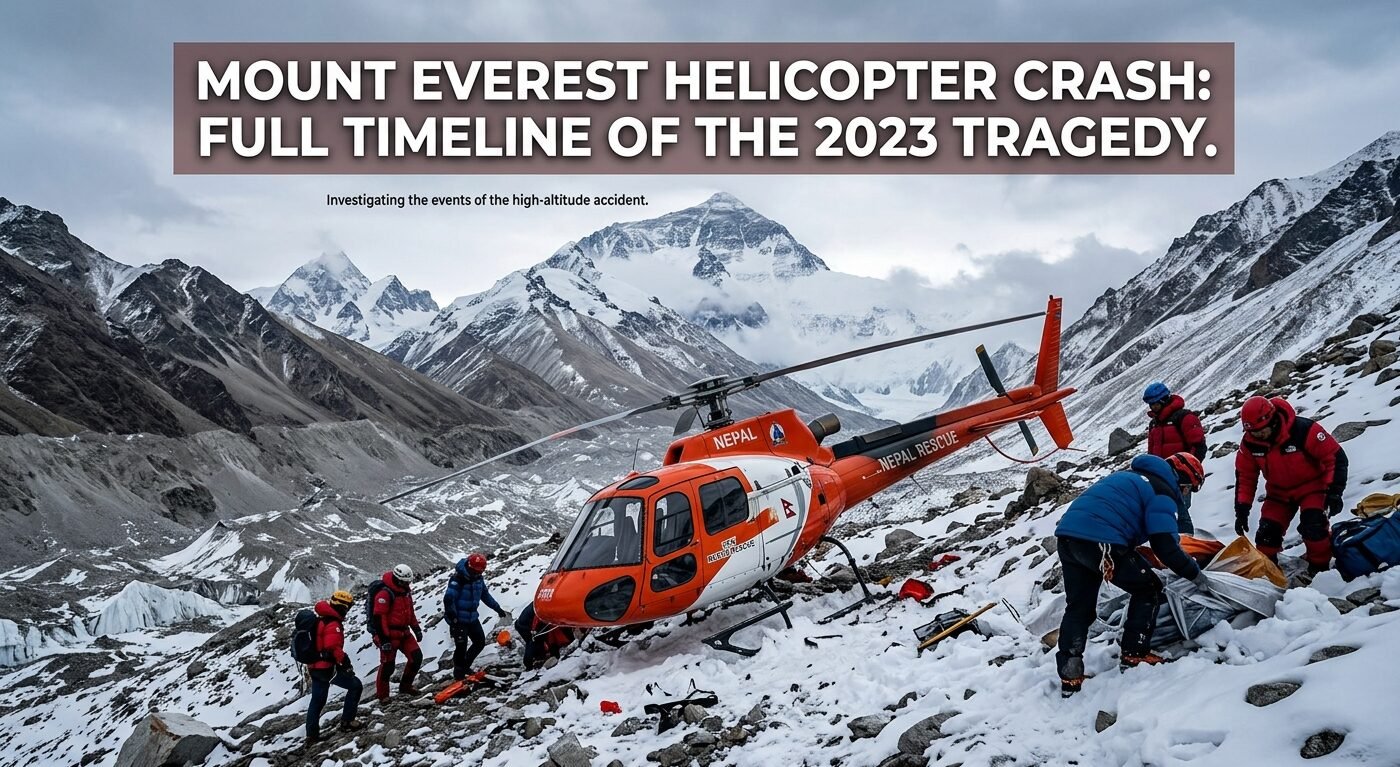
Mount Everest Helicopter Crashes: Navigating the Heights
In the heart of the Himalayas, where the sky touches the earth, lies the majestic Mount Everest. In our last blog we talked about Annapurna Base camp trek but in this one I will write about a place of dreams for adventurers and climbers, a destination that beckons with its awe-inspiring beauty and formidable challenges. But amid this allure, there’s a lesser-known side of Everest – a history of helicopter crashes that have left their mark on this iconic peak.
Table of Contents
The Significance of Mount Everest
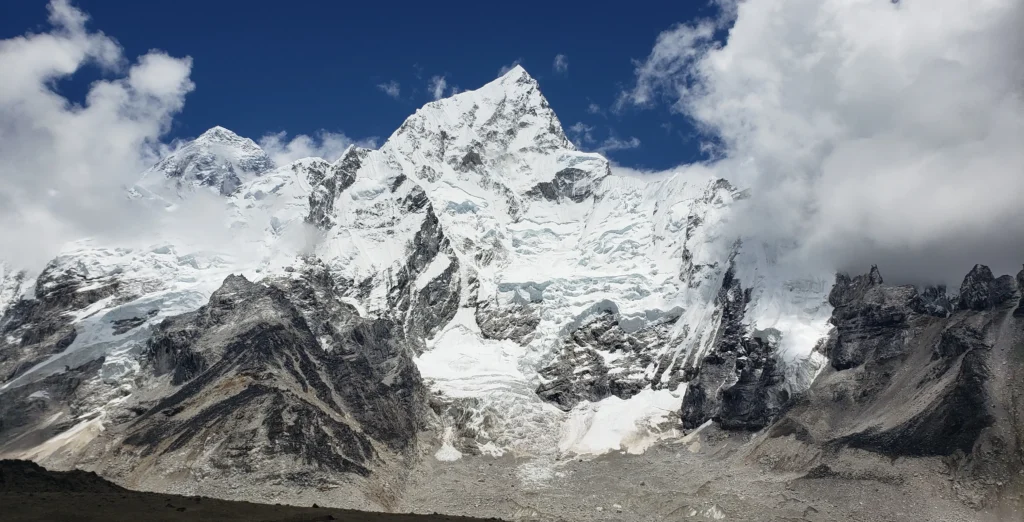
Mt Everest, the tallest mountain on Earth, stands at a staggering 29,032 feet (8,849 meters) above sea level. It has long held a special place in the hearts of mountaineers, offering a tantalizing mix of adventure and danger. Climbing Everest is the ultimate test of human endurance and willpower.
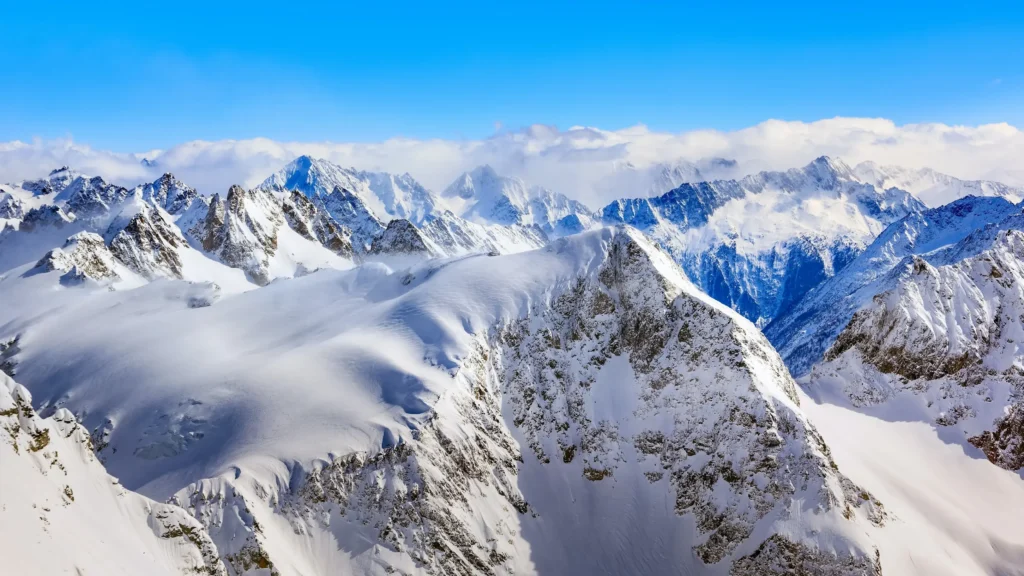
Full Timeline of the 2023 Tragedy
The Manang Air helicopter crash on July 11, 2023, was one of the tragic aviation accidents in Nepal’s Everest region. The helicopter, registered as 9N-AMV, was flying from the Surke area of Solukhumbu to Kathmandu when it lost contact with air traffic control near Lamjura Pass. All six people on board—five Mexican nationals and Nepali pilot Captain Chet Bahadur Gurung—died in the crash.
Although often described as the Mount Everest helicopter crash, the accident occurred near Lamjura Pass in Solukhumbu district, rather than on Mount Everest itself.
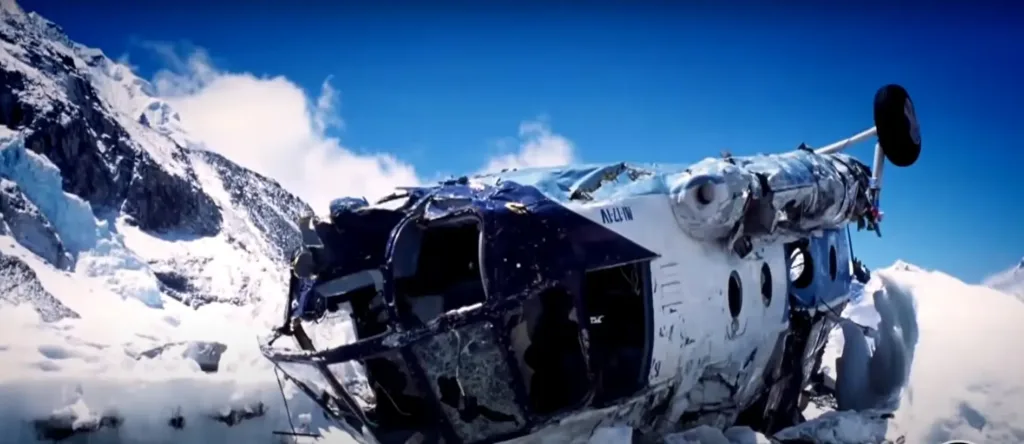
Timeline of the Mount Everest Helicopter Crash
| Around 10 AM | The helicopter departs from Surke Manang Air helicopter 9N-AMV takes off from Surke, near Lukla, carrying pilot Captain Chet Bahadur Gurung and five Mexican passengers. It is heading to Kathmandu. |
| 10:01 AM 📶 | Communication is lost The helicopter loses contact with air traffic control in the Lamjura Pass area. Authorities then make a series of attempts to recover the lost aircraft. |
| 10:12 AM 📡 | Last tracked location is reported Manang Air’s operations and safety manager later reports that the helicopter’s last tracked location was near Lamjura Pass at approximately 10:12 AM. |
| Late morning | Search efforts begin Police and other personnel search the Lamjura Pass area. Local residents discover the wreckage at Chihandanda, near Lamjura in Likhupike Rural Municipality, Solukhumbu district. |
| July 11 💔 | All six occupants are confirmed dead Authorities confirm that the pilot and all five Mexican passengers died in the crash. The passengers were members of the same family. |
| July 11 evening | Victims’ bodies are transported to Kathmandu The rescuers transport the wreckage by roads from the crash site to Bhakanje. Two Altitude Air helicopters then transport them to Tribhuvan University Teaching Hospital in Kathmandu for post-mortem examinations. |
| July 11–12 🔎 | The government orders an investigation The government forms an inquiry committee led by Buddisagar Lamichhane, a joint secretary at the Ministry of Culture, Tourism and Civil Aviation, to investigate the accident. |
What caused the helicopter crash?
Initial police comments suggested that bad weather may have contributed to the accident. However, early reports did not establish a definitive cause. The French aviation investigation authority’s published accident record also describes the circumstances as unknown. It is important not to blame the weather or any other factor until the official investigation confirms the actual cause.
Key facts at a glance
| Detail | Information |
|---|---|
| Date | July 11, 2023 |
| Airline | Manang Air |
| Aircraft registration | 9N-AMV |
| Flight route | Surke, Solukhumbu, to Kathmandu |
| Crash location | Chihandanda, Lamjura Pass area, Solukhumbu, Nepal |
| People on board | 6 |
| Fatalities | 6 |
| Pilot | Captain Chet Bahadur Gurung |
| Passengers | 5 Mexican nationals |
| Investigation | Government inquiry committee formed |
Sources: The Kathmandu Post, Radio Nepal, Setopati and the French BEA aviation investigation authority.
Editorial note for your article: The phrase “Mount Everest helicopter crash” is useful as a search keyword, but the more precise description is the 2023 Manang Air helicopter crash near Lamjura Pass in Nepal’s Everest region. This helps readers understand where the accident actually happened.
Helicopter Travel to Mt Everest
Helicopters have become an integral part of the Everest experience. They ferry climbers and tourists to the base camp, offering a breathtaking aerial view of the surrounding landscape. The convenience of helicopter travel has made the Everest region more accessible than ever.
Historical Context of Mount Everest Helicopter Crashes
Over the years, the skies over Everest have witnessed several helicopter accidents. These incidents have often resulted in tragedy, with lives lost and dreams shattered. Understanding the historical context of these crashes is essential to improving safety.
Recent Incidents
In recent years, Mt Everest has seen a spate of helicopter crashes. These incidents have raised questions about the safety of air travel in this region. Examining the causes and outcomes of these crashes is crucial.
Safety Measures and Regulations
Efforts have been made to enhance safety in helicopter travel on Everest. Regulations have been put in place, and safety measures have been implemented to mitigate risks.
Human Factor in Crashes
However, the human element remains a critical factor. The decisions made by pilots and their training play a pivotal role in preventing accidents.
Technological Advancements
On a brighter note, advancements in helicopter technology are contributing to safer travel in the Everest region. These innovations promise to make air travel more secure.
Impact on Tourism
The safety of helicopter travel has a direct impact on tourism in the Everest region. Visitors and climbers consider safety a top priority when planning their trips.
Response and Rescue Efforts
Swift response and effective rescue operations are essential in the aftermath of helicopter crashes. The ability to respond promptly can make the difference between life and death.
Environmental Concerns
Helicopter travel also raises environmental concerns. Noise pollution and disturbance to wildlife are issues that need attention.
Survivor Stories from Mount Everest helicopter crash
Amid the stories of tragedy, there are also tales of survival. Individuals who have lived through helicopter crashes on Everest share their experiences and insights.
The Future of Helicopter Travel on Everest
As we look to the future, there is hope for safer helicopter travel on Mount Everest. Technological advancements, improved regulations, and a commitment to safety all point toward a brighter tomorrow.
Conclusion
In conclusion, Mt Everest helicopter crash is often happens in Everest sites. Mount Everest, with all its grandeur and challenges, remains a magnet for adventurers worldwide. Helicopter travel has added a new dimension to exploring this iconic peak, but it comes with its share of risks. Safety measures, regulations, and technological advancements are shaping a safer future for those who dare to reach for the sky.
Frequently Asked Questions
Are helicopter crashes on Mount Everest common?
Helicopter crashes on Mt Everest are relatively rare, but they do occur. Safety measures are implemented in place to minimize the risk.
How can I ensure a safe helicopter trip to Everest Base Camp?
To ensure a safe trip, choose a reputable helicopter tour operator with experienced pilots, and follow all safety guidelines provided.
What are the environmental impacts of helicopter travel on Everest?
Helicopter travel can contribute to noise pollution and disturb wildlife in the region. Efforts are being made to address these concerns.
Are there any recent advancements in helicopter technology for Everest travel?
Yes, advancements in helicopter technology are continuously improving safety and efficiency in the Everest region.
Can I still climb Mt Everest if I’m concerned about helicopter safety?
Yes, you can still climb Mt Everest via traditional routes without taking a helicopter. It’s essential to assess your comfort level and risk tolerance when planning your expedition.