

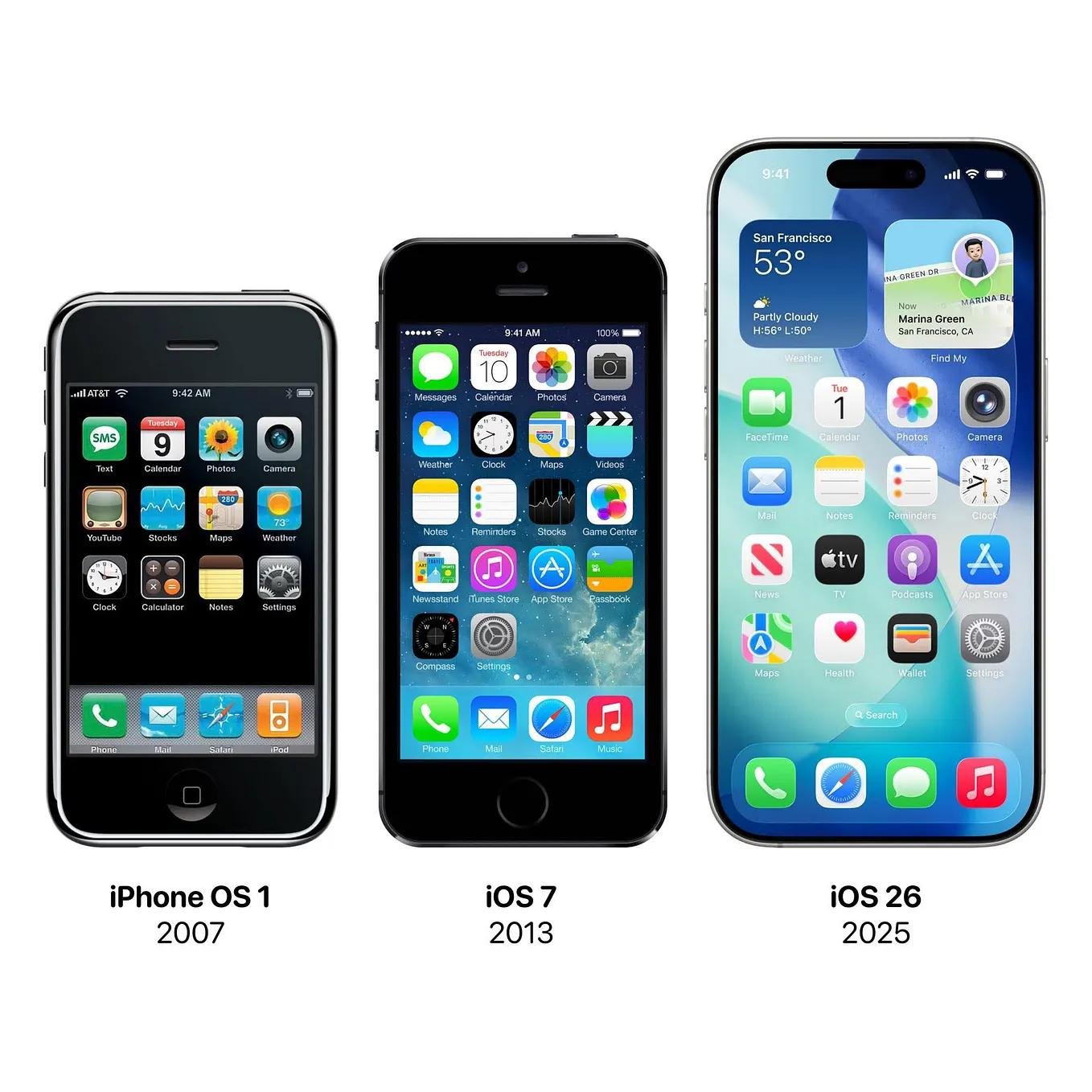
As I think back to the firm’s past, I wonder why Apple has squandered its innovation and design DNA in such a puzzling way.I dust off my memories of the company’s history and question: Where has the design and innovation at Apple gone?
In January of 2007, Steve Jobs appeared on stage at Macworld to unveil an event that changed the world of mobile technology forever with the launch of the original iPhone. The beginning of iPhone innovation started with the product that made one touch screen device out of a phone, a widescreen iPod touch and an internet communication device. The original iPhone marked an entirely new paradigm in interacting with a cell phone, via a touch-heavy display.
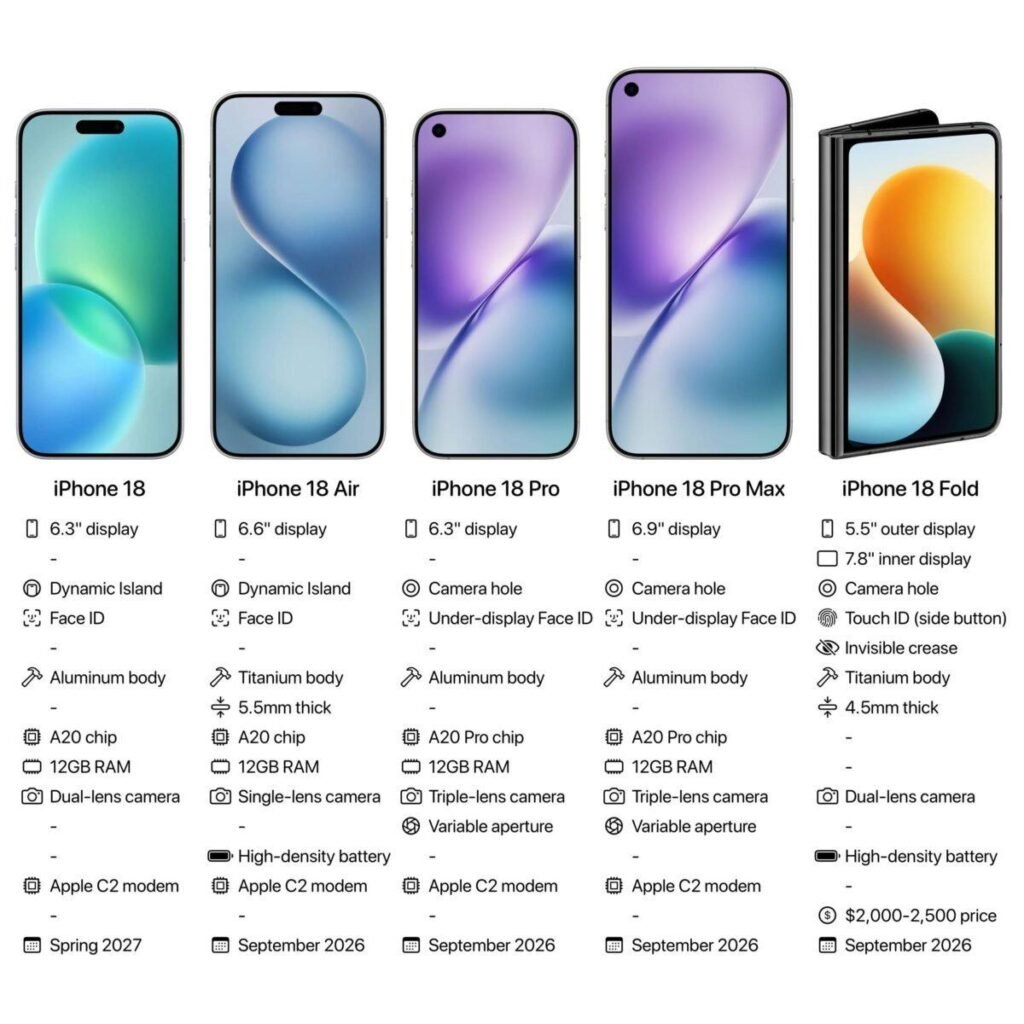
Apple is now in the iPhone 18 generation and it is nearly 20 years later. The cameras in the iPhone 18 Pro and iPhone 18 Pro are also enhanced, and wheelchat brings the first foldable iPhone to Apple with several enhancements for the battery life and AI in the new iPhone Duo.
It can thus be considered an interesting question as to the iPhone innovation: has Apple continued the revolution with each abruption of the original iPhone, or has Apple arrived at a new era in which improvements will be less radical and less essential to the common man?
iPhone 1st Generation: The Beginning of a Revolution
Apple’s debut iPhone on 9th January, 2007, was simply called the “iPhone“—the company claimed it was a mobile phone, a 1280×800 touch video screen iPod and an internet communication device all in one. One of the biggest iPhone innovations was essentially when Apple was not just releasing a new phone with new features but the approach of mobile devices in general.
Features of the original iPhone were the 3.5-inch display, the 2MP camera, the Wi-Fi, the EDGE connectivity and the multi-touch interface. Today it’s quite a primitive set of specs but the initial facebook phone did not matter because of the specs, it matters because of the people using it. Actually, the user experience of the iPhone was what was truly innovative: users could now touch, swipe, pinch and touch and manipulate information directly on the screen as opposed to primarily relying on hard buttons.
For the first time, the iPhone also came with features like visual voicemail, which would show visual voicemail instead of ringtone or silent notifications; a software-type keyboard; the Safebility of web browsing; integrating Google Maps into the device; photo-management functions and automatically switching the display orientation and turning off the screen when the device was held to one’s ear.
It was quite apparent right away how important this iPhone innovation was. Only 74 days after Apple first sold the iPhone in the U.S. market a million units later, the company revealed it had reached the milestone of a million sales.
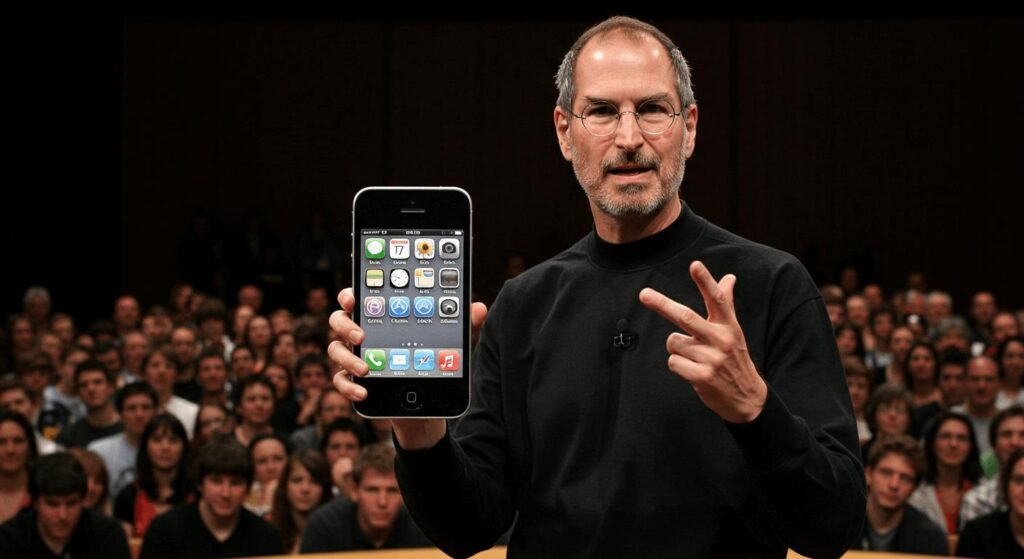
Make no mistake, Steve Jobs and his team were brilliant!There is no doubt that Steve Jobs and his team were brilliant!
It’s not that Steve Jobs was responsible for developing each and every technology in the iPhone. Many technologies were already available, such as touchscreens, mobile telephones, portable music players and Internet services. His gift was in the ability to take the technologies and make them simple, intuitive and desirable.
One of the key tenets of iPhone innovation was this. Apple made the technologies complicated and made them accessible to the common man by way of an interface. Apple weren’t bothering users with complex technology, they tried creating technology to be used by consumers.
Steve Jobs was also one of the people who had realised that you have to have something more than just impressive specifications in order to have a successful product. The original iPhone proved that the design, software and hardware and user experience could be engineered in unison. This strategy was to become Apple’s hallmark, and played a significant role in making the iPhone’s a platform instead of just another phone.
The impact of that iPhone innovation was far reaching beyond the original. But Salesforce was just the latest in a host of ideas that Apple claimed the iPhone inspired for “integration of software and hardware and services”, such as its iPad and Apple Watch, and for millions of apps used every single day.
iPhone 1 vs iPhone 18 Pro Max
The original iPhone to the iPhone 18 Pro Max represents how far iPhone innovation has come. While the original iPhone was created with the idea of placing a computer-like internet browser experience into a pocketbook phone, the iPhone 18 Pro Max is certainly an extremely robust pocket computer for advanced photography, gaming, AI processing and expert video generation.
The iPhone 18 Pro Max features Apple’s A20 Pro chip, next-generation vapor chamber, new 48MP Fusion Main camera with variable aperture, new Pro camera controls and Apple’s next-generation AI capabilities. Apple claims the battery life has also been the biggest of its lifetime on the iPhone 18 Pro Max.
Through the lens of technical or product engineering, that distinction also speaks to a huge degree of innovation by the iPhone. The iPhone back in the day had nowhere near the specification of modern smartphones when it came to processing power, camera quality, connectivity and battery life. But the original device most certainly drove more consumer behavior change.
The answer lies in the difference between iPhone innovation in 2007 and iPhone innovation today: The first iPhone transformed the original concept of the smartphone, while today’s iPhones are an increasing impetus to make the smartphone faster, smarter, or more capable.
The iPhone 18 Pro/features improved cameras and AI, along with more power.
The iPhone 18 Pro is a more evolved version of the iPhone innovation. These are the areas that Apple has focused on, the ones that are of importance to the consumer on a daily basis: photography, performance, battery life and intelligence.
One of the most intrigue features will be the new 48MP Fusion primary camera with variable aperture. According to Apple, this is the first time that aperture control will make its appearance on the iPhone, which will provide the camera with more control over Light and Images.
The A20 Pro chip is also being used in the iPhone 18 Pro, and Apple claims that this chip is manufactured on 2-nanometer process technology and is enhanced with new Neural Accelerators to boost AI and computational photography capabilities.
This is real innovation for the iPhone and especially for photographers and video makers, as well as those users who utilize demanding applications. The concept however remains familiar, and is still a traditional touch-screen cell phone.
📱 iPhone 1st Gen vs iPhone 18 Pro Max – iPhone innovation
| Feature | iPhone 1st Gen (2007) | iPhone 18 Pro Max (2026) |
|---|---|---|
| Launch | 2007 | 2026 |
| Display | 3.5″ LCD | ~6.9″ OLED |
| Resolution | 320 × 480 | ~2868 × 1320 |
| Refresh rate | 60 Hz | 120 Hz ProMotion |
| Touch | Multi-touch | Multi-touch + modern gesture system |
| Processor | Samsung 32-bit ARM | Apple A20 Pro |
| RAM | 128 MB | ~12 GB |
| Storage | 4 / 8 / 16 GB | 256 GB – 2 TB |
| Main camera | 2 MP | 48 MP system |
| Front camera | ❌ None | 18 MP |
| Video recording | ❌ No video recording | 4K-class professional video |
| Cellular | 2G GSM / EDGE | 5G |
| Wi-Fi | 802.11b/g | Modern Wi-Fi |
| Bluetooth | Bluetooth 2.0 | Modern Bluetooth |
| GPS | ❌ No built-in GPS | GPS + modern positioning |
| Biometrics | ❌ | Face ID |
| Charging | 30-pin connector | USB-C / wireless charging |
| Water resistance | ❌ | IP-rated water resistance |
| App Store | ❌ At launch | Full modern App Store |
| Weight | ~135 g | ~230 g class |
| Battery | ~1,400 mAh class | Much larger, modern high-density battery |
| AI capabilities | ❌ | Apple Intelligence / advanced on-device AI |
| Starting US price | $499 (4 GB) | Around $1,299 class* |
Let’s take a closer look at the all-new iPhone 18 Pro Max.Let’s have a closer look at the all-new iPhone 18 Pro Max.
The iPhone 18 Pro Max is the latest iPhone innovation in Apple’s series of traditional smartphone designs. It brings the familiar concept of the iPhone and takes it on the performance, camera, battery and AI. With regards to the innovative aspect of the iPhone, it’s an incremental evolution instead of truly revolutionary.
The iPhone 18 Pro Max’s improvements in terms of battery life come from Apple silicon and a larger battery, which give it its greatest increase in battery life ever, according to Apple. The company adds that the new thermal system enables it to perform its best sustained performance ever.
The Variable Aperture Camera is just one among a number of new opportunities in iPhone development for professional photographers, since it provides a new degree of control over the camera system – without requiring an even greater megapixel increase.
However, many consumers will have just one question: How revolutionary can the next iteration truly be if the phone’s overall form and interface remain largely unchanged?
In many ways, Apple’s largest physical change is the iPhone Duo.
The innovations in the iPhone get really interesting with the iPhone Duo. Apple has made the first-ever foldable iPhone with a radical new body that is far removed from the other shaped iPhones they have produced over the years.
The iPhone Duo outer display comes in 5.4-inch size when closed. It will come with a 7.6-inch inner display when it is opened, meaning it is half the size of the iPhone 18 Pro Max display. This will also ensure seamless transition between the outer and inner screens.
Another important aspect of this is the innovation of iPhone – switching shapes as per the user action. It can be opened when more screen space is needed for multitasking, gaming or watching content, but retracted when it’s time to get a bit smaller for a compact phone.
In contrast to what is a routine upgrade on another conventional smartphone, the Dupoint is more like an iPhone innovation than anything else. This shifts the discussion from “How powerful can the smartphone be?” to “What is the actual shape of the physical smartphone?
Why iPhone Innovation seems to be slower now?
But part of the explanation people give for the recent lackluster pace of innovation for the iPhone is that the smartphone itself is quite old-fashioned these days. Smartphones had so many challenges to face in 2007. The finger on the screen was not yet the primary interface to the phone, mobile internet was still in its infancy, and camera technology was basic and computer programs scarce.
Today, with a cell phone, there’s actually a massive amount of work being done. Can be a substitute for a camera, GPS device, music player, video player, games console, calculator, notebook, banking terminal and computer in a wide range of everyday activities. That poses an even greater hurdle for Apple to make innovative leaps in what it has, as it embarks on improving an already very capable category.
That is why it often seems the gap between this generation (the iPhone 16, 17, and 18) and that which has been released before doesn’t seem as vast as the comparison between the original iPhone and the previous generations. The iPhone innovation doesn’t necessarily have gone away, but a lot is happening undercover.
In the realm of human subjects, Evolution is not Revolution.Human subjects: Evolution is not Revolution.
When it comes to technological innovation and technological revolution in the realm of the iPhone, there’s an important difference.
Evolution is the improvement of an existing product. They could all be classified as evolutionary iPhone innovations, such as a quicker processor, a better camera, or longer battery lasting power, and a richer display coupled to better connectivity.
Revolution is different. A revolution alters the fundamental way that the user and the technology relate. The Daisy Multi-Touch interface was radical back on the original iPhone because it had revolutionised a standard touchscreen phone. Both aspects of the iPhone Duo, along with its foldable design, have the promise of being revolutionary as they redefine the physics of a phone and a large screen.
This is because a technically amazing iPhone will look less alluring than the original. While the scientific aspects of innovation may be more advanced in the modern iPhone, revolutionary innovation is all about altering behaviour, expectations and possibilities.
They are easy to use yet they come with a significant trade-off.Simple to use and yet they have a very significant disadvantage.
However, at a certain stage improvements to a specification become too subtle for average users to discern. Faster processors, along with devices like the iPhone, presents a dilemma for innovation, because users may not notice a significant increase, when their device’s already high-horsepower chip gets even more parts to perform faster.
The improvements in the cameras are unique as photography is very conspicuous. This website features variations of the variable-aperture system in the iPhone 18 Pro and the iPhone 18 Pro Max that would affect the creative freedom of photographers, as opposed to just upping some number on a spec sheet.This website highlights the different variations of the variable-aperture system in the iPhone 18 Pro and the iPhone 18 Pro Max and how these changes would impact creative freedom versus simple specification line-up bump.
This is similarly true for battery life. We could all use a faster processor, but longer battery life could make a huge difference when it comes to the phone usage. So, Apple’s battery upgrades in the iPhone 18 Pro lineup are seen as practical iPhone innovation despite not being enhanced on the outside.
In his time at Apple, was Steve Jobs the world-changer he was identified as?
Steve Jobs’ contribution to the innovation of the iPhone goes beyond his work there—it’s part of his general principles of product design. He waylaid the arc of technology; he knew that power is achieved when people actually use technology.
The one thing that the original iPhone had was a multi-touch interface, a phone and a music player and internet device all in one. Apple later began using this term as a way to claim the iPhone was a platform that changed the nature of mobile computing and to extol upon the other devices that followed, like the Apple Watch and ApplePad.
Perhaps the biggest takeaway from Steve Jobs to the field of iPhone innovation is that innovation is not just about adding so many more features. It involves recognizing a problem, understanding human behavior and how people really operate in the real world and developing a product that changes people’s perception of what is possible.
What Will the Revolutionary Feature be in the next iPhone?
There are several ways in which the next big step forward in iPhone innovation may occur. How we interact with applications could change with AI, how digital information is presented around us could change with AR, and how phones and tablets relate to each other could change with foldable displays.
Important first step is Apple iPhone Duo, with its new “physical shape”. The most significant iPhone innovation, though, might be when these pieces of hardware, artificial intelligence and software can blend so fluidly that people don’t even think of one app or another.
The future of the iPhone’s innovation might instead have more to do with what it can sense the customer wants to do before the customer does, rather than just putting another button or camera on its surface.
iPhone 1 vs iPhone 18 Pro Max vs iPhone 18 Pro vs iPhone Duo
The original iPhone is the first in the string of new innovations of the iPhone. With iPhone 18 Pro, Apple has one more step towards taking the camera, performance, battery and AI technology further. The iPhone 18 Pro Max is the biggest and most capable model of the familiar, timeless design. The iPhone Duo is an entirely new genre of bendy designs.
| Feature | iPhone 1 | iPhone 18 Pro | iPhone 18 Pro Max | iPhone Duo |
|---|---|---|---|---|
| Era | 2007 | 2026 | 2026 | 2026 |
| Form | Traditional phone | Traditional smartphone | Traditional smartphone | Foldable smartphone |
| Display | 3.5-inch | Modern Pro display | Larger Pro display | 5.4-inch outer / 7.6-inch inner |
| Main camera | 2MP | 48MP Fusion with variable aperture | 48MP Fusion with variable aperture | Advanced multi-camera system |
| Processor | First-generation iPhone platform | A20 Pro | A20 Pro | A20 Pro |
| AI | No | Siri AI / Apple Intelligence | Siri AI / Apple Intelligence | Apple Intelligence |
| Revolutionizing multi-touch systems, refinement of the smartphone, maximum conventional iPhone capabilities, new foldable form. | ||||
| Business-as-usual, without innovation | Technological innovation | Evolutionary + technological innovation | Potentially transformational innovation | Business-as-usual, with innovation |
This comparison is a good example of why it’s hard to sense the range of possibilities in the iPhone without looking at the innovations. The original iPhone’s specs are hard to beat, but they could prove to be the most important: driving the direction of the industry.
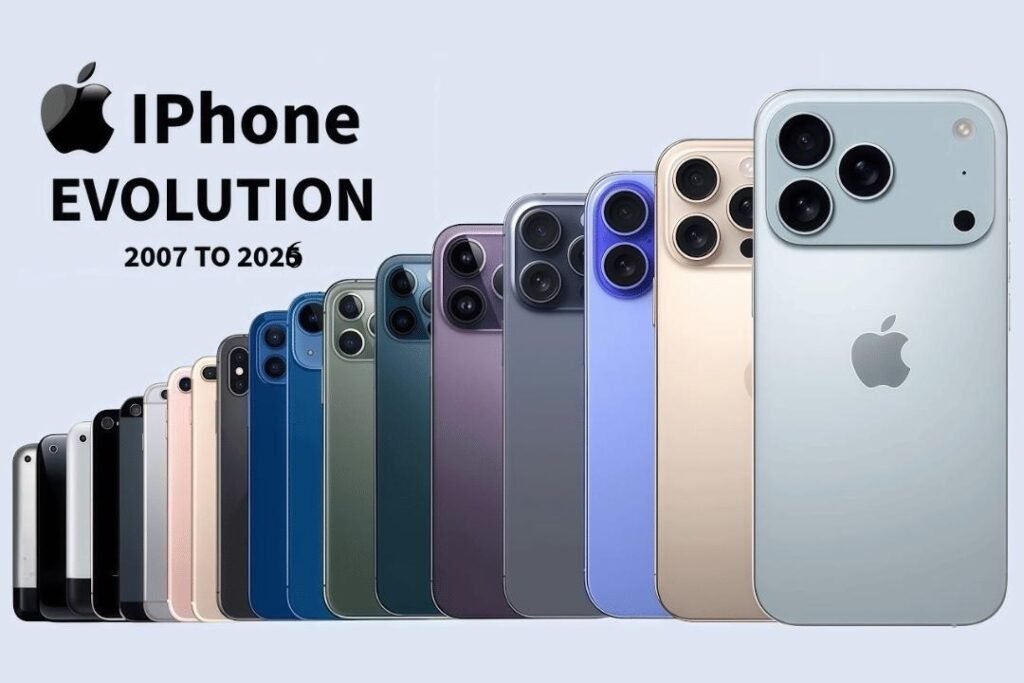
The Original iPhone is still shrouded in mystery.
The original iPhone continues to be relevant because of the emphasis on iPhone innovation as a redefining product category as opposed to a ‘perfect’ product. Apple came into a world that already had a smartphone, but sold a vision to consumers of a simpler and more visual, and more personal smartphone.
Which is why the first phone remains a marvel of technology. While the innovation of the iPhone “generation” may be significantly more sophisticated technically, the initial generation set the stage for many of the later innovations.
As the king of the smart phone industry, the original iPhone would change the landscape if it were not in existence. By its 10th anniversary, Apple had touted the ten-year longevity of the iPhone as marking an era of mobile computing, and the company had posted iPhone sales over one billion units.
Final Verdict: So has Apple lost the edge on innovation?
Is Apple a grouchy guy that lost the expertise in iPhone innovation?
Not exactly.
The iPhone 18 Pro and iPhone 18 Pro Max introduce big improvements on the camera, performance, battery and thermal management and artificial intelligence. While Apple’s coveted design looks unchanged, considerable engineering is still likely to be taking place under the hood with its variable aperture camera and A20 Pro chip.
But it’s fair to say that the innovative aspects of the new iPhone don’t seem quite as groundbreaking as those of the original in 2007. The problem category of the smartphone is already fully developed and there are already a multitude of major issues that have been addressed. It’s harder to make an old product significantly better than to create a new product category.
This product is the first whiff of new iPhone innovation. Being foldable, it’s a major change in the physical appearance of the device and potentially will impact how people perceive the connection between a smartphone and their tablet.
Steve Jobs’ most important rule was that ‘iPhone Innovation’ wasn’t just about getting last year’s devices to run a little quicker. It’s a matter of shifting mindsets.
The point about the original iPhone was it had no physical keyboard, it was for people to just think about one.
The iPhone Duo invites users to envision a phone that swells open even as you unfurl it.
The next great iPhone innovation could go further.
Perhaps it will be a phone that understands what we’re asking for before we even know what to ask for, a machine that synchronizes your life, even when you’re not aware you need it.It might be a phone that knows what it is we want before we realise we need it, a machine that knows how to orchestrate our lives when we don’t.
Well, that’ll be another “iPhone moment.”
So, as Apple gets it done, one can imagine users walking away from the new gadget saying what they did in 2007: # Artificial Intelligence Could Decide the Next iPhone Revolution
AI might be next big break in the innovation of the iPhone. Rather than having to open the various apps separately and instruct the devices separately, in the future, the phone could understand the user’s needs and then be able to carry out several actions from different apps.
Which is the stronger of the two phones?
Unarguably, the iPhone 18 Pro Max.
Out of the two, which has the top camera?
The iPhone 18 Pro Max.
Which option provides a longer battery life, more connectivity and processing ability?
Latest iPhone 18 pro max and also 16, 17 series
Which has had a greater impact on the world? The original iPhone’s case is stronger?
The first iPhone wasn’t successful due to the best specs. It’s because it changed people’s expectations that it won.
Table of Contents
You may also like to follow: Latest Multipurpose Foldable Table Assignment on Auto Cad-solid works design – 2026