

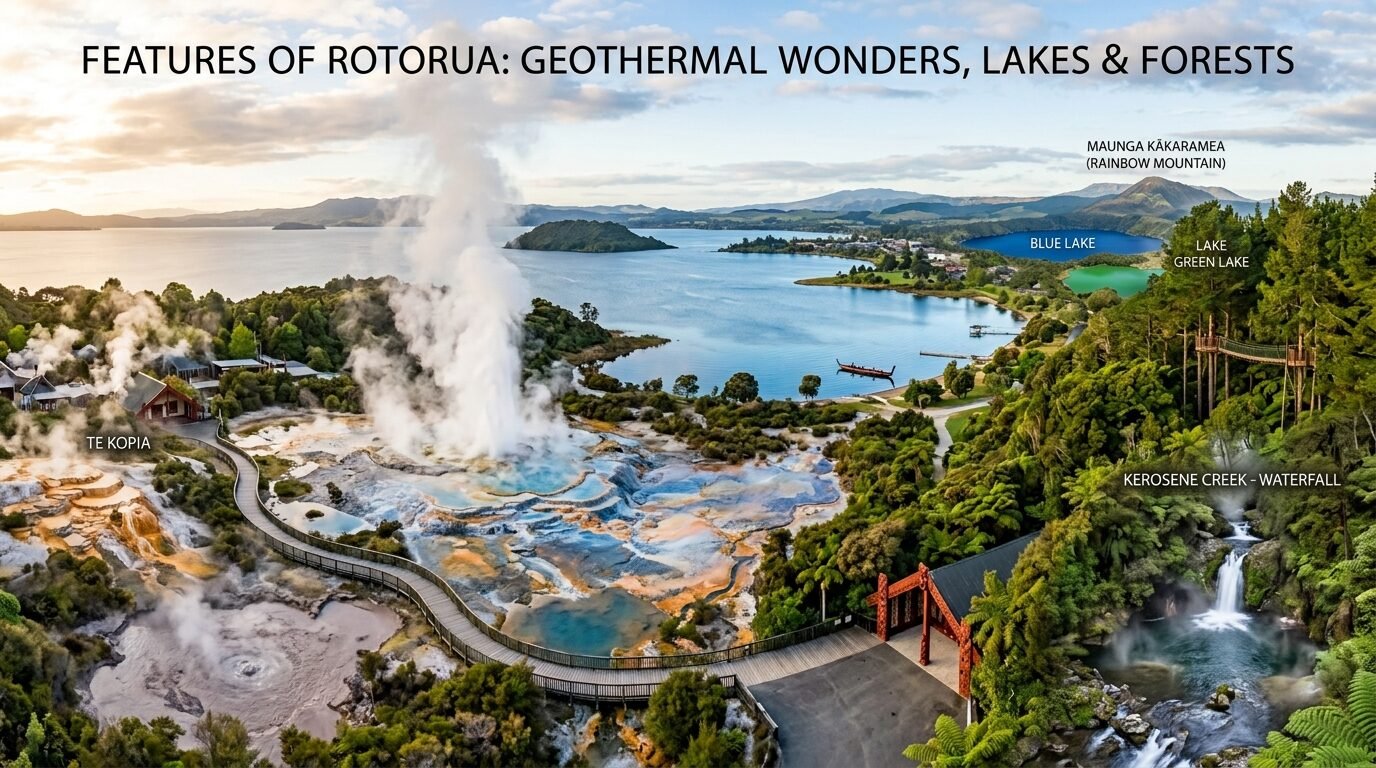
It is a well-known fact that some of Rotorua’s attractions, the sulphur in the air, the steam, and the bubbling mud are smelt before you see them. But if you think Rotorua is simply a collection of geysers, hot pools and geothermal parks, you are only seeing one side of the region. Rotorua beyond the geysers reveals a side of New Zealand that many visitors miss, from unusual natural wonders and hidden lakes to quiet forests, waterfalls and geothermal landscapes.
Beyond the tourist hordes, and the hot springs and geysers of New Zealand’s Rotorua, there is a much stranger side to be found.
It’s possible to trek through the trees of a forest where gigantic trees loft overhead, stand by a lake set among volcanic mountains, observe a waterfall springing from a forested terrain, learn about the geothermal activity outside a main tourist park and even find areas where nature has crafted its own swimming pools.
This guide takes a different approach to things to do in Rotorua. Rather than the usual string of Rotorua’s foremost destinations, these are 20 bizarre and unexpected locations to visit Rotorua in 2026.
Others are familiar to natives but not so obvious to visitors. Some are natural tourist destinations that are memorable, and just not a tourist hotspot.
Kerosene Creek: A Naturally Warm Stream in the Forest
Kerosene Creek is one of the less familiar geothermal attractions near Rotorua and an interesting location to enjoy warm running waters naturally rather than from geothermal pools.
Think how you would feel if you were walking through normal looking New Zealand bush and all of a sudden you bumped into warm flowing water. That’s what makes Kerosene Creek an enjoyable place to be. While it’s one of Rotorua’s more popular off the beaten track experiences, it still has a feel and atmosphere very different to that of a commercial spa. The setting is surrounded by native vegetation, and warm water moves through the creek and over a small waterfall.
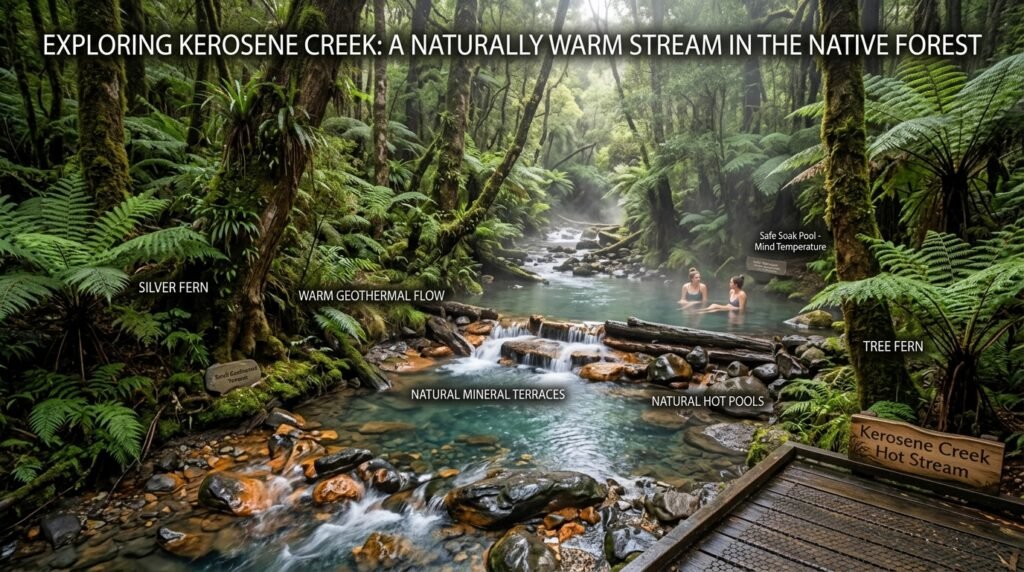
One of the other more unusual things to do in Rotorua would be if you aren’t looking to enjoy geothermal discovery behind the usual frontage of an attraction. This is however a natural site not supervised for swimming. Situation may change, no lifeguards and visitors should check local advice before going into the water at present. Rotorua NZ also recommends taking care around the site.
Why it feels strange: You can be standing in a forest while warm geothermal water is flowing beneath your feet.
Te Kopia – Geothermal Landscape that Feels almost Alien
The nature and type of rocks at Te Kopia makes you question if you have stumbled onto some walking lava. The short Te Kopia Walk provides views across an active geothermal landscape, including steaming ground and a large boiling mud pool. The surrounding vegetation enhances this experience, as some plants have adapted to the very unusual geothermal environment!
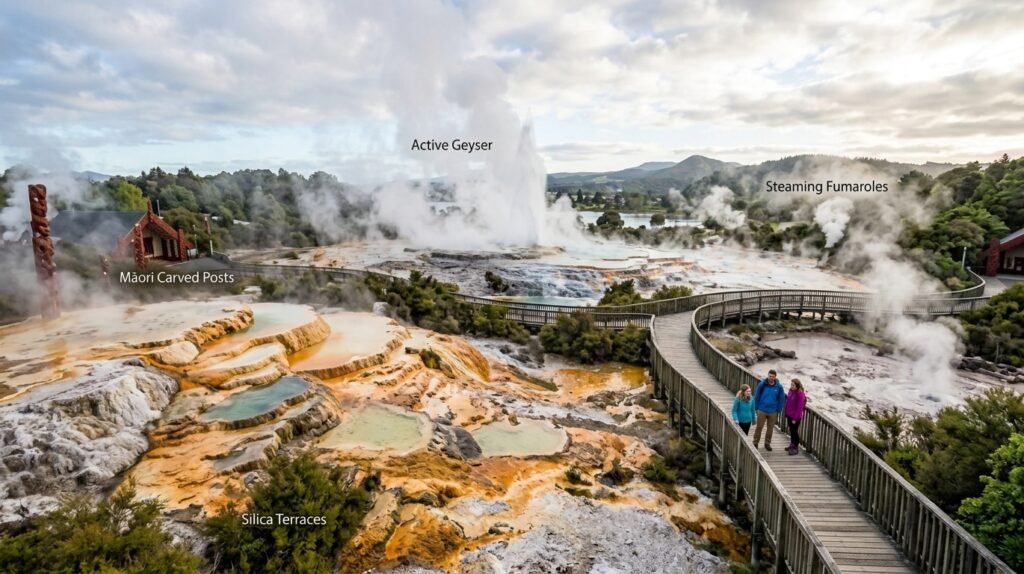
DOC describes the walk as an easy 200-metre route, with a viewing platform overlooking the geothermal field. It is located 39 kilometres south of Rotorua. The unusual part isn’t simply the steam. The contrast between native vegetation, and an area that is continuing to be formed by heat under the ground.
Why visit: This is a less showy and touristy geothermal attraction than Rotorua’s other well-known paid experiences.
Important: This is an active geothermal environment. Keep in the line and behind the barriers, and watch children closely.
Maunga Kākaramea: The Mountain of Coloured Earth
You may know this place by its former name, Rainbow Mountain. Its Māori name, Maunga Kākaramea, means “mountain of coloured earth,” and the landscape certainly lives up to the name. Part of this volcanic landscape exhibits shades of brown, orange and red, and geothermal activity along with native vegetation forms a unique palette.
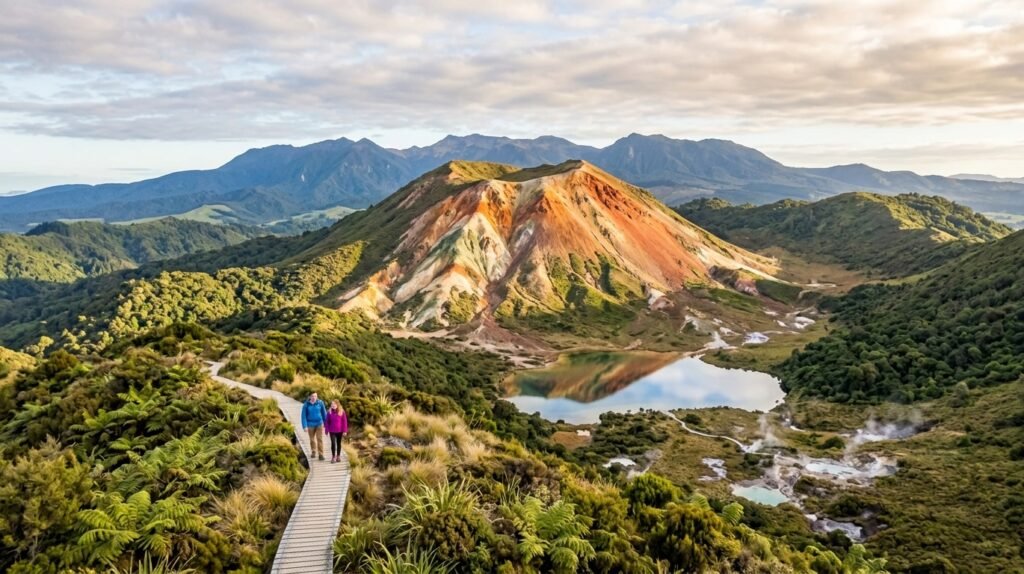
The easy Crater Lake Walk provides views over crater lakes and steaming cliffs, while more experienced walkers can continue towards the summit. DOC marks this area as having rare geothermal plants which can withstand difficult conditions. One of the few Rotorua attractions where the geology is just as interesting as the scenery.
Photography tip: Overcast conditions can work here too, as the earth colours will stand out without strong sunlight.
Kuirau Park: Geothermal Activity in the Middle of the City
Kuirau park is one of the easiest places to experience Rotorua beyond the geysers, with bubbling mud pools, steaming ground, geothermal vents and walking paths right in the middle of the city.
It’s one of the most surprising experiences in Rotorua, and one that’s also an easy one to get to. Kuirau Park is very near the city centre yet much of the park can seem like a small wilderness geothermal area. Steam comes up from the earth. Mud bubbles. There is thermal water below the surface. There are walkways leading through the geothermal areas, and surrounding the park, lawns, picnic areas and family facilities.
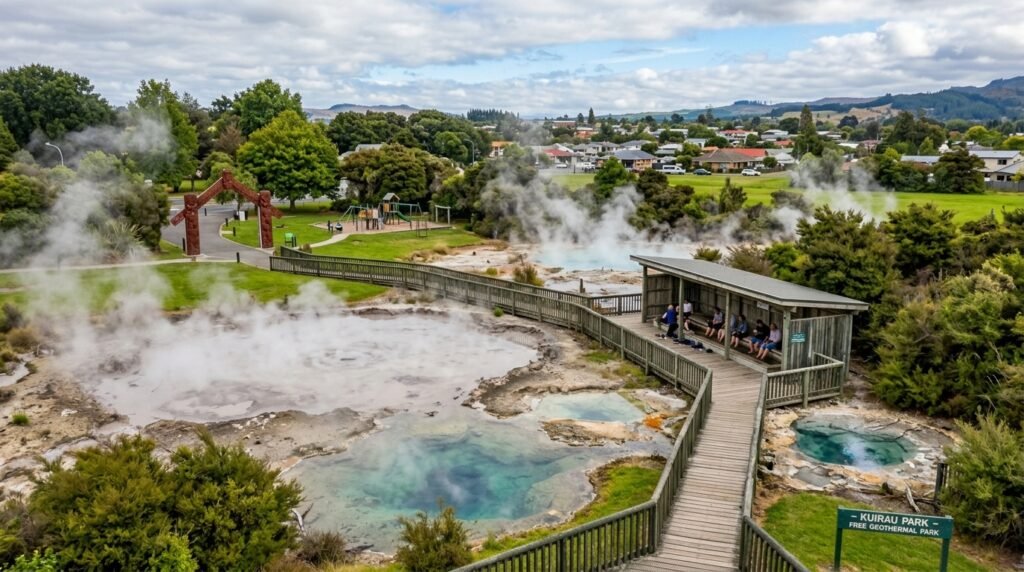
It is also free. Rotorua NZ describes Kuirau Park as New Zealand’s only geothermal public park, with geothermal features and a free thermal foot bath.
Why it’s unusual: You don’t need to drive into the countryside to see geothermal Rotorua. It is happening within the urban environment.
Hamurana Springs: Water So Clear It Looks Artificial
Hamurana Springs is an almost inverse vibe to Rotorua, with its cloudy geothermal pools and bubbling mud. Here the water is very clear. It’s crystal clear fresh water surrounded by native flora and high stands – a quiet contrast to the more dramatic volcanic surroundings of Rotorua.
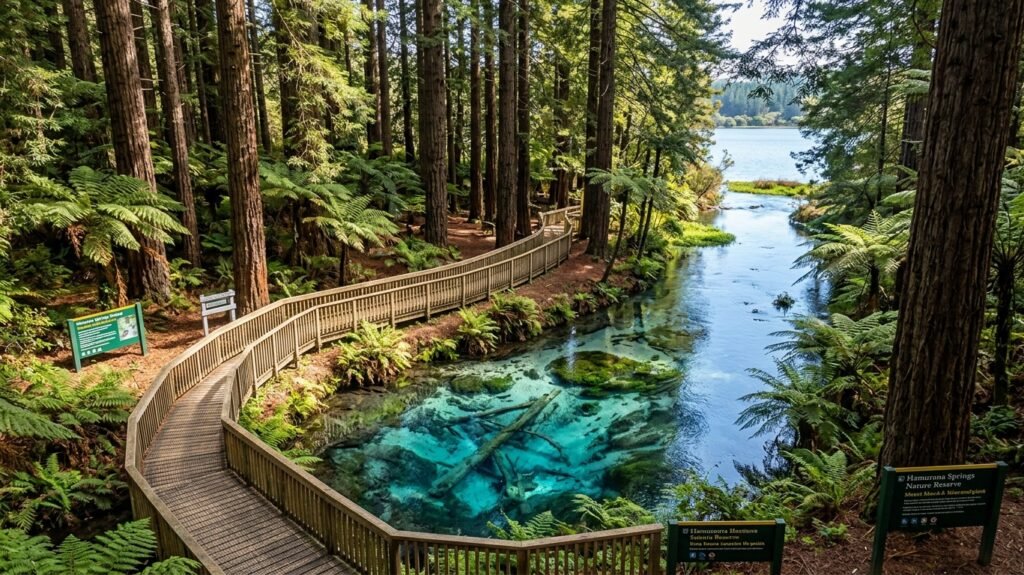
If you’ve already enjoyed some activities at the volcano, perhaps you’d like a place to relax. Hamurana Springs is one of the lesser known aspects of Rotorua NZ.
Why visit – It shows that Rotorua’s natural character isn’t all about heat and steam.
Lake Tarawera: The Place to Jump Into a Volcanic Landscape
One of the most scenic unique places to visit Rotorua is Lake Tarawera, a place whose waters are serene and blue, with hills covered in forest, and volcanic scenery all around that evokes the feeling of being miles from the actions going on at the supervolcanic baths.
Lake Tarawera is beautiful from most perspectives, but the moment you start treating it like a photo opportunity along the road, it’s not. The lake has become a destination for swimming, boating, fishing, walking and exploring.
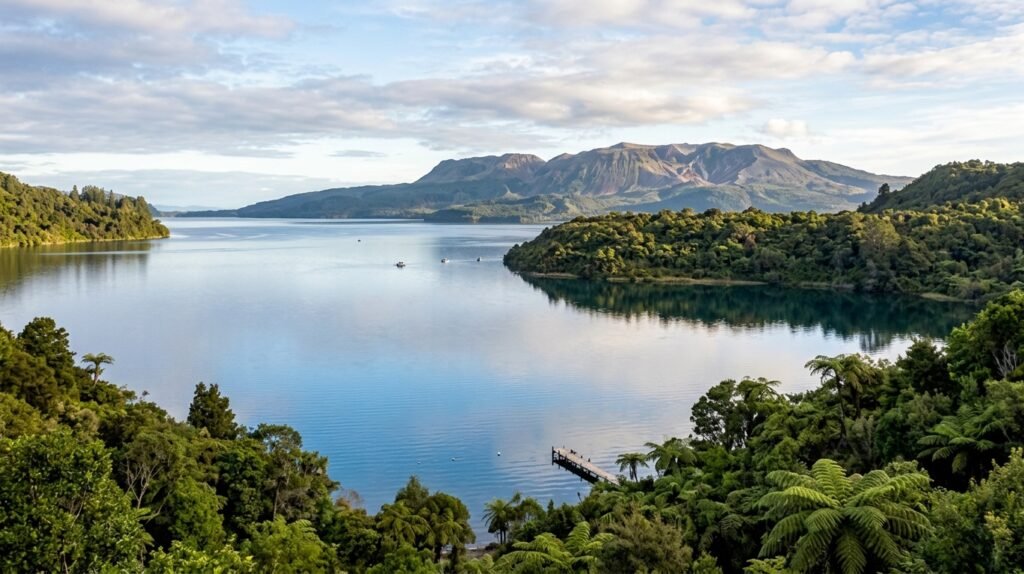
At the Landing, visitors can enjoy views towards Mount Tarawera, while tracks lead towards quieter areas around the shoreline. Rotorua Nz in particular emphasizes the jetty where the more adventurous may leap into the cool waters of the lake. There is another layer of story in the landscape, too.
The 1886 eruption, which buried the renowned Pink and White Terraces, forever altered the wider Tarawera region. The reserve today has lakes, waterfalls, geothermal pools and historical features associated with that eruption, DOC notes.
Why it’s surprising: A beautiful recreational lake sits within a landscape marked by one of New Zealand’s most devastating volcanic events.
Te Rātā / Hot Water Beach: A Beach With a Geothermal Secret
There are plenty of beaches in New Zealand. One’s beach connected with somehow straightforwardly warm mineral water is something else. Te Rātā or Hot Water Beach is located in the Lake Tarawera region and has been linked with geothermal waters for centuries, a site where visitors have long enjoyed hot water.
One of Rotorua’s more offbeat attractions is the hot water beach Te Rata, where geothermal warmth spills onto the shoreline providing a unique opportunity for the visitor to experience a different side of Rotorua.
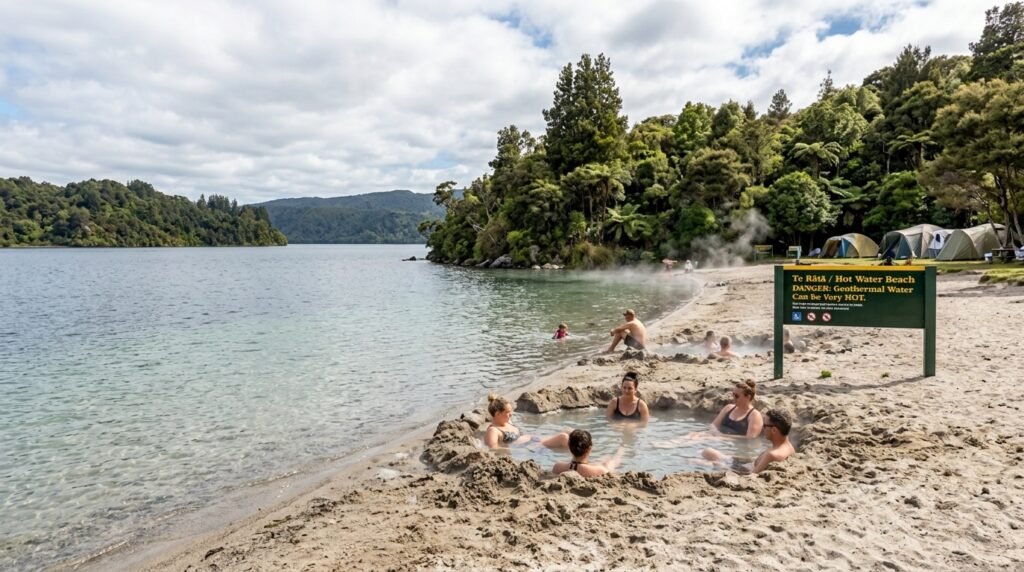
DOC reports the mineral waters at Te Rātā/ Hot Water Beach can still be enjoyed, either off the ground tracked over native forest, or by water taxi from the shores of Lake Tarawera.
This is a great example of why Rotorua beyond the geysers is a valuable frame of mind with which to view Rotorua! A geothermal story is never over with a geyser field. It gets to beaches, lakes, forests and walking tracks.
Why it’s surprising: A beautiful recreational lake sits within a landscape marked by one of New Zealand’s most devastating volcanic events.
Best for – beaches, lakes, forests and walking tracks.
Tarawera Falls: A Waterfall With a Geological Story
Tarawera Falls isn’t just another waterfall to take your picture of. For travellers looking for unusual places in Rotorua, Tarawera Falls offers something completely different—a powerful waterfall surrounded by volcanic terrain, native forest and a fascinating geological story.
Rotorua is only one part of this volcanic region of the North Island. If you’re continuing south toward Lake Taupō, our guide to Things to do in Taupo with Kids 2026 covers some of the surprising and adventurous experiences families can enjoy there.
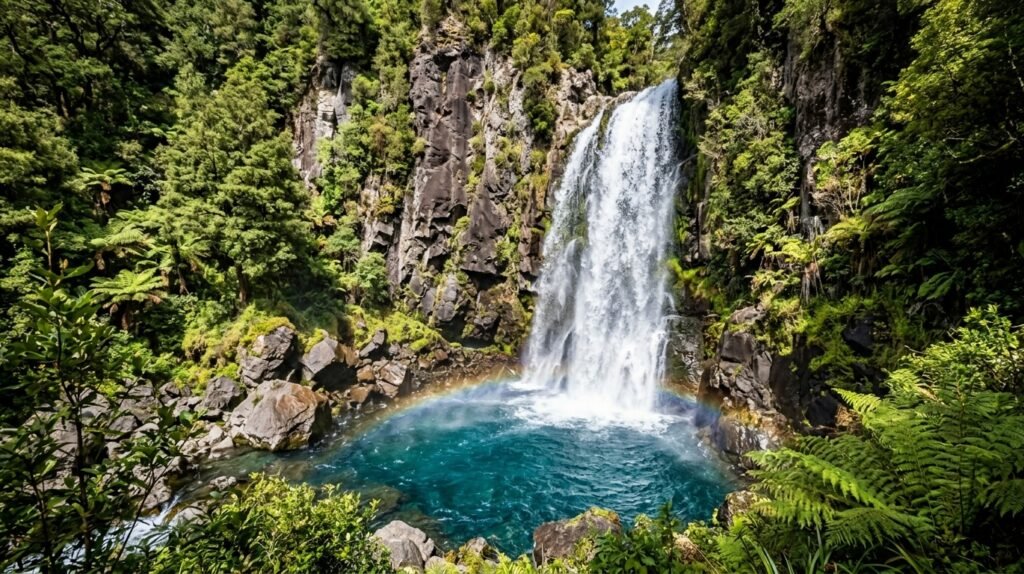
It takes just a short walk to get to the viewing area, as it traces the dramatic landscape without requiring a long trek. Tarawera Falls is one of the not-so-well-known natural wonders identified by Rotorua NZ about four hours from Rotorua.
Why it’s on the list: This links Rotorua’s volcanic connection with one of the most striking examples of everyday natural features – waterfall.
Te Wairoa Falls: The Waterfall Behind a Buried Village
Te Wairoa Falls has an unusual neighbour: the Buried Village of Te Wairoa. After a short walk through the woods, the pathway leads you down the waterfall, which dives 30 meters into the valley. A more interesting experience is its history tells it.
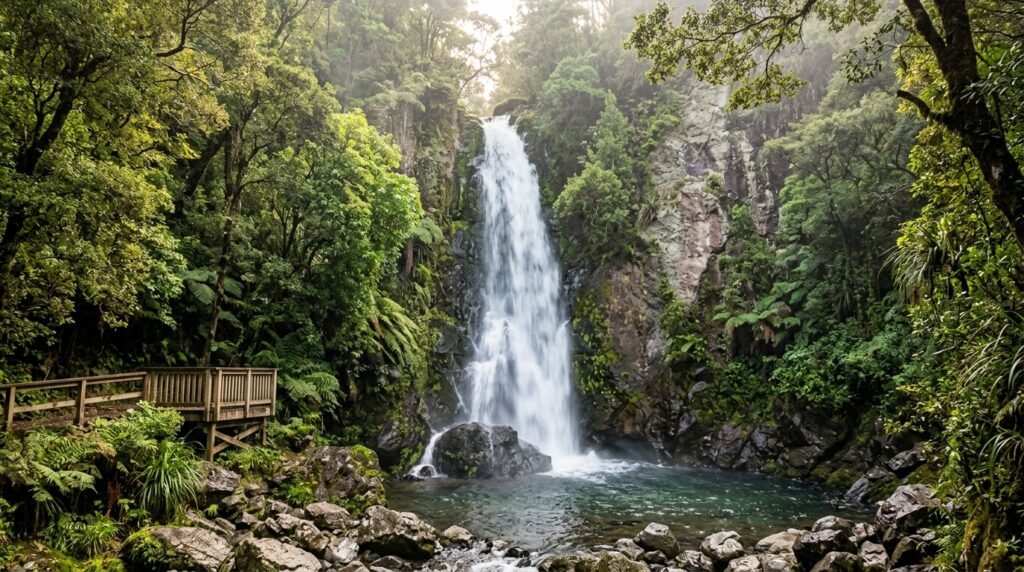
Te Wairoa was buried during the 1886 eruption of Mt Tarawera, and the overall site offers an extraordinary link between volcanic activity and 19th century life in New Zealand. Rotorua NZ describes the waterfall as a peaceful natural escape behind the Buried Village.
Best for: Tourists looking for scenery and history at the same time.
Lake Rotoiti: Look Beneath the Surface
Lake Rotoiti is beautiful from above. However, some of its most peculiar activities take place around its caves and the coastline.
Rotorua NZ notes that lesser-known glowworm experiences around the region can include locations accessible by kayak, including caves around Lake Rotoiti.
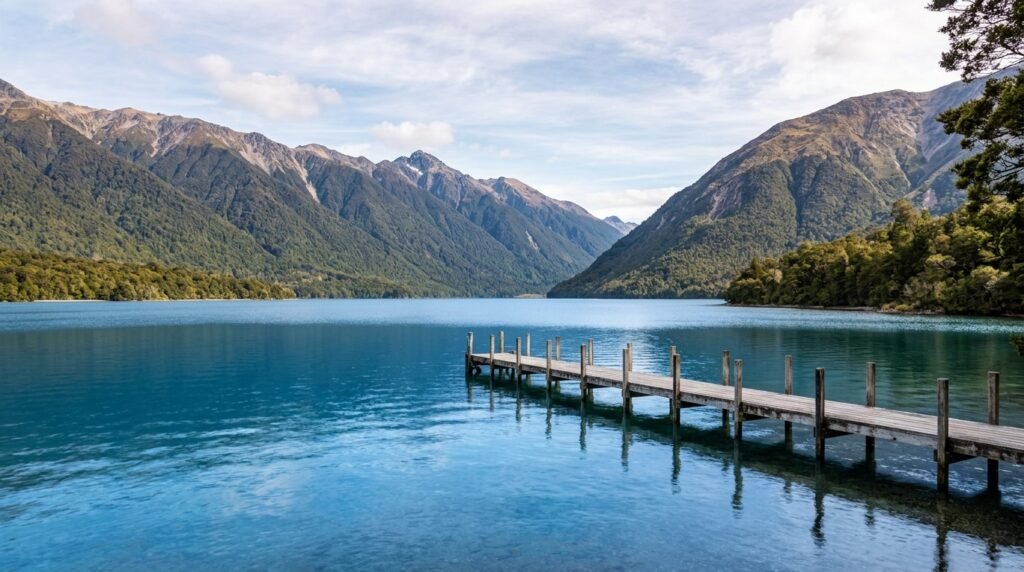
It’s different when you actually appreciate the lake. Rather than photographing from the shore, you can explore the shore from the water and find a gentler, more quiet side.
Why it’s surprising: The lake isn’t just scenery; it can become part of an underground-style adventure.
Mount Ngongotahā Nature Loop: A Different Side of Rotorua
Mount Ngongotahā doesn’t necessarily have the instant recognition of Rotorua’s famous geothermal attractions.
That’s why it does nice things here. The Nature Loop Track provides a relatively short introduction to native forest, birdlife and the mountain environment. On the way to Rotorua NZ, you’ll pass by a large rātā tree.
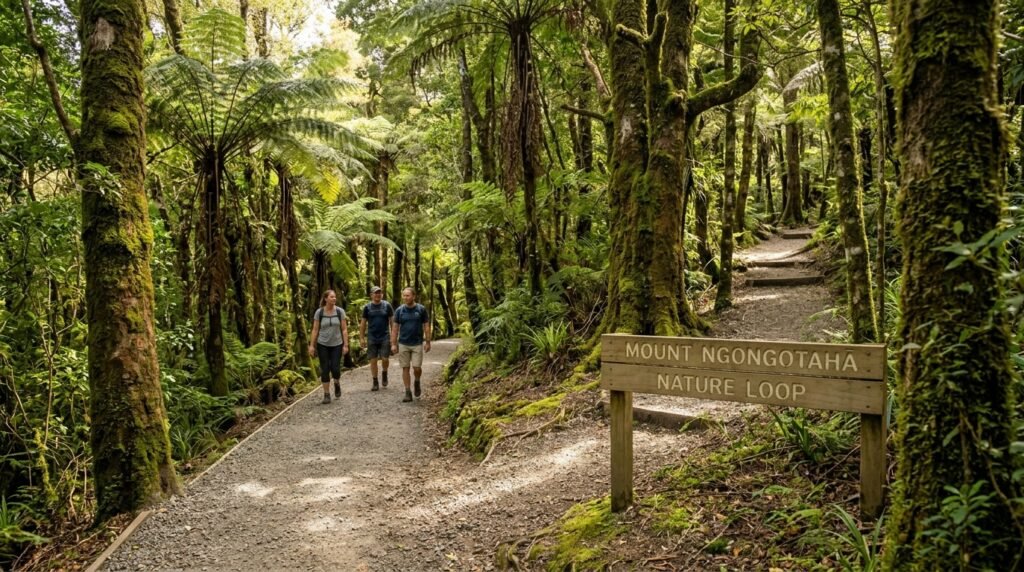
This experience is particularly valuable for families or travellers looking for a walk without the foray towards half a day on a challenging trail.
Why visit: It reminds you that Rotorua isn’t just about volcanoes; it’s also about forests, birds and native plants.
Whakarewarewa Forest Without the Treewalk
The Redwoods Treewalk gets most of the attention. But Whakarewarewa Forest is far larger than the famous suspended walkways.
According to Rotorua NZ there are over 220 kilometres of mountain-bike trails in the forest that quieter corners and quietly flowing trails are available well off the main trails. This makes the forest especially appealing for re-visitors.
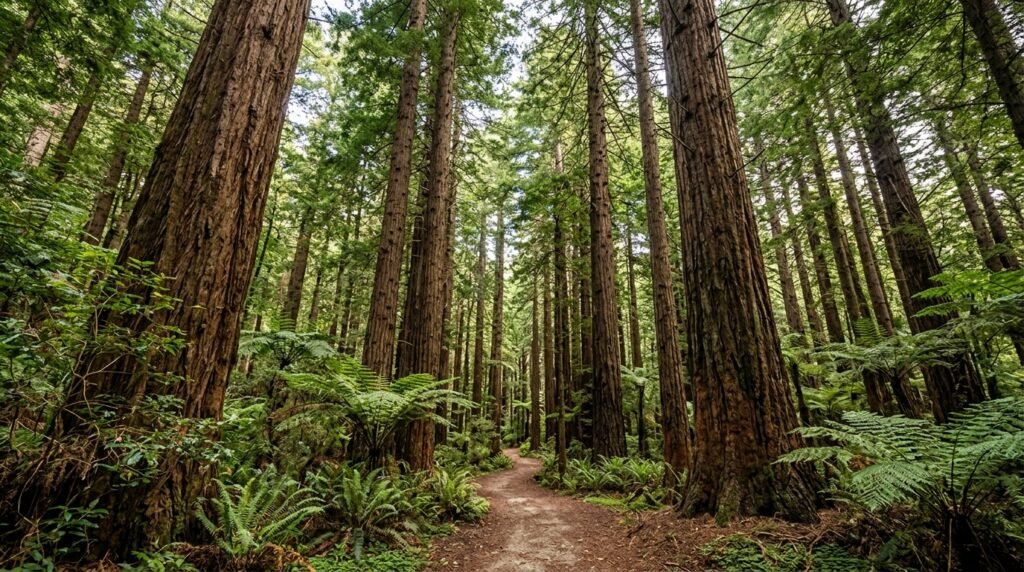
If you’ve already photographed the giant redwoods, consider exploring the wider forest on foot or by bike.
The surprising part: One of Rotorua’s most popular attractions has extensive sections where it’s actually quite quiet.
Waiotapu Boardwalk: A Very Short Geothermal Detour
Not all of the interesting things can be done in half a day during a visit to Rotorua. The Waiotapu Boardwalk provides a very short way to see bubbling mud and geothermal activity. Accessibility features are provided; the hike is short, just a few minutes, and described as easy, but it is considered to be an extremely dangerous walk on geothermal ground.
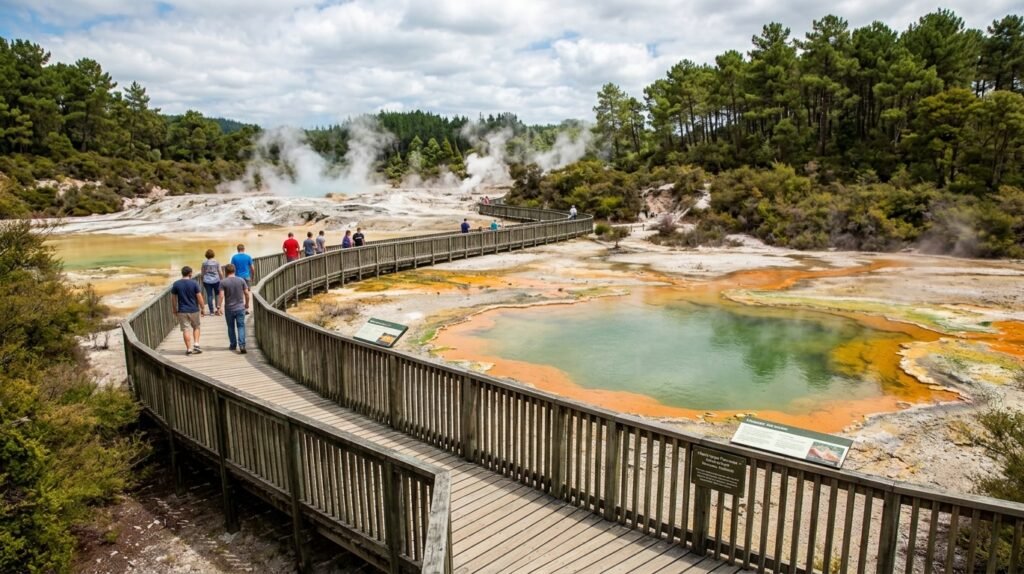
It can come in handy if you are travelling through Rotorua-Taupō and need to squeeze in another stop before you arrive at Taupō.
Why it’s surprising: A few minutes can take you from a normal highway journey into an active volcanic landscape.
The Crater Lakes of Maunga Kākaramea
Examples of Rotorua landscapes that need a view from above to beb understood. The Maunga Kākaramea Crater Lake Walk offers views across crater lakes framed by brown, orange and red steaming cliffs. The track itself is relatively accessible, while experienced hikers can continue towards the summit.
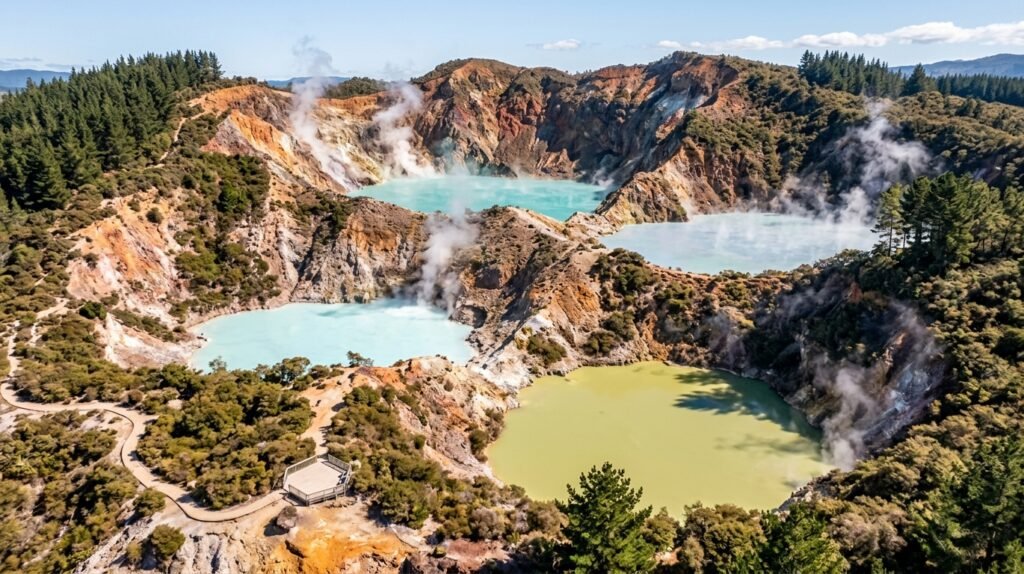
For those looking to find natural attractions and volcanic scenes over commercial activities, this is one of the best destinations on the list to go.
Sulphur bay – A Wetland that looks almost unreal
When you leave Rotorua’s special geothermal attractions, the geothermal landscape exists beyond the boundaries of the dedicated attractions and activities. The geothermal activity comes close to wetlands and bird habitat in the area surrounding Sulphur Bay.
The landscape includes sulphur and silica flats, mud pools and steam vents. DOC describes it as an active and constantly changing geothermal wetland supporting a wide variety of birdlife. It’s an unusual pairing. You’re considering geothermal ground, and not only that — you’re looking at an important natural habitat.
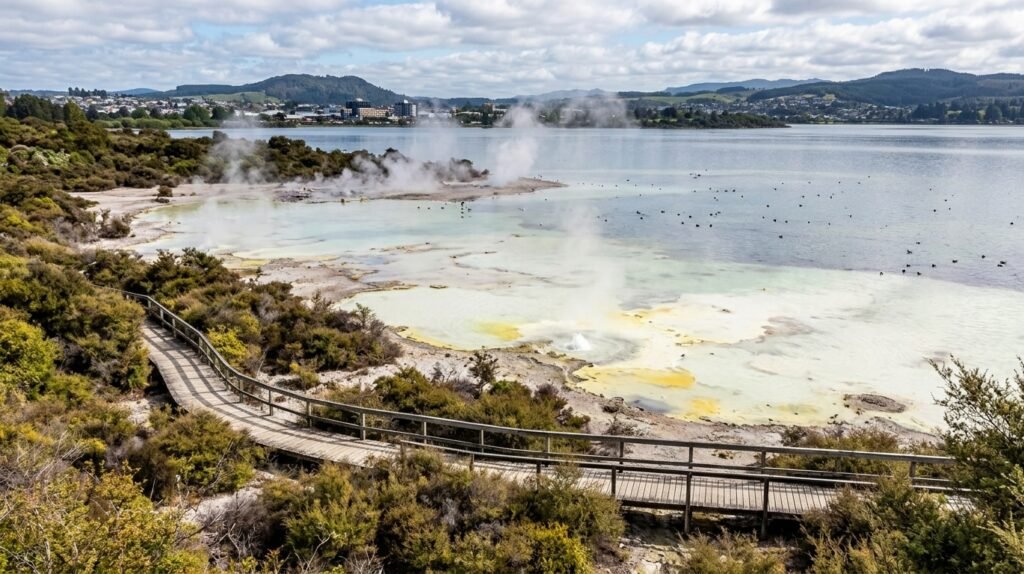
Photography idea: Look for the contrast between the pale geothermal landscape, water and birdlife rather than focusing only on steam.
Okere Falls – where the river becomes the attraction
Okere Falls is a great reminder that Rotorua isn’t just about lakes and geothermal areas. The Kaituna River creates a dramatic landscape here, attracting people interested in walking, kayaking and white-water adventures. Even if you aren’t interested in adventure sports, the surrounding scenery provides a completely different experience from a geothermal park.
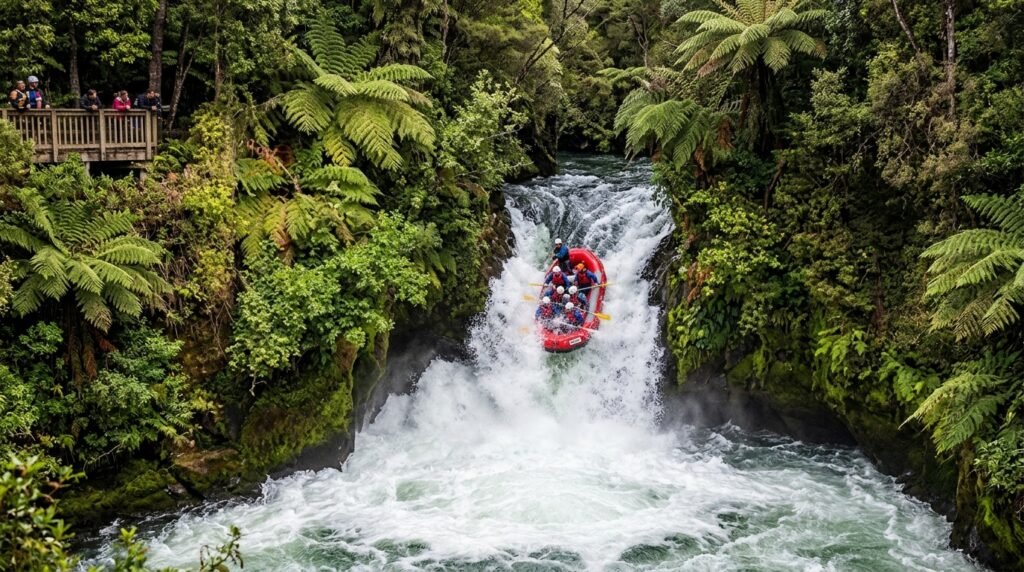
For photographers with little equipment, moving water, thick undergrowth and cliff lines along river banks provide more opportunities than they could ever desire.
Lake Ōkāreka: A Quieter Lake Day
If Lake Rotorua is too urban, and Lake Tarawera is too ambitious, then ask for another option and it’s Lake Ōkāreka. A nice place to take a break. Instead of packing together five attractions in one afternoon you can walk, sit near the water, enjoy a picnic and enjoy the volcanic scenery. Lake Ōkāreka is one of the lesser-known experiences of Rotorua Nz.
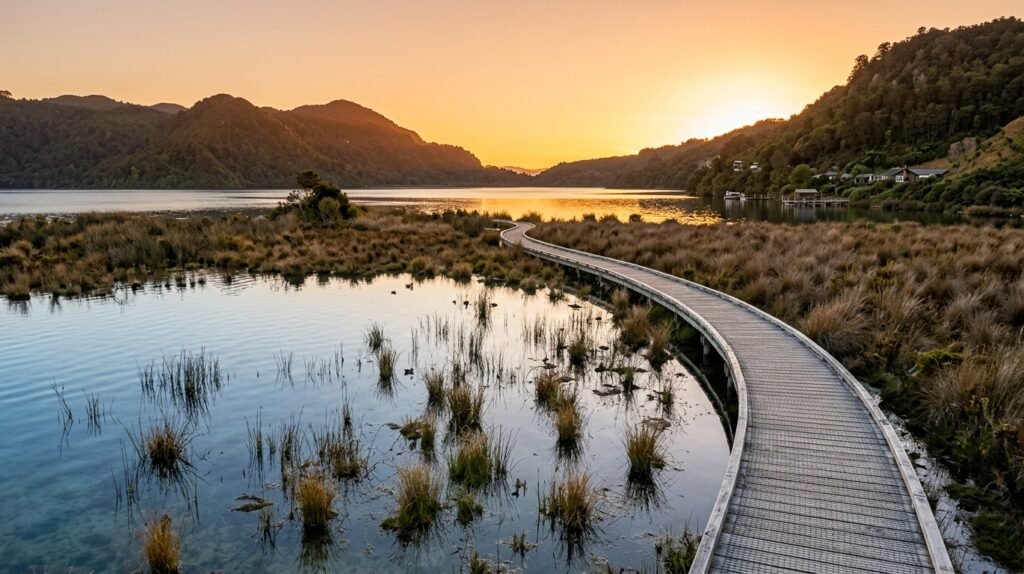
Why it belongs here – sometimes a surprising Rotorua experience is not an adrenaline activity at all. It’s just taking some time to do nothing.
Geothermal Plants That Withstand the Heat
One of the most baffling aspects of Rotorua thermal sites is not the steam. It’s the vegetation. Plants have developed adaptations to the high temperatures, acidic soils, and gases at Maunga Kākaramea, which would make normal forest growth difficult without them. DOC notes that some mosses, liverworts and lichens can tolerate temperatures as high as 70°C.
This is a completely different way to look at Rotorua’s geothermal landscape. Rather than asking this question: “Where is the biggest geyser?” ask: “So what can possibly live here?” Something’s just as fascinating when you ask that question.
Rotorua After Dark: Look at the Landscape Differently
Things change in Rotorua when it’s dark. Steam becomes more visible against a dark sky, forests feel completely different and some glowworm experiences become possible. Rotorua NZ highlights some inexplored glowworm sites, and mentions kayaking trips and forest and stream excursions.
Night-time exploration should always be done in appropriate, permitted places and with suitable guidance where required. However, this is an overall concept to keep in mind: Rotorua isn’t necessarily finished when the sun goes down.
The Most Surprising Rotorua Experience: Slow Down
This final suggestion isn’t a specific attraction. It’s an approach. It is possible to over-do things in Rotorua.
All morning in a geothermal park, then on to the cultural experience, lake driving and a forest hike to come home completely drained. Instead, leave space for one unplanned stop.
Take the road beside a lake. Stop at a viewpoint. Take a short walk in the forest track. Sit and relax near the water. Visit a geothermal area that wasn’t originally on your itinerary.
Some of the best unique Rotorua experiences aren’t necessarily the attractions with the biggest signs. They are the times when you forget to obey a list of instructions.
Why Rotorua is more than just geysers ?
The geothermal activity in Rotorua is remarkable, but it can also give a false impression of what Rotorua is all about.
There are volcanic mountains, crater lakes, native forests, waterfalls, wetlands, clear springs, caves, beaches and waterways. There’s also a rich indigenous Māori cultural environment and a longer volcanic history.
What you get is a place where two drastically different experiences can occur in one day.
The steam rising from the ground in the morning and after lunch walking through the natural forests and in the evening sitting by the volcanic lake. This is the true story behind Rotorua beyond the geysers.
Which of These Rotorua Places Should You Visit?
It depends on what kind of traveller you are.
For couples
Try Lake Tarawera, Hamurana Springs, Te Kopia and a glowworm experience.
For families
Consider Kuirau Park, Mount Ngongotahā, Hamurana Springs and the easier walks.
For photographers
Look at Maunga Kākaramea, Tarawera Falls, Hamurana Springs, Sulphur Bay and Lake Tarawera.
For adventurous travellers
Choose Okere Falls, Lake Tarawera, Whakarewarewa Forest and selected back-country experiences.
For travellers on a budget
Start with Kuirau Park, Mount Ngongotahā and other free public walks and viewpoints. Rotorua NZ are promoting the following free experiences throughout the region.
Frequently Asked Questions
What are the most unusual things to do in Rotorua?
Some of the more unusual experiences include visiting naturally heated Kerosene Creek, exploring Te Kopia’s geothermal landscape, visiting Kuirau Park, exploring Lake Tarawera and finding lesser-known glowworm experiences.
What can you do in Rotorua besides geysers?
Rotorua is much more than a geothermal destination. You can explore native forests, crater lakes, waterfalls, springs, beaches, caves, mountain-bike trails, wetlands and Māori cultural sites.
Are there hidden gems in Rotorua?
Yes. Rotorua has many lesser-known places outside its biggest attractions. Information on local trips is available that includes Hamurana Springs, Mount Ngongotahā, Lake Ōkāreka, Kuirau Park, and the not so well known glowworm sites.
What is the weirdest natural attraction near Rotorua?
Depends on how weird you think it gets, but weird places like Te Kopia and Maunga Kākaramea, where there’s an high presence of heat, volcanic geology, and weird plant life go hand-in-hand.
Is Rotorua worth visiting if I don’t like geothermal attractions?
Absolutely. Explore nearby forests, waterfalls and waterfalls, mountain trails, bicycle trails, look at the animals and cultural events and enjoy all of these without having geothermal activities as a focal point of your journey.
What is the best unusual place to visit in Rotorua for photography?
For dramatic landscapes, Maunga Kākaramea, Lake Tarawera and Tarawera Falls are excellent choices. To take something less common, geothermal vegetation and the range of colours around volcanic landscapes can produce very different photographs.
Can you find free things to do in Rotorua?
Yes. Kuirau Park and several walks, viewpoints and outdoor areas can be enjoyed without an attraction admission fee. DANdownaversions should never be taken for granted, however, before travelling always check current access conditions.
Final Thoughts
Rotorua doesn’t need another article telling visitors that it has geysers. As everyone is already aware.The more intriguing question is, But what about when you pass them? You’ll discover warm streams in forests, coloured volcanos, crater lakes, clear springs, waterfalls, geothermal wetlands, strange plants, undisturbed side of the river places in the region suddenly feels less touristy.
So on your next trip, don’t simply ask “What is the most famous thing to do in Rotorua?”
Ask:
“What is the strangest place I can discover today?”
That one question can take you to the most interesting and memorable aspect of your Rotorua holiday.
please note that all picture for this article, Rotorua Beyond the Geysers: 20 Surprising Places 2026 are created by gemini.ai
[…] you have extra time on your journey, check out our guide Rotorua Beyond the Geysers: 20 Surprising Places 2026 for ideas that can take you beyond the usual tourist stops. With its otherworldly scenery, rich […]