

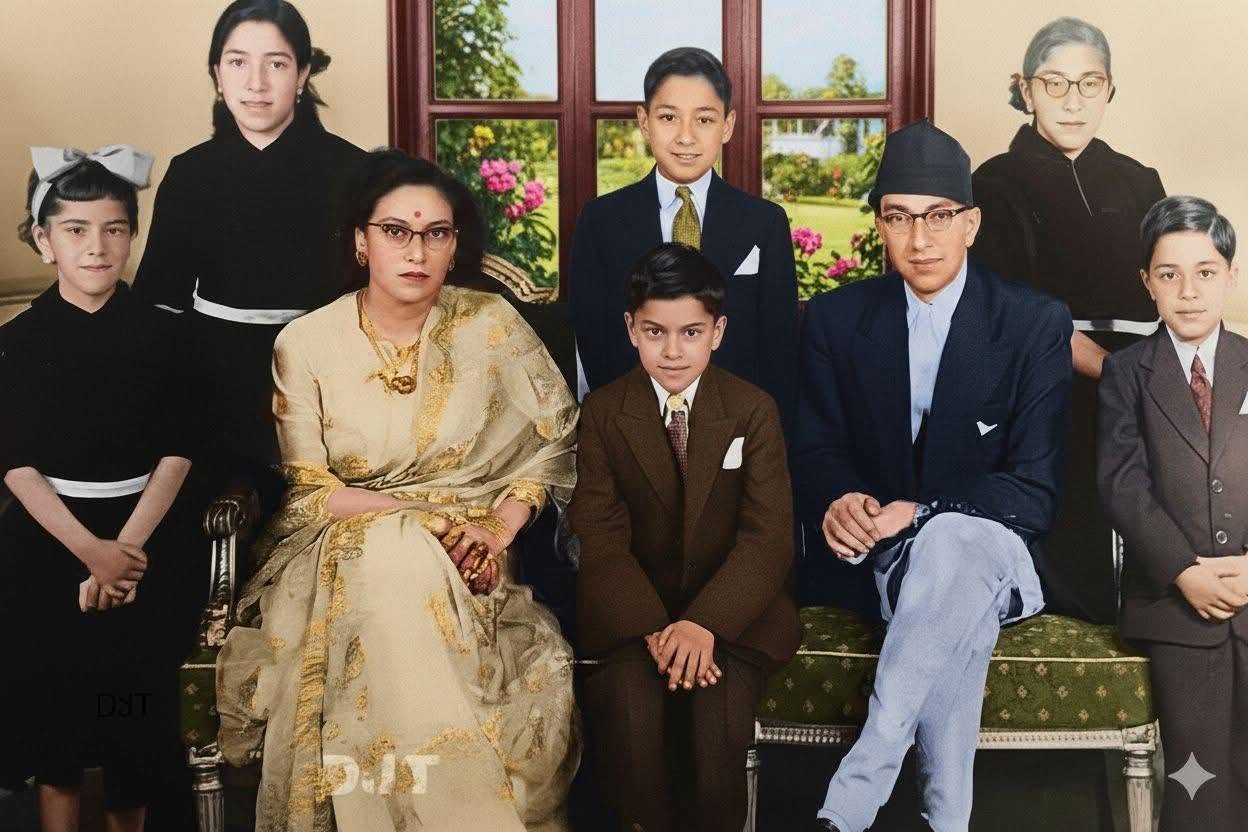
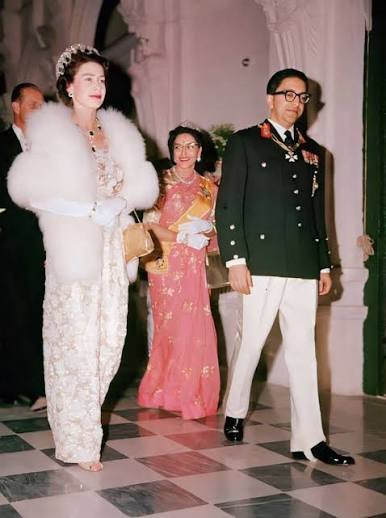
King Mahendra Bir Bikram Shah Dev (श्री ५ को सरकार महेन्द्र वीर विक्रम शाह देव) has been one of the most talked about and controversial figure in the modern norm of Nepali history. He is remembered as the king that marked the end of the first parliamentary experiment in Nepal in 1960. He is being remembered as the King who strengthened the sovereignty of the Nepal state, interacted with the outside world, became a source of foreign help and laid the bases of modern Nepal.
But on getting to understand King Mahendra, one must first understand the Nepal that he inherited.
The Nepal of the 1950s was vastly different to the Nepal of today. The nation was moving from the Rana period, democratic systems and institutions were still very young, road and communication were very limited and education and health were inaccessible to majority of the population, and financial resources of the government were very little.
Nepal, meanwhile, had two faces – one in the lime-light during the height of the Cold War. Three European countries namely India, China, United States, and Britain were interested in the Himalayan area. Both were huge tasks that King Mahendra had to confront simultaneously: The development of Nepal was imperative and its independence had to be maintained. Many of his fans see the two goals in view as the preeminent themes for his reign.
Political Unrest in a Country
Politically the years after the end of the Rana rule was turbulent. Nepal did not have smooth functioning political institutions. Political parties split, governments shifted multiple times and conflicts between the monarchy and the political leaders escalated.
The Sixties have been seen as a time of great political upheaval in history, and there were successive changes of government and direct rule by the King during this era. Political development in the country was not just subject to domestic actors but foreign relations or to international help.
Political debate in Kathmandu was no guarantee of a solution to the most pressing issues for ordinary Nepalis.
People needed roads.
Citizen’s needed schools.
They needed hospitals.
They needed bridges.
They had a need for electricity, communication, agriculture, jobs and access to markets.
His Majesty government had to be able to plan for the next political crisis. Political stability thus had equally close linkages with national development in King Mahendra’s view.
But the political joustery was not taking place alone –
However, there was also a bigger international context to Nepal’s political conflicts. There were huge political, economic and security stakes in Nepal on India’s part. With the Communist revolution and developments in Tibet, China was growing in significance. From the perspective of the US, Nepal was seen as part of a fight between communist and non-communist countries. The Soviets were, too, expanding ties with developing countries. Britain had long held an interest in Nepal, most notably for the Gurkha link.
Accordingly, the internal politics in Nepal could not be separated from the international politics completely. Washington kept close watch on the political parties, the monarchy, ties with India and China, and the possibilities for influence by communists in Nepal during the contemporary period of American history that is reflected in those records. Similarly, where the records of Indian leadership regarding its capacity to assist the developing Indian struggle for independence are concerned, they provide a good illustration of its ties with the political players of Nepal.
That doesn’t necessarily imply that foreign governments enforced complete control over Nepali politicians. Nepali politicians had their political agenda, and frequently sought to align themselves with foreign powers for gaining an advantage for Nepal. What it does show, however, is that the political instability in Nepal was already a part of a wider geopolitical contest.
King Mahendra’s answer was ‘A Stronger and More Independent Nepal‘
King Mahendra grew in confidence that there was a need for a more powerful national centre for formal power in Nepal. His followers did not consider the monarchy to be just a royal affair. It was seen as a symbol, which could unite country divided by different geographical regions, ethnic groups, parties and conflicting interests. King Mahendra’s ideology was one of nationalism and country.
He wished for Nepal to engage neighboring countries as friends but not a single one as its dependency. This was significant for Nepal as it was between India and China. There wasn’t any way for Nepal to alter its geography. It thus had to learn diplomacy.
Diplomacy was also a means of development.
The linkage of foreign policy with economic development is not always noticed as one of the main elements during King Mahendra’s rule. Nepal was a poor country without sizable domestic financial resources. The His Majesty Government (श्री ५ को सरकार ) alone could not pay for all the needed requirements of Nepal.
Nepal had a need for highways, bridges, hospitals, schools, factories, electricity projects, irrigation, and telecommunications and other infrastructure, and to meet this requirement, international cooperation was needed.
Therefore, through King Mahendra’s involvement Nepal’s relations with the countries outside the country extended.
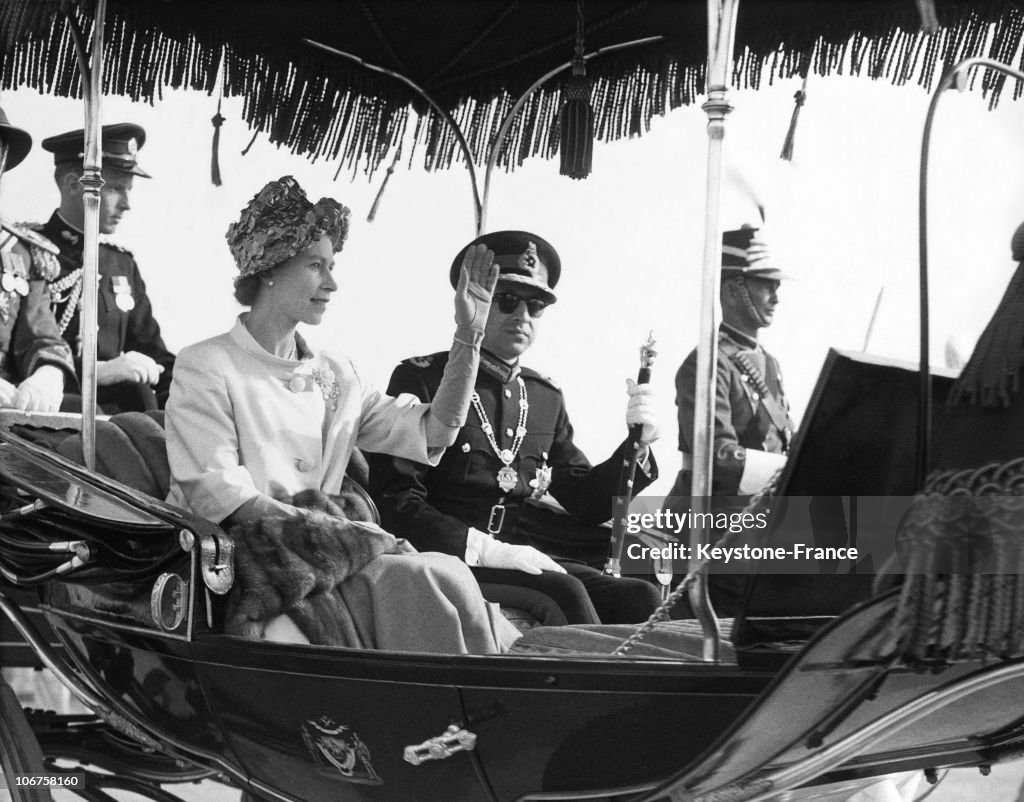
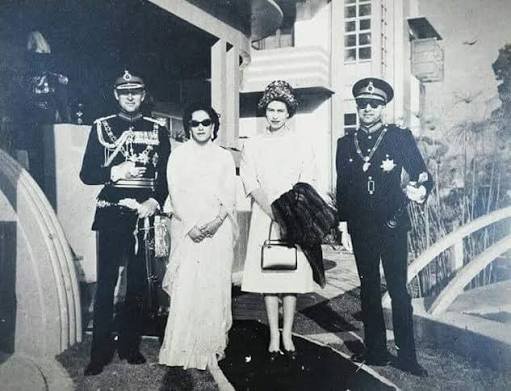
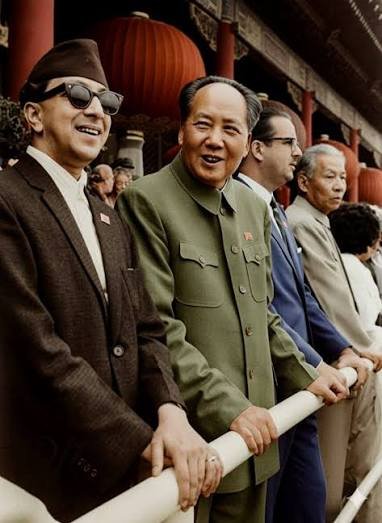
Diplomatic relations between Nepal and China was established in 1955 and Nepal became a member state of the United Nations in 1955 as well. Developing closer ties with India remained of vital importance, and such ties were also established between India and the United States, Britain and the Soviet Union and other nations with Nepal.
It enabled Nepal to have access to a broader pool of development partners. Part of infrastructure and development might be possible in India. The government of China can offer support and cooperation. There is opportunity for financial, technical, educational and training support from Western countries and International organisations.
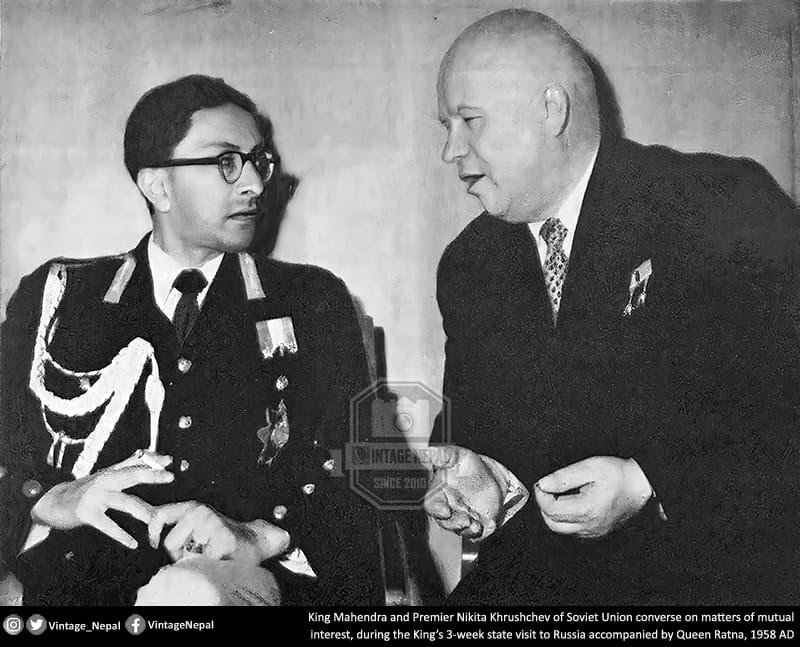
The USSR was ready to offer industrial and technical aid. Nepal would therefore be able to employ diplomacy to bring in resources from various parts of the world. This wasn’t just foreign policy for the Mahendra’s people. It was nation building.
Foreign aid was part of the history of the foundations of modern Nepal.
Foreign Aid contributed to the early occupation and development of Nepal. The need for external support for the development of Nepal was more and more acute in this time. Financial Assistance, Technical Support, Equipment, Training and Development Cooperation were provided by foreign governments and international organisations.
They included support for the following:
- roads and highways
- bridges
- Health hospitals and services
- schools and education
- agriculture
- irrigation
- electricity
- telecommunications
- industrial development
- transportation
- technical education
- public administration
- drinking water
- economic planning
As the country was in dire need of external finance and skills, the diplomatic climate His Majesty King Mahendra’s government operated in certainly had its merits in getting Nepal some help from the outside world.
It’s significant that distinction.
King Mahendra of Nepal himself was responsible for the construction of modern Nepal through his diplomatic efforts, opportunities were created for Nepal to start moulding a modern Nepal.
Roads Were a Revolution
These days, one can simply observe how an old highway has functioned as one but through the narrow lens of a road.
In the the fifty and sixty’s Nepal a road was a more significant matter.
A road linked the farmers to the markets.
It enabled things to move.
It enabled government functionaries and services to Access remote areas.
It enabled hospitals to be more accessible.
It linked the villages and towns.
It led to the growth of businesses.
A bridge has the potential to likewise be transformative.
One day a stream, marking the border between communities, might turn to a protected water bridge between a region and the rest of the country.
Infrastructure was not just that of “buildings” for a country that was so geographically challenged as Nepal.
Infrastructure was national integration.
Schools Built More Than Buildings
Another important aspect of Nepal’s change was its transformation in the field of education.
Nepal needed teachers.
It needed doctors.
It needed engineers.
It needed administrators.
Requires experts in agriculture.
It required individuals with the ability to work within the framework of a contemporary state.
A larger education meant to establish Nepal’s Human Resources.
A school has the potential to train a teacher later on.
A university might make an engineer.
Producing one could be a medical institution producing a doctor.
Production of the kinds of workers needed to build and grow infrastructure may be sourced from a technical training programme.
Thus, human capital development was as essential as road and bridge.
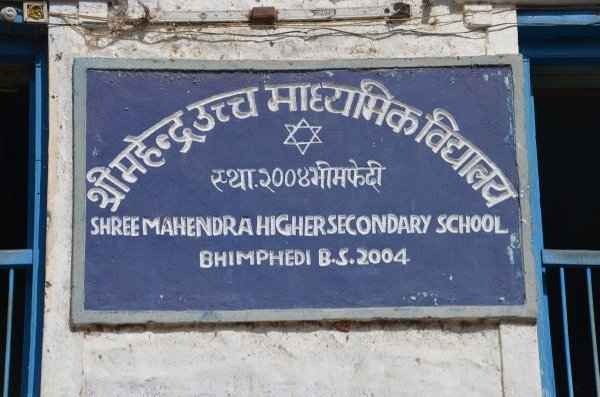
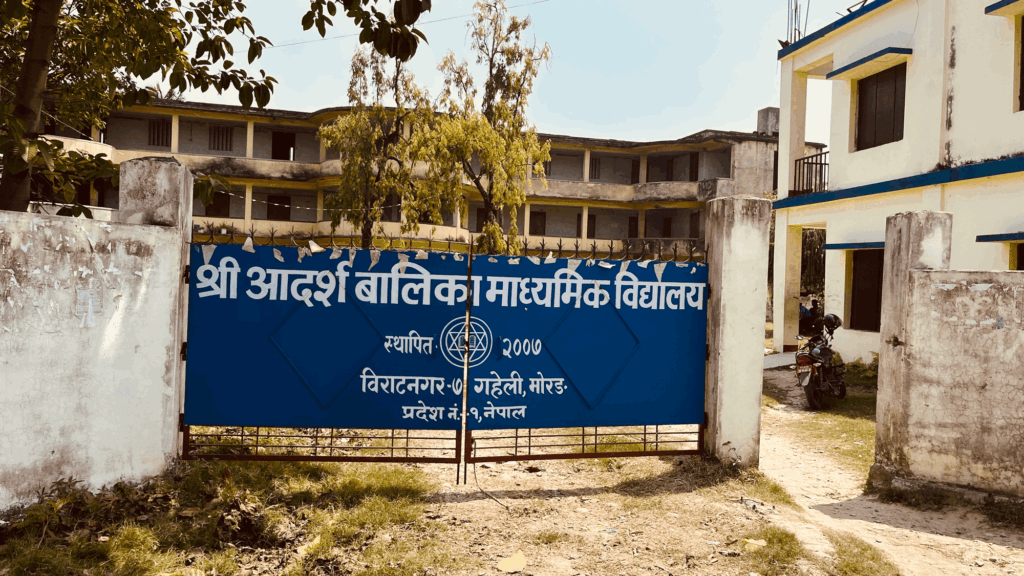




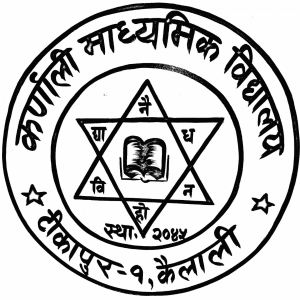



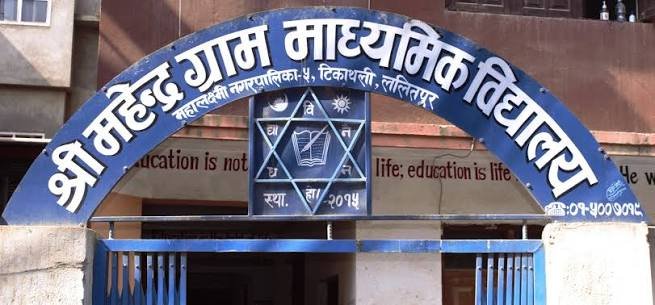


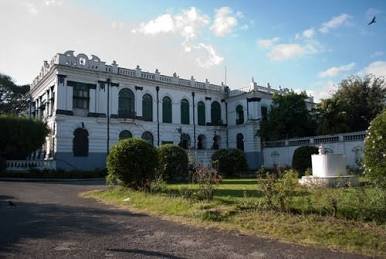
All these schools were established during or before King Mahendra’s rule
Hospitals and health services.
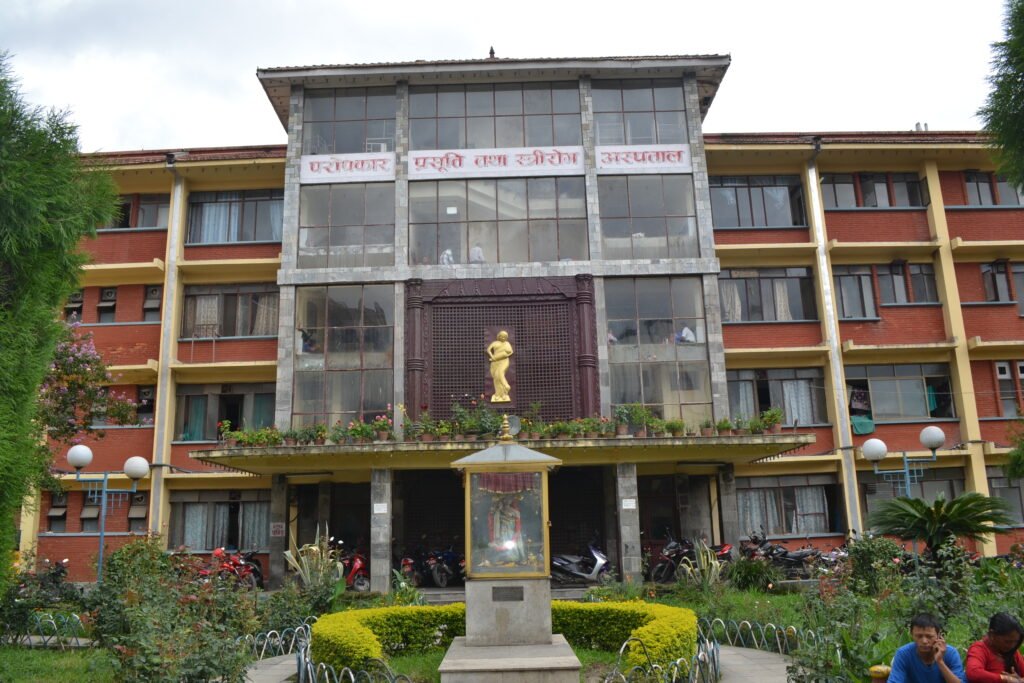
The healthcare sector was one of the most critical ones of Nepal’s needs.
Few modern medical facilities were available throughout most of the nation.
Building of hospitals and health institutions therefore was more than just building new structures.
It meant providing professional healthcare to laymen.
The already positive development of health, education and public administration assisted Nepal to escape the extreme isolation of the past few decades.
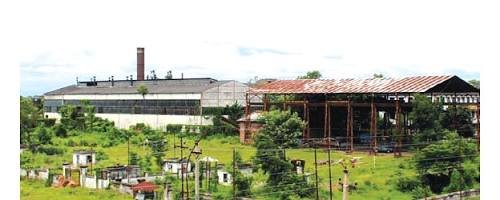
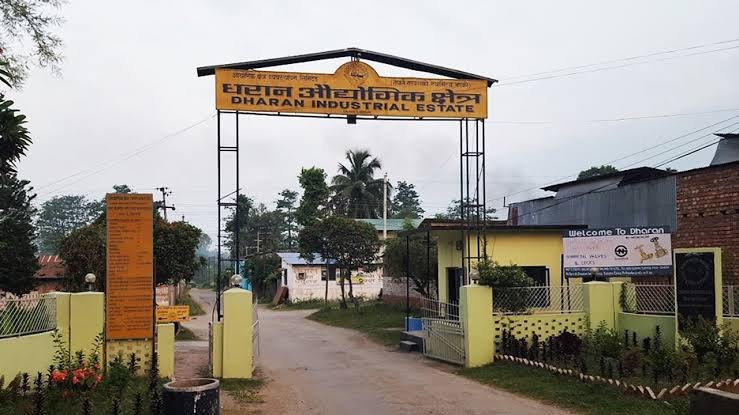
Factories and Industrial Development
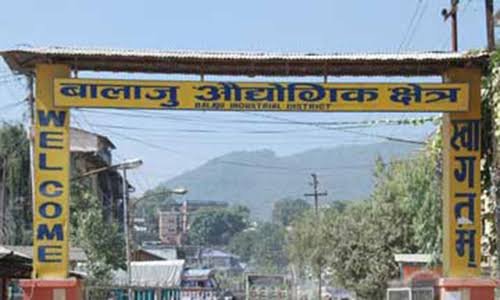
Industrialisation was a part of King Mahendra’s development vision too.
If Nepal wanted to develop a strong economy then the country would not be able to depend solely on agriculture and-importation.
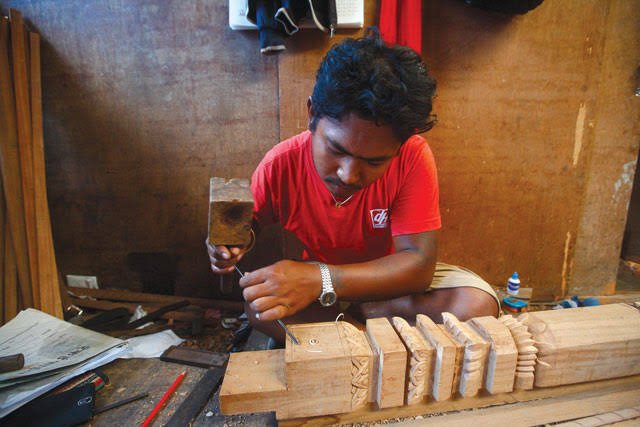
Industrial projects developed employment, production and technical training opportunities.
New skills and technologies were also transferred to the nation by factories.
Modest industrial development amounted to a considerable change for a country at the start of its industrial growth.
Mahendra and the Art of Balancing Foreign Powers
King Mahendra’s biggest challenge as a statesman had been to preserve the sovereign right of Nepal amidst much bigger countries.
India was the nearest amongst all major countries to Nepal.
The north was gaining strength everywhere: China was becoming more powerful.
Competition for Soviet-American influence spread throughout the developing world.
King Mahendra Bir Bikram Shah Dev has tried to foster ties with a number of nations without putting Nepal in an exclusively geopolitical camp.
With this strategy, Nepal was able to approach various partners for support.
It also provided Nepal with some room for diplomatic maneuverability.
Hence his supporters consider him as a practice of “small state diplomacy”—as peace-way maintains relations with strong nations while trying to ensure freedom of action.
The 1960 Political Turning Point
December of 1960 cannot be ignored from the discussion of Mahendra.
First general election was conducted in Nepal in 1959.
After the victory in the election, with a majority advantage in parliament, B.P.Koirala got the chance of becoming the prime minister.
The dynamic between the palace and the elected government fell into disrepute soon after.
On 15 December 1960, the under the pressure of the public, King Mahendra dismissed the government, dissolved Parliament and imposed Arusha on B.P. Koirala and other political leaders.
He later developed Panchayat system.
It is one of the most controversial events of modern Nepali history but was successive system for modern Nepal.
They state that King Mahendra had faith in parliamentary system which was muskling down and strong national leadership was required for the development and independence of Nepal.
Some people criticize that the King failed in the democratic movement in Nepal and centralised political power in the monarchy.
This history must be recognised in both its parts.
Did King Mahendra Act out Just for the Throne?
The question of how much, or how little, of his legacy is attributed to him is one of the main concerns with his Egyptian legacy.
King Mahendra definitely wanted the monarchy to remain to built and help nation.
Modern foreign commentators saw this element as a key component in his politics.
However, this party-political limitation leads to an inadequate account of the development and diplomacy.
His government worked towards countries relations, gathered development loans, built the state structures and developed infrastructures.
Hence Nepali people saw the monarchy in aspects other than just his own privilege but more as an unity of the country.
Whether or not one will buy into that philosophy is another matter.
The point to note from a historical perspective is that the preservation and expansion of royal power were linked in Mahendra’s political thought.
The Political Tragedies of Nepal first reviewed the book in 2007.The Political Tragedies of Nepal reviewed the book in 2007.
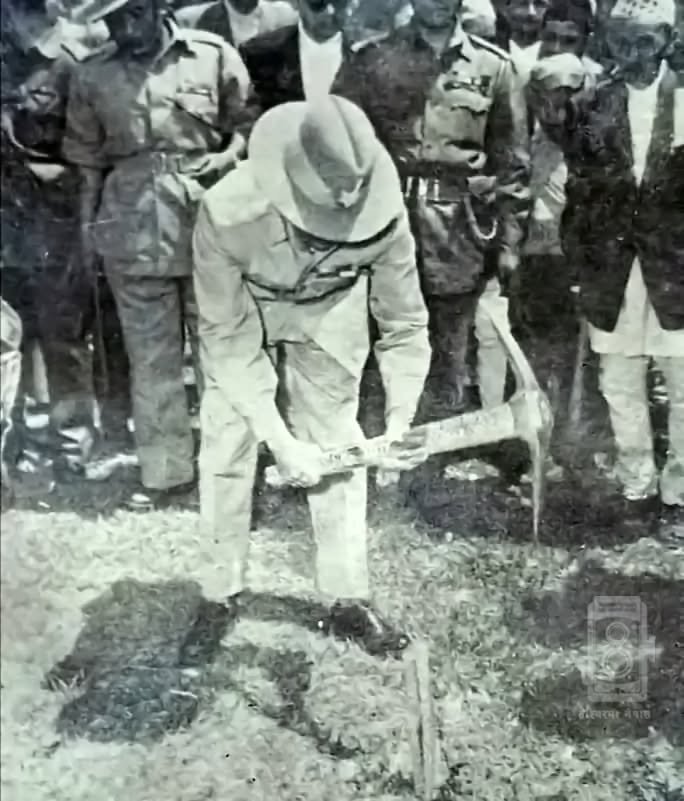
A King Who Wanted Nepal to Stand on Its Own Feet
The most robust argument for King Mahendra’s followers is that he was not flawless.
He said this is because he thinks Nepal should get even stronger before it becomes fully secure.
He came into position at a time when his country lacked most of the infrastructure while it was full of development challenges.
He was a ruler of the Cold War era.He is a ruler of the cold war period.
He was put under a lot of pressure from his strong neighbouring powers.
He saw and experienced many times political turmoil.
In addition, as the His Majesty government would no longer rely solely on any one foreign authority, it extended its cooperation and reached out to several different international authorities for support in developing the country.
From that point of view, the goal of the objective was simple:
Use the world without becoming controlled by the world.
Introduce investments and expertise to Nepal, Build roads, Build bridges, Build schools, Build hospitals, Develop industries, Expand communications, Train Nepali people., Strengthen government institutions, And maintain Nepal’s independence.
King Mahendra: Poet, Songwriter and Cultural Figure
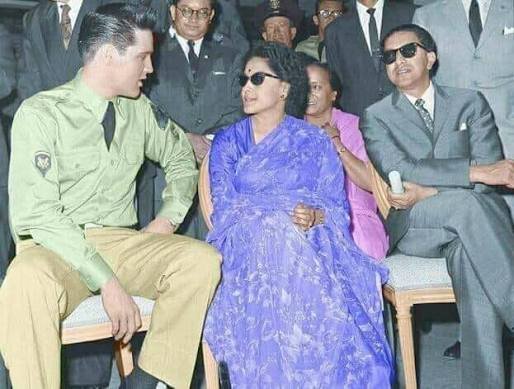
In addition to politics and nation-building, there was a creative aspect to Mahendra Bir Bikram Shah Dev. As a poet and lyricist he wrote poetry and song lyrics as M. B. B. Shah and some of his songs entered the musical heritage of Nepal. Regrettably, during his trip to the United States in 1960 Mahendra and Queen Ratna also met Elvis Presley who was filmming G.I. Blues at Paramount Studios. The meeting was an expression of Mahendra’s interest in music and international culture, apart from his acts of a king.
The irony of the King Mahendra’s Era
King Mahendra’s legacy is a fascinating one.
Panchayat system stifled political competition and political freedoms.
Ironically, during the same era, there was an increase in the education and communications components, as well as exposure to external world.
In a future more literate and linked with the rest of the world, more people sought to participate in politics.
In the end the Panchayat system disappeared during the People’s Movement of 1990.
Not that King Mahendra had seen that transformation; he passed away in 1972.
His political system did not last.
However, many of the physical and institutional infrastructure his regime established is still utilized by successive governments.
What Should We Remember About King Mahendra?
History seldom provides us with straightforward characters.
Not everything was great about King Mahendra.
To his credit be it said that the dissolution of Parliament and the institution of Panchayat rule had tremendous political repercussions.
During his reign, however, there was also suppression of political freedom.
Those facts are just not going to go away.
Nor must his consequences upon the present and future of the world be left unmentioned.
He governed Nepal during a period of poverty, isolation, political vulnerability and a high degree of perceived capability on his part in comparison to much bigger powers.
He thought that unity of the nation was in need of Nepal.
He felt that there was a need for stability in Nepal.
He felt that Nepal was in need of development.
And he felt it was necessary that Nepal would sustain its independence.
His government thus resolved to resort to diplomacy for not only the survival of Nepal’s international status but also to enter the country with assistance and support of financial resources, highly qualified manpower, education and infrastructure development.
That is Mahendra’s legacy beloved of his admirers.
King Tyriste wielded such power to make Nepal stronger, more connected and more able to stand on its own.
Perhaps the most apt approach to the vision of Nepal can be called the national vision of him, if one would ever give it that name, is that the kings of Nepal cooperated on building it up.
Millions of people – farmers, workers, and engineers, teachers, doctors, soldiers, civil servants, entrepreneurs and ordinary families contributed to build Nepal Indirectly but it was lead by His Majesty King Mahendra Bir Bikram Shah.
However, one might say that King Mahendra helped set the political course and diplomatic setting for much of that nation-building.
That is the reason why there has been a debate over King Mahendra even decades after his demise.
For others he is still the king who was responsible for the downfall of democracy. To some he is the king who destroyed democracy.
In his view, for others he is the King who was instrumental in strengthening the power and sovereignty of Nepal and opened a path for modern life in the country.He is the King in his eyes who bolstered the strength and sovereignty of Nepal and paved the way to modern progress in the country.
His legacy is both for many.
Except for this part of his history record, which he cannot deny:
Nepal pioneered a new era of international connection and a new era of more extensive infrastructure during a significant time in the country’s history, during which it became a more deeply engaged nation and a nation with the beginnings of a modern nation-wide network of roadways, schools, hospitals, industries and public institutions.
However, King Mahendra was one of the prominent figures in the political axis of the then kingdom.