

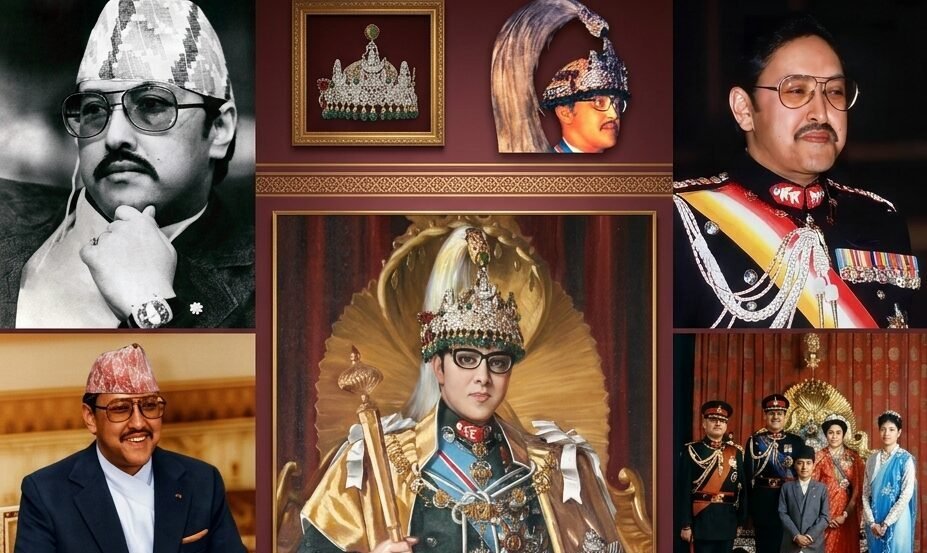
King Birendra Bir Bikram Shah Dev is certainly one of those names that will be remembered in Nepalese history. His reign witnessed a major transformation in Nepal’s political system, from the partyless Panchayat system to a constitutional monarchy, alongside growing public demands for democracy, national development and political freedom.
Born into the Shah dynasty, King Birendra inherited a powerful monarchy from his father, King Mahendra. But it can’t be only in his royal role that his legacy is considered. His decisions during the 1990 People’s Movement, his vision of Nepal as a Zone of Peace, and his tragic death during the 2001 Royal Massacre continue to shape discussions about Nepal’s past.
The important part of King Birendra’s life is how his own reign is contrasted with the political transformation that he did go through.
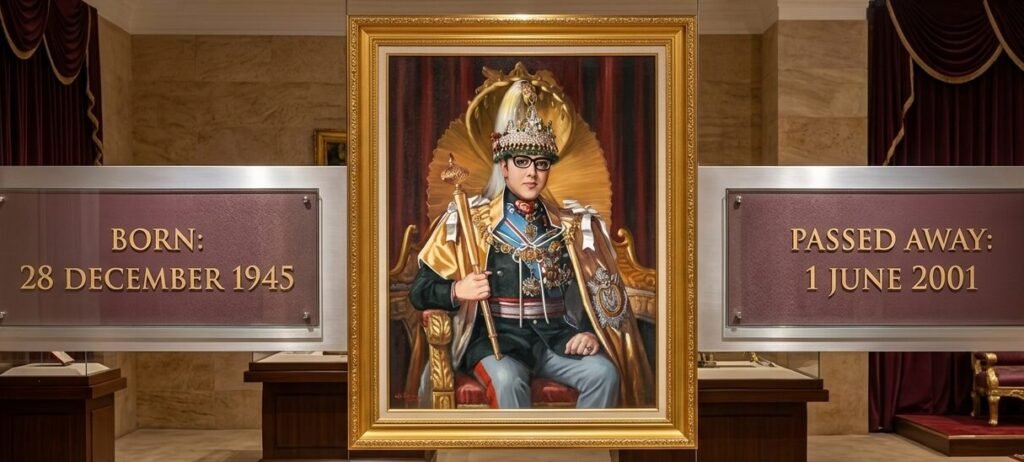
King Birendra Bir Bikram Shah Dev: Biography Table
| Details | Information |
|---|---|
| Full name | King Birendra Bir Bikram Shah Dev |
| Popular name | King Birendra of Nepal |
| Date of birth | 28 December 1945 |
| Birthplace | Narayanhiti Royal Palace, Kathmandu, Nepal |
| Father | King Mahendra Bir Bikram Shah Dev |
| Mother | Crown Princess Indra Rajya Lakshmi Devi Shah |
| Wife | Queen Aishwarya Rajya Lakshmi Devi Shah |
| Marriage date | February 1970 |
| Children | Crown Prince Dipendra, Princess Shruti and Prince Nirajan |
| Royal dynasty | Shah dynasty |
| Became king | 31 January 1972 |
| Coronation date | 24 February 1975 |
| Education | Studied in Nepal, India, the United Kingdom, Japan and the United States |
| Major political event | 1990 People’s Movement and restoration of multiparty democracy |
| Foreign policy initiative | Nepal as a Zone of Peace |
| Predecessor | King Mahendra |
| Successor | King Gyanendra |
| Date of death | 1 June 2001 |
| Place of death | Narayanhiti Royal Palace, Kathmandu, Nepal |
| Cause of death | Fatal shooting during the 2001 Royal Massacre |
| Historical significance | Oversaw Nepal’s transition to constitutional monarchy in 1990 |
Historical note: King Birendra died on 1 June 2001. His son, Crown Prince Dipendra, was proclaimed king while critically wounded but died on 4 June 2001. King Gyanendra Bir Bikram Shah subsequently ascended the throne.
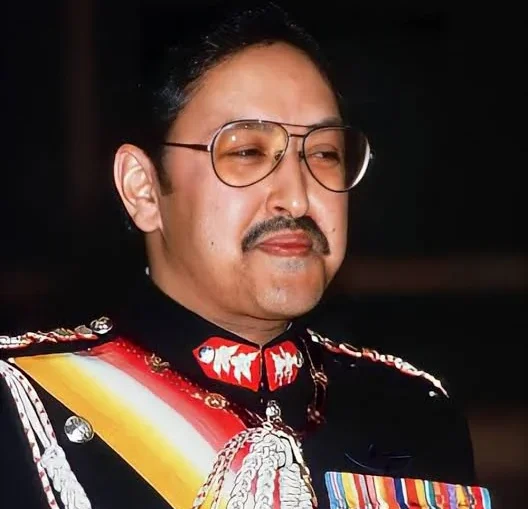
King Birendra Biography – Early Life and Education
King Birendra Bir Bikram Shah Dev was born on 28 December 1945 at Narayanhiti Royal Palace in Kathmandu, Nepal. He was the eldest son of King Mahendra Bir Bikram Shah Dev and Crown Princess Indra Rajya Lakshmi Devi Shah.
Growing up in the royal palace, Birendra received an education that extended beyond Nepal. He studied in Darjeeling, India, attended Eton College in England, and pursued further studies in Japan and the United States. His international education exposed him to different cultures, political ideas and approaches to governance.
Unlike a monarch whose personal experience was within the palace walls, King Birendra Bir Bikram Shah Dev had the chance to look at societies that have different political institution. This is important in understanding his later reaction to the rise of the Nepali democratic movement, but not all educational factors can be taken into account in explaining political choices.
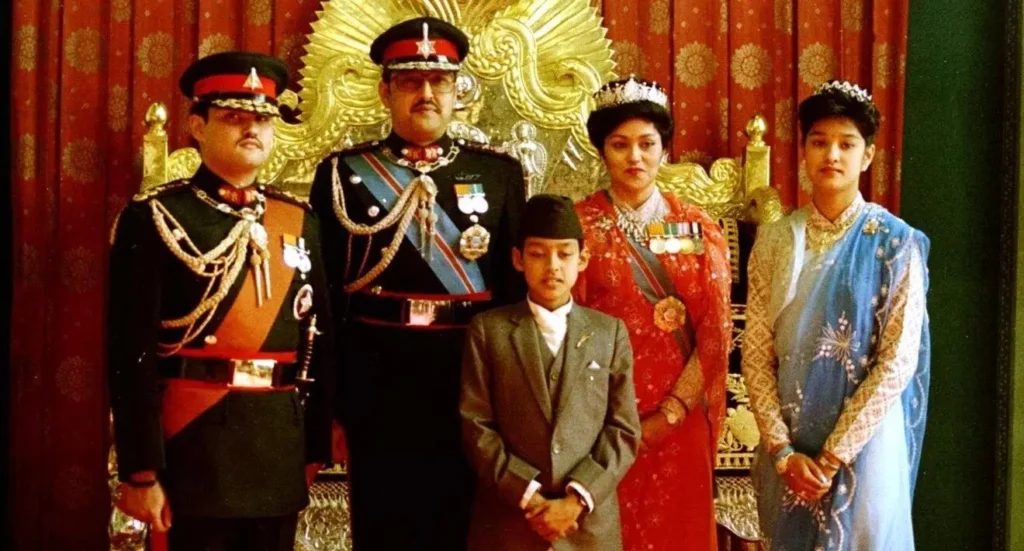
King Birendra of Nepal married Aishwarya Rajya Lakshmi Devi Shah in February 1970. The couple had three children: Crown Prince Dipendra, Princess Shruti and Prince Nirajan.
On 31 January 1972, following the death of King Mahendra, Birendra became the King of Nepal. King Birendra was formally crowned on 24th February 1975.
King Birendra and the Panchayat System
One of the most important aspects of King Birendra’s reign was the political system he inherited.
The Panchayats were introduced in Nepal, under King Mahendra, where political parties were not allowed to function openly and where significant powers were vested in the monarchy. The system provided for elected local and national bodies, but was not a typical multiparty parliamentary democracy.
When King Birendra Bir Bikram Shah Dev became king, he initially continued under this system. The earlier years of his reign are thus rather more complex than the popular picture of a monarch who was always democratic.
However, in 1979 the pressure for reform grew as a result of student protest and political unrest. King Birendra declared a national referendum where the people would have the option to maintain Panchayat system with changes, or opt for a multiparty system.
The referendum was held in May 1980 and the panchayat option was accepted by a narrow majority. Political restrictions remained but there were some changes. It serves as a relevant episode because it established that the demand for political reform was a nationwide issue before the historic events in 1990.
King Birendra and the 1990 People’s Movement
The Jana Andolan I, which occurred in 1990, marked a pivotal moment in King Birendra Bir Bikram Shah Dev reign. Political parties, student groups and ordinary citizens joined demonstrations demanding the restoration of multiparty democracy. The government responded harshly to the movement, which involved arrests and killings of demonstrators.
The crisis forced the monarchy to make a difficult decision continue to uphold the existing political structure or concede to a fundamental shift in government in Nepal. In April 1990, King Birendra Bir Bikram Shah Dev agreed to lift the ban on political parties and allow the transition towards multiparty democracy. In November 1990, a new Constitution was promulgated which made Nepal a constitutional monarchy with elected Parliament and executive prime minister.
This was a historic change in the relationship between the king, the government and the people. That it should not, however, be shown as ‘entirely’ a royal gift of democracy. It had been a long period of political work, public opposition and sacrifice for the demonstrators, and this was a key factor.
There is a flip side to King Birendra’s significance, in that he chose to accept the change, rather than go on with an absolute confrontation with the movement.
The decision also proved to be contentious for the ages and would pose the question if he was a monarch who truly believed in the tenets of democracy, or one responding to overwhelming people pressure or a mix of both. It is better to consider these possibilities than just one explanation of his legacy.
Nepal as a Zone of Peace: King Birendra’s Foreign Policy Vision
Another important part of King Birendra’s legacy was his proposal to declare Nepal a Zone of Peace. In 1975 when he was coronated, he had made a proposal of international understanding to strengthen the Nepalism identity of the country. The proposal was a result of the country’s strategic geopolitical position between two big neighbours, India and China.
For Nepal, balancing ties between both nations and maintaining sovereignty while devising measures for economic development is a priority aspect of its foreign policy. The Zone of Peace proposal sought international support for the principle that Nepal should not become a base for hostile activities against other countries. It was also associated with the notion of a nation with less security concerns having greater resources available to advance living standards.
The idea was welcomed by a number of countries, but was not adopted as an international agreement. The importance of it is how it illuminates Birendra’s perception of Nepal—a smaller Himalayan nation, one that found security with diplomacy, peaceful relations, and international validation, not through conflict.
It is one of the rather unique missions during his rule, for readers familiar with Nepal’s foreign policy history. King Birendra Bir Bikram Shah Dev’s Contribution to Nepal’s Development and Nature Conservation. During King Birendra’s reign, the works for the expansion of the development as well as improvement of the environmental protection were undertaken.
Nepal has a rich natural heritage which encompasses its Himalayan landscape, forests, rivers and wildlife, all of which play an important role in the country’s national identity and economy. Increased population pressure, settlement expansion and poaching seriously endangered the habitats of wildlife and conservation became more important.
In the period, Nepal enhanced its protected area system. Protected areas in the western part of the country grew in the following years and Chitwan National Park has been set up in 1973 and is now a significant preserve for wildlife conservation.
These are some of the changes that happened during King Birendra Bir Bikram Shah Dev tenure regarding environmentalism in Nepal. This should not be blamed solely on the king, before him the government institutions, the conservation workers, as well as both the local communities must also be recognized.
Nevertheless, nature conservation became a significant part of Nepal’s national development agenda during this era. The overall challenge was balancing the protection of the environment and the protection of the communities for their working needs, infrastructure, education and access to public services. This tension is still present in Nepal today.
King Birendra’s Family and Personal Life
The family of King Birendra Bir Bikram Shah Dev was a prominent part of Nepal’s royal saga. Queen Aishwarya was a prominent public figure while their children were closely associated with the future of the monarchy. The direct royal family included Crown Prince Dipendra and two princes, Nirajan and Shruti.
To many Nepalese symbolises royal family symbolised as incarnation of god Bishnu, the nation’s traditional organisations. For others, the monarchy was part of a political structure that needed reform. It is a significant difference of opinion which is relevant. Nepal was not a society only of those who accepted the king, and there was a dual sentiment of respect for the king and demands for political accountability and democratic representation.
His reputation as a self-effacing and rather genial king contributed to his posthumous charisma. But popularity and political achievement are not interchangeable and both ought to be kept in mind in judging his rule.
Frequently Asked Questions About King Birendra Bir Bikram Shah Dev
When was King Birendra Bir Bikram Shah Dev born?
King Birendra was born on 28 December 1945 in Kathmandu, Nepal.
When did King Birendra become the King of Nepal?
He succeeded his father King Mahendra to the throne on 31 January 1972. King was crowned on 24 February 1975.
Who was King Birendra’s wife?
His wife was Queen Aishwarya Rajya Lakshmi Devi Shah. They were married in February of 1970.
What did King Birendra do during the 1990 People’s Movement?
In April 1990, he agreed to restore multiparty politics. The new constitution promulgated later that year established a constitutional monarchy and a parliamentary system.
What was the Zone of Peace proposal?
It was a diplomatic initiative proposed by King Birendra in 1975 to promote Nepal’s peaceful international position and protect its sovereignty. India and Russia voted against the proposal.
How did King Birendra die?
He was shot dead in the Royal Palace Shooting on 1st June, 2001 at the Narayanhiti Palace, Kathmandu.
When was the monarchy abolished in Nepal?
On April 28th, 2008, Nepal’s Constituent Assembly voted without taking people mandate declared the end of its Monarchy system and announced the nation as a Federal Democratic Republic.
Why do Nepalis remember King Birendra?
He is recalled for political change in 1990, his foreign policy of peace and his connection to national development and his tragic death.